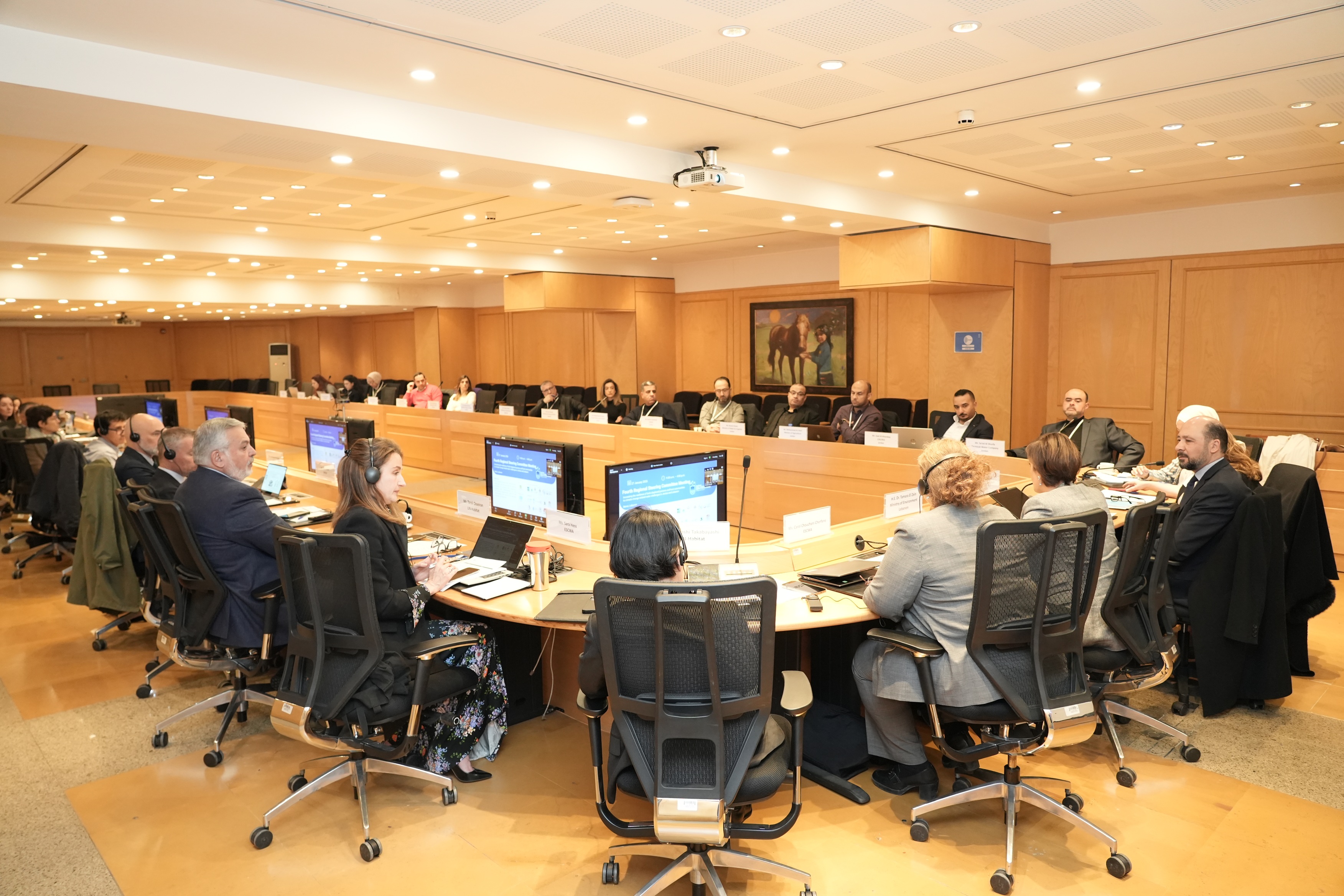
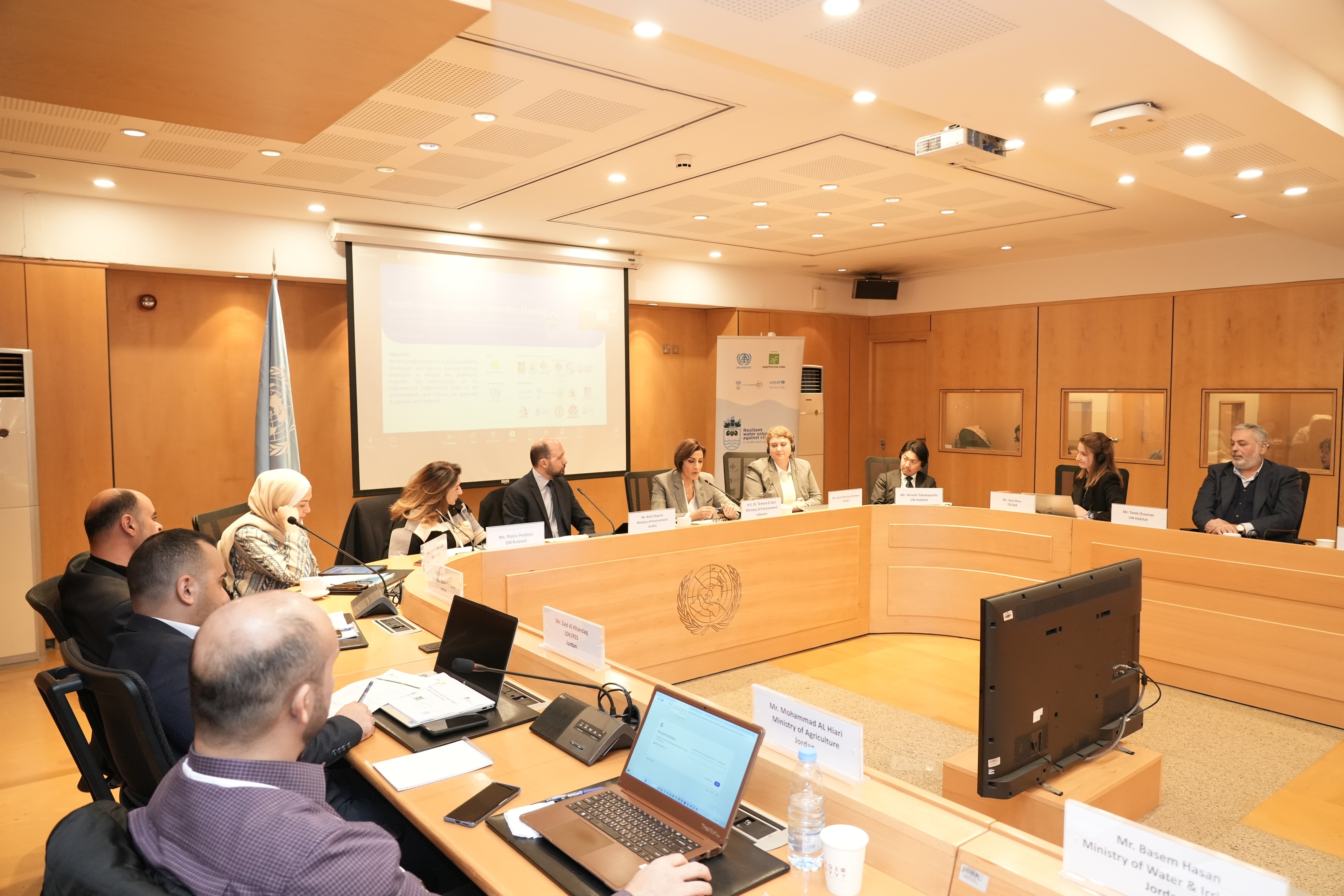
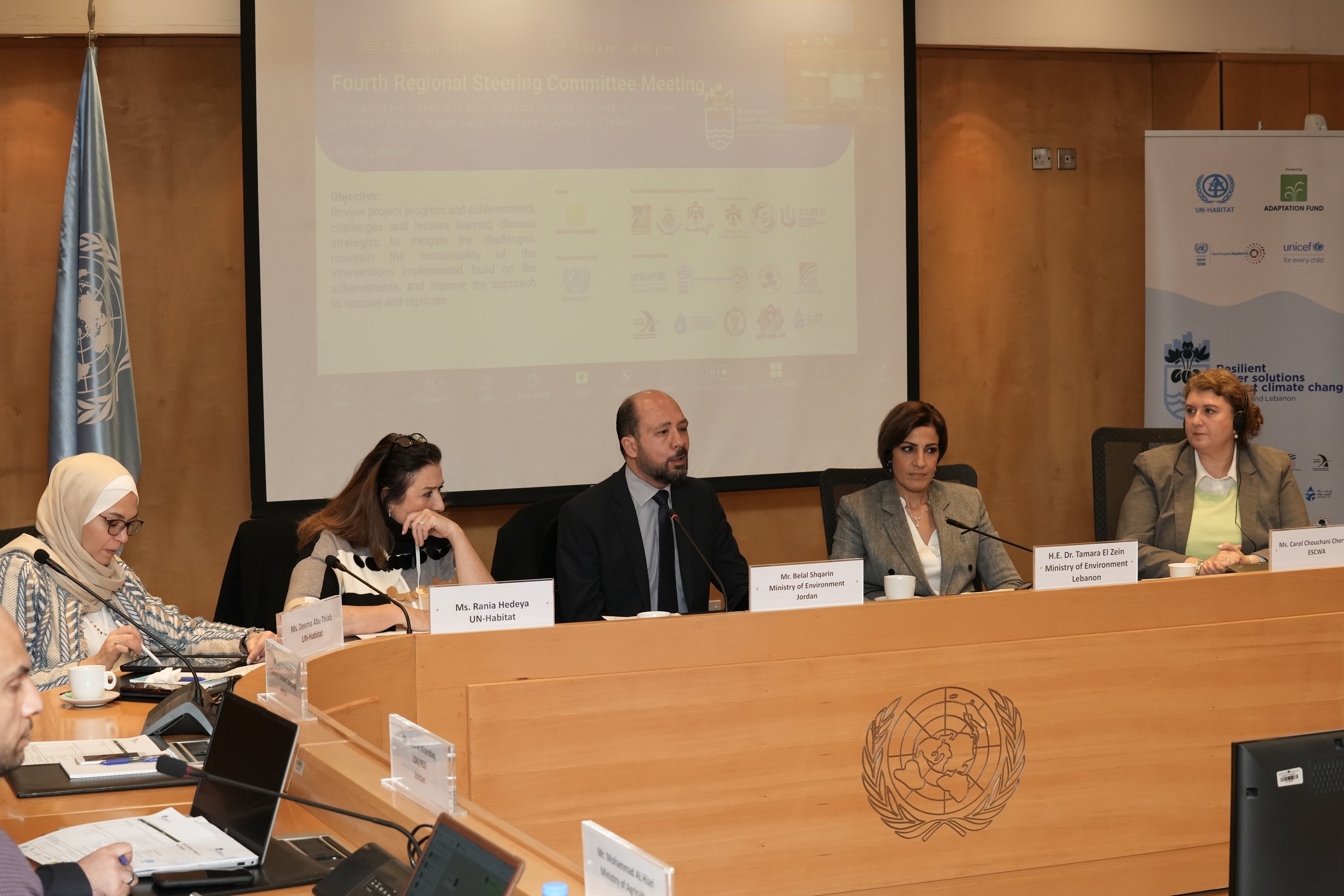
Beirut, 30 January 2026 – Partners in the four-year “Resilient Water Solutions against Climate Change in Jordan and Lebanon” project, currently in its final phase, convened last Tuesday their fourth and last Regional Steering Committee meeting at the UN House in Beirut. The project has benefited about 88,000 people in Jordan and Lebanon.
The meeting brought together Lebanese Minister of Environment Tamara El-Zein and Head of the Climate Change Directorate in Jordan Belal Shaqarin, representing Jordanian Minister of Environment Aiman Soleiman, along with Regional Director of UN-Habitat Regional Office for Arab States (ROAS) Rania Hedeya, and Director of the Arab Centre for Climate Change Policies at ESCWA Carol Chouchani Cherfane, as well as representatives of UN agencies, development partners and technical experts.
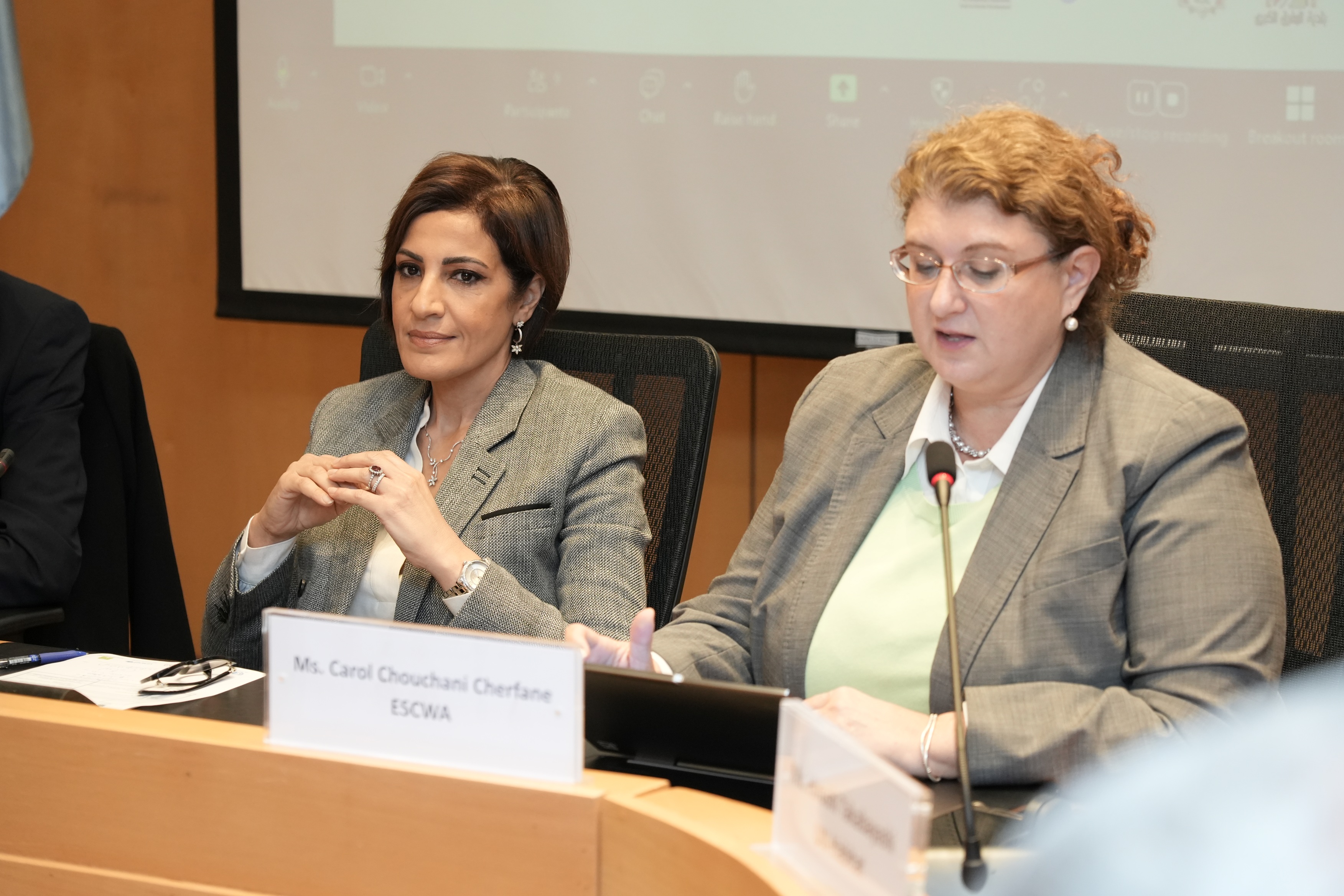
“By strengthening climate-informed urban planning and sustainable water systems, this project helped both displaced people and host communities build long-term water resilience,” said Director of the Arab Centre for Climate Change Policies at ESCWA Carol Chouchani Cherfane.
Participants reviewed key achievements, exchanged lessons learned and agreed on next steps to scale up the project’s impact in addressing the interconnected challenges of water scarcity, climate change, and displacement in urban contexts. Discussions also underscored a shared commitment to advancing climate resilience and sustainable water management in one of the world’s most water-stressed regions.
Financed by the Adaptation Fund, the project has supported the installation of rainwater harvesting and greywater systems in Zahle in Lebanon, and Mafraq and Irbid in Jordan, while training thousands on municipal resilience and permaculture practices.
Regional Leadership and Cooperation
“This project represents a successful model of regional cooperation between Jordan and Lebanon, based on the exchange of expertise, the development of joint solutions, and the strengthening of institutional and local capacities,” Hedeya emphasized. “It is a model that UN-Habitat is committed to promoting and expanding to include other countries in the Arab region,” she added.
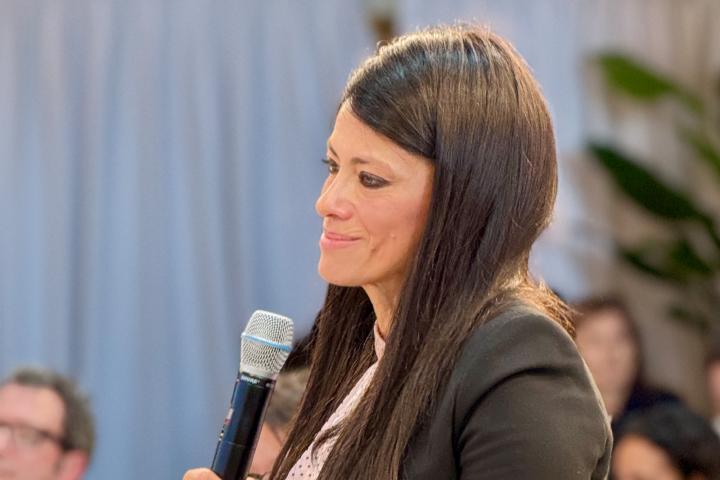
“Water scarcity in Jordan makes initiatives like rainwater harvesting essential, but the region still receives just 0.6% of global climate finance,” said Shaqarin, emphasizing the need for increased funding for project sustainability.
Scaling impact beyond the project
The meeting also included a high-level ministerial panel, which stressed that climate change impacts on water security demanded integrated approaches linking policy, finance and local action, and called for stronger regional cooperation to scale up proven solutions.
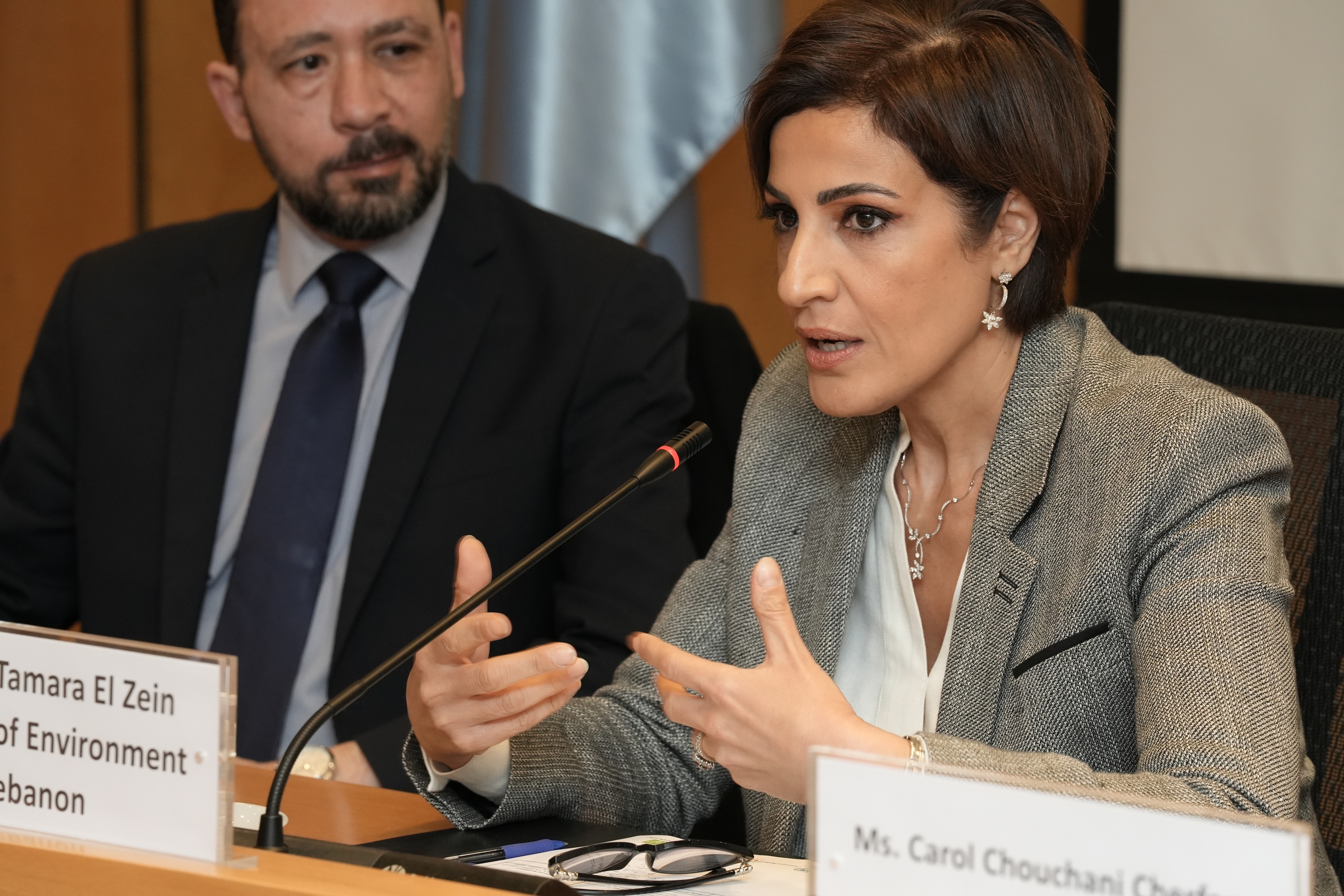
“Countries facing conflict and fragility need faster, more flexible climate financing to protect critical water infrastructure,” El-Zein underscored.
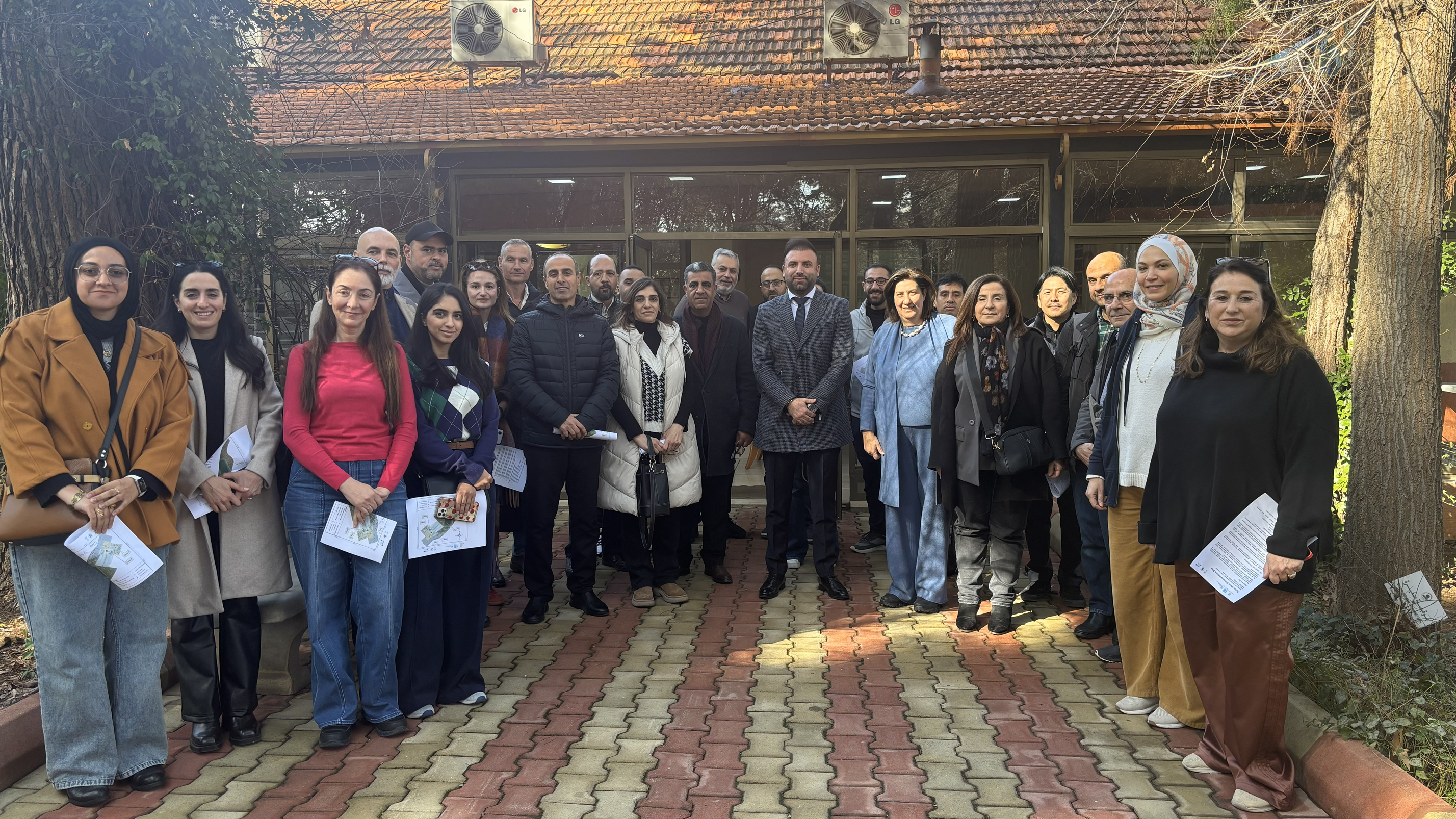
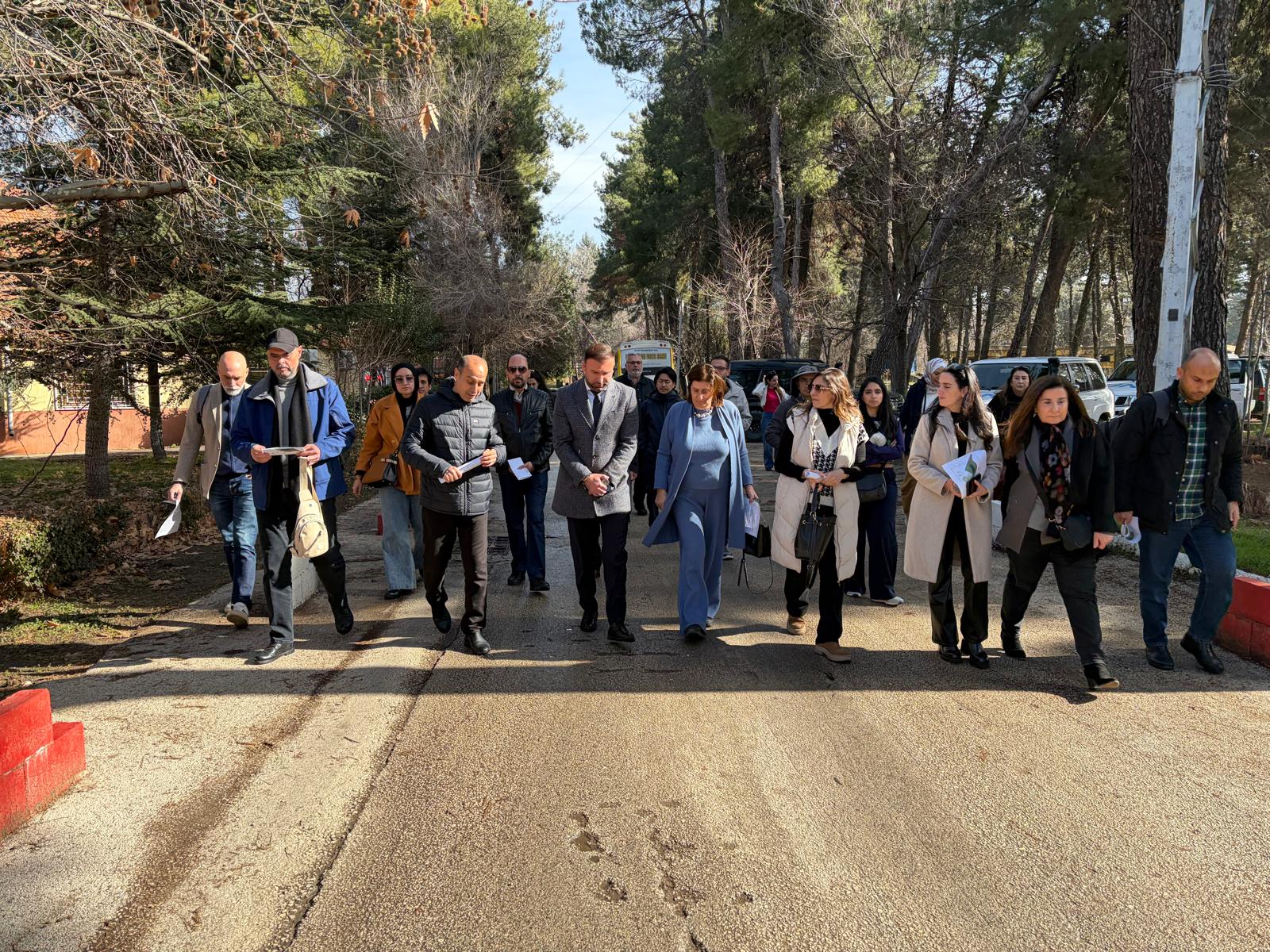
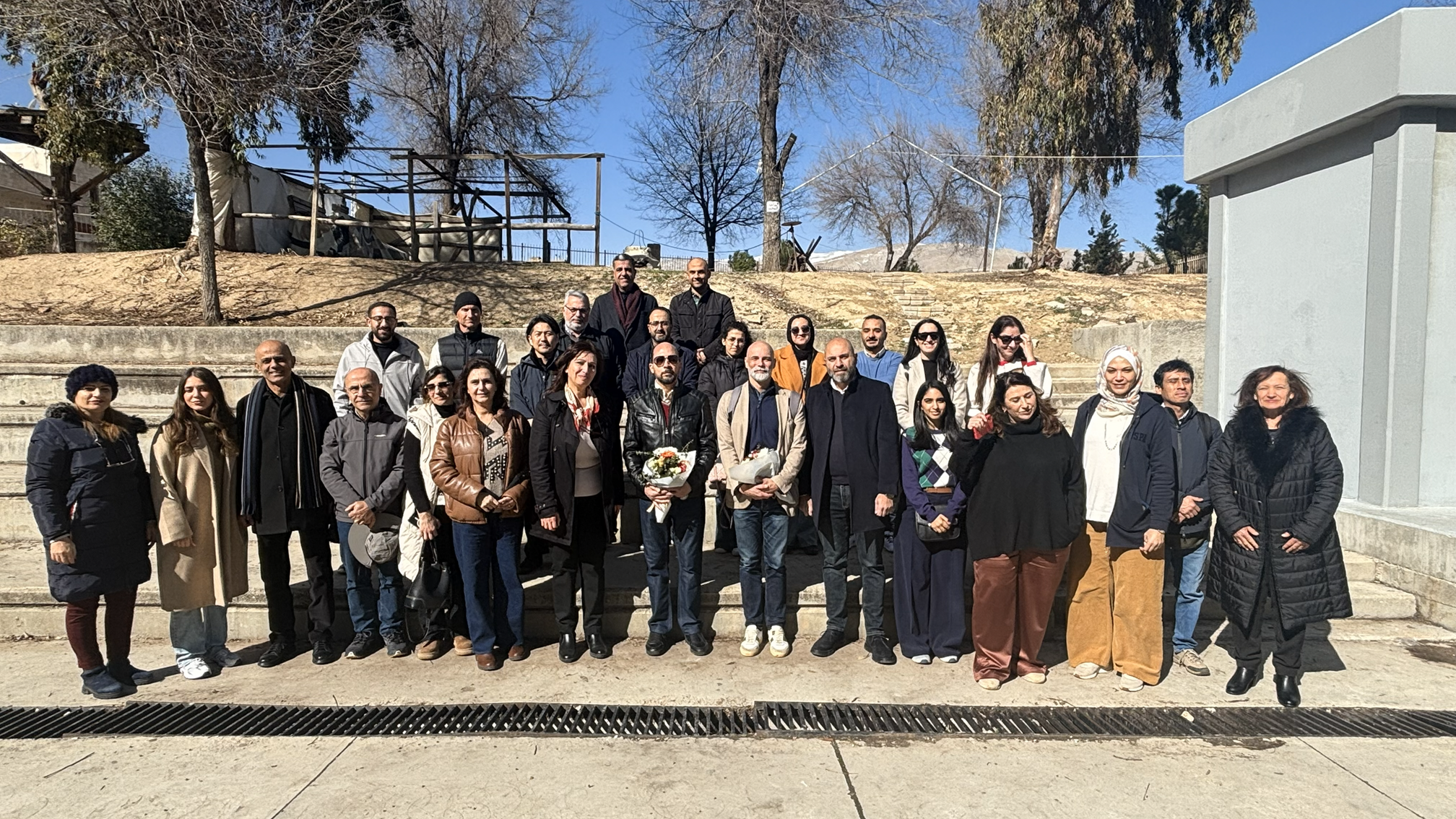
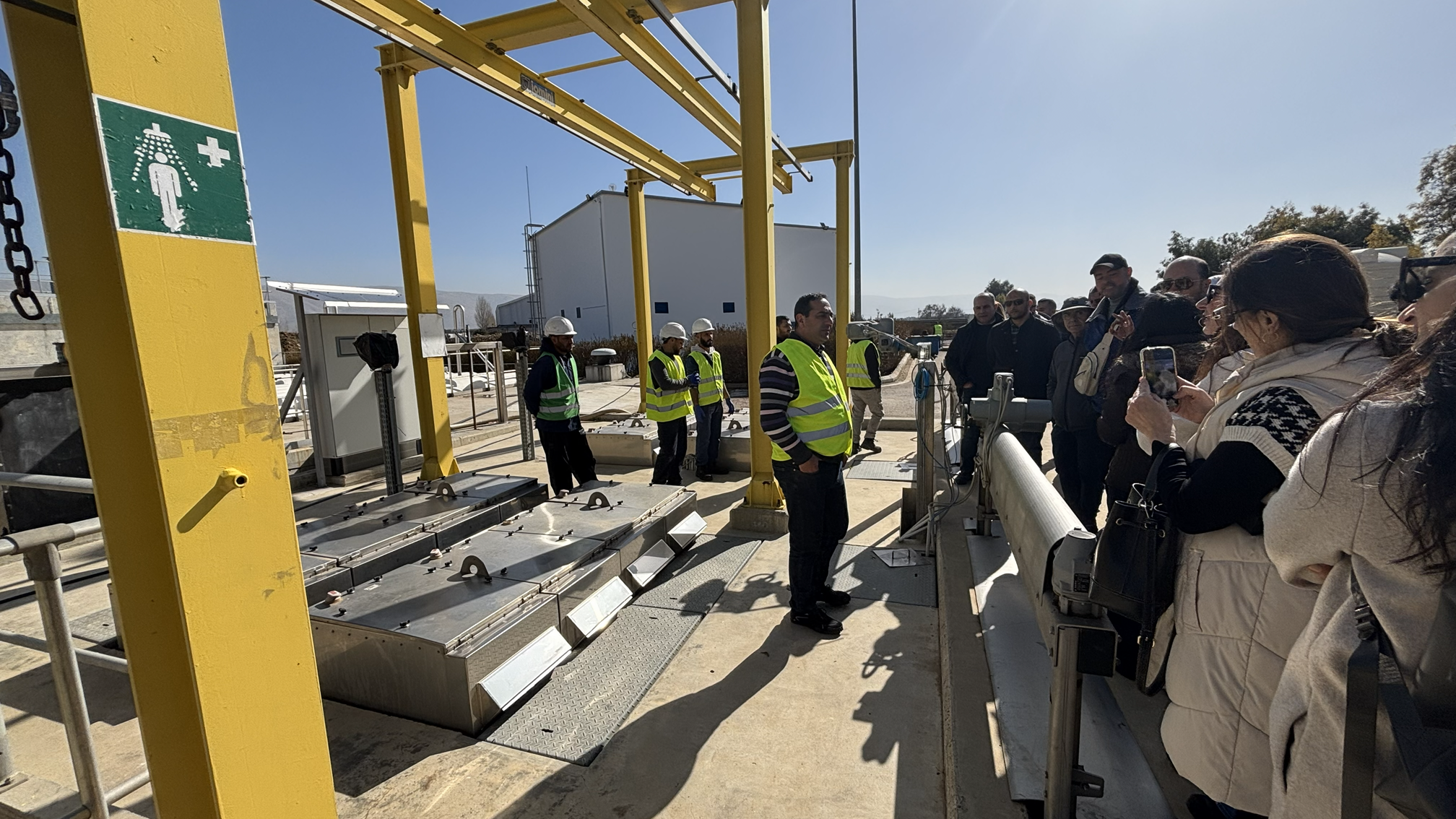
The meeting was preceded by a field visit to Zahle, which included the Lebanese Agricultural Research Institute (LARI)’s permaculture site in Rayak, a water reuse system at Ablah Public School, and the Zahle wastewater treatment plant. The initiatives demonstrate how innovative water solutions can enhance food security, reduce water stress and strengthen community resilience.
*****
About UN-Habitat:
The United Nations Human Settlement Programme (UN-Habitat) works in over 90 countries worldwide, supporting people in cities and human settlements for a better urban future. Working with governments and local partners, its high impact projects combine world-class expertise and local knowledge to deliver timely and targeted solutions. The 2030 Agenda for Sustainable Development includes a dedicated Goal on cities, SDG 11 – to make cities inclusive, safe, resilient and sustainable.
About ESCWA:
One of five United Nations regional commissions, ESCWA supports inclusive and sustainable economic and social development in Arab States and works on enhancing regional integration.
About UNICEF:
Working in Jordan and Lebanon for over 70 years, UNICEF works in some of the world’s toughest places, to reach the world’s most disadvantaged children. Across more than 190 countries and territories, we work for every child, everywhere, to build a better world for everyone.
***
For more information:
- Ms. Rania Harb, Public Information Assistant, ESCWA, Beirut, Lebanon +961-70-008-879; email: [email protected]
- Ms. Maryam Sleiman, Public Information Assistant, ESCWA, Beirut, Lebanon +961-81-769-888; email: [email protected]
- Ms. Pakinam Elgohary, Regional Communications Lead, UN-Habitat Regional Office for Arab States ROAS, +201055757002, email: [email protected]