ESCWA Publication: E/ESCWA/CL1.CCS/2025/TP.3
Country: Sultanate of Oman
Publication Type: Information material
Cluster: Climate Change and Natural Resource Sustainability
Focus Area: Climate change, Natural resource sustainability
Initiatives: Improved Water Security in Arab States, AWARENET
SDGs: Goal 6: Clean Water and Sanitation, Goal 11: Sustainable Cities and Communities, Goal 13: Climate Action
Keywords: Agricultural land, Case studies, Climate, Evapotranspiration, Groundwater, Hydrogeology, Irrigation, Irrigation farming, Land use, Oman, Precipitation, Recommendations, Remote sensing, Soils, Technical cooperation, Water balance, Water resources
Case study on the use of remote sensing to estimate groundwater quantities used for irrigation: Wadi Al-Ma’awil watershed, South Al Batinah Governorate – Oman
October 2025
The Arab region is among the most water-scarce regions in the world, with over 90 per cent of its population affected by limited water availability. Groundwater constitutes the primary source of water in more than half of the countries in the region. Dependence on groundwater is increasing as surface water resources diminish due to climate change and rising demand. Given that the agricultural sector consumes approximately 80 per cent of total freshwater use, estimating the quantities of groundwater used for irrigation is crucial for informed decision-making, long-term planning and sustainable management of groundwater resources.
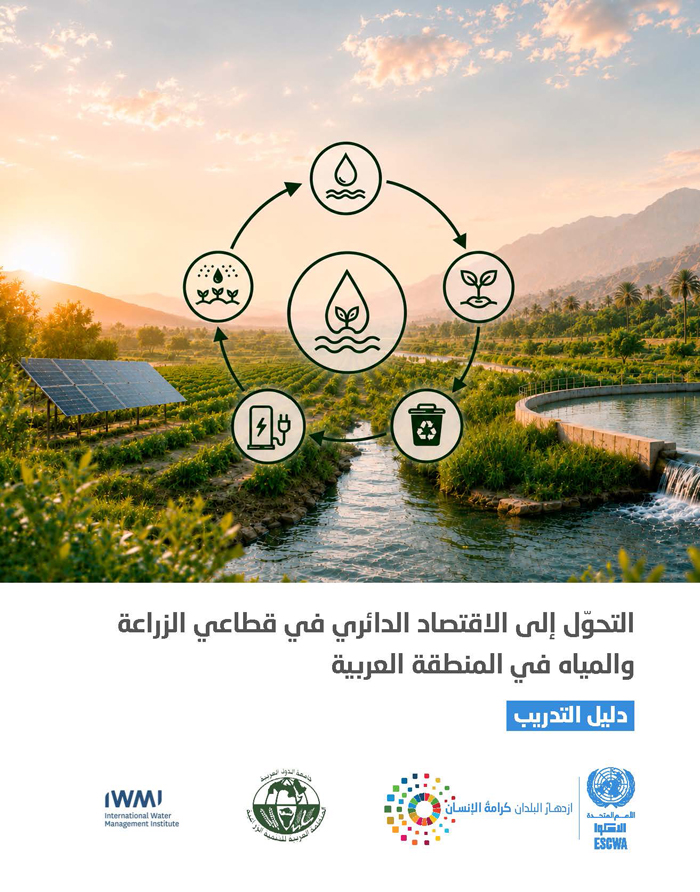
To better support countries in the Arab region in the sustainable management of groundwater through innovative technologies, ESCWA developed a training manual on the use of remote sensing to estimate groundwater quantities used in irrigation and organized a capacity-building workshop for national teams upon request.
As a result of the workshop, a national team from the Ministry of Agriculture, Fisheries and Water Resources in Oman, with ESCWA support, conducted the case study presented in this report. The Wadi Al-Ma’awil is one of the Sultanate’s vital agricultural areas and relies heavily on groundwater to meet its water needs.
The study includes an analysis of groundwater use in the region, highlighting the main influencing factors. It also offers practical recommendations to adopt effective strategies aimed at improving water resource management and sustainability.
Related content
Climate change, Natural resource sustainability
The Arab region is among the most water-scarce regions in the world, with over 90 per cent of its population affected by limited water availability. Groundwater constitutes the primary source of water in more than half of the countries in the region. Dependence on groundwater is increasing as surface water resources diminish due to climate change and rising demand. Given that the agricultural sector consumes approximately 80 per cent of total freshwater use, estimating the quantities of groundwater used for irrigation is crucial for informed decision-making, long-term planning and sustainable management of groundwater resources.
To better support countries in the Arab region in the sustainable management of groundwater through innovative technologies, ESCWA developed a training manual on the use of remote sensing to estimate groundwater quantities used in irrigation and organized a capacity-building workshop for national teams upon request.
As a result of the workshop, a national team from the Ministry of Agriculture, Fisheries and Water Resources in Oman, with ESCWA support, conducted the case study presented in this report. The Wadi Al-Ma’awil is one of the Sultanate’s vital agricultural areas and relies heavily on groundwater to meet its water needs.
The study includes an analysis of groundwater use in the region, highlighting the main influencing factors. It also offers practical recommendations to adopt effective strategies aimed at improving water resource management and sustainability.