
ESCWA Publication: E/ESCWA/CL1.CCS/2026/Policy brief.1
Country: Republic of Iraq, Hashemite Kingdom of Jordan, Lebanese Republic, Syrian Arab Republic
Publication Type: Policy briefs
Cluster: Climate Change and Natural Resource Sustainability
Focus Area: Climate change, Natural resource sustainability
Initiatives: Arab Centre for Climate Change Policies, AWARENET, Water Action Decade
SDGs: Goal 6: Clean Water and Sanitation, Goal 11: Sustainable Cities and Communities, Goal 13: Climate Action
Keywords: Agriculture, Climate change, Drought, Food security, Groundwater, Iraq, Jordan, Lebanon, Precipitation, Rain, Regional cooperation, Risk management, Syrian arab republic, Water resources, Water supply
Dry season 2024–2025: foreshadowing a new normal in the Mashreq
February 2026
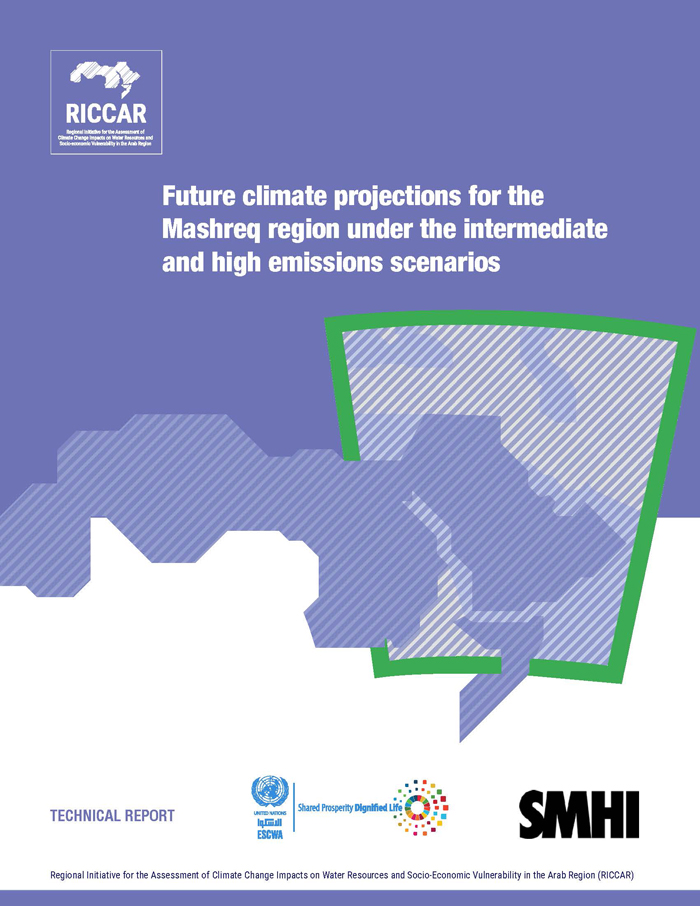
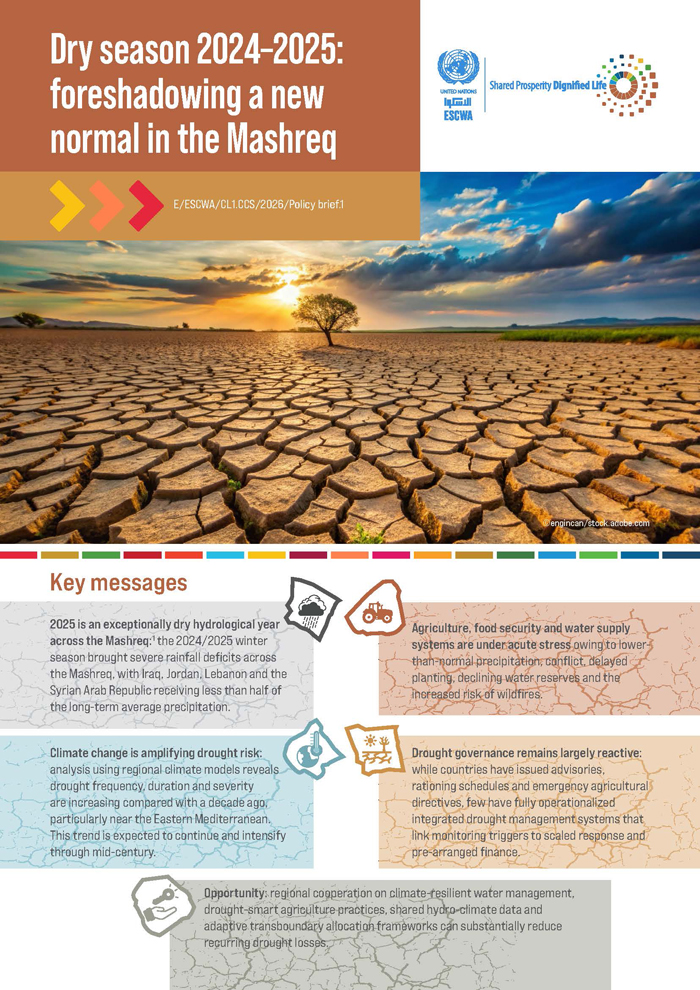
The Mashreq, including Iraq, Jordan, Lebanon and the Syrian Arab Republic, entered the 2025 summer under severe water stress, driven by below-average precipitation and escalating sectoral vulnerabilities. The present policy brief examines the concurrent occurrence of meteorological, agricultural and hydrological droughts, highlighting their impact on agriculture, water and food security, energy, environment and health. It calls for an integrated multi-sectoral and cooperative approach to drought risk management, emphasizing regional planning, early warning systems, climate-resilient agriculture, water efficiency technologies, and institutional strengthening.
The 2025 dry season may foreshadow a new climate reality for the Mashreq, underscoring the urgency of timely action to mitigate humanitarian, environmental and economic consequences, particularly in countries still recovering from conflict and its spillover effects.
Related content
Climate change, Natural resource sustainability
The Mashreq, including Iraq, Jordan, Lebanon and the Syrian Arab Republic, entered the 2025 summer under severe water stress, driven by below-average precipitation and escalating sectoral vulnerabilities. The present policy brief examines the concurrent occurrence of meteorological, agricultural and hydrological droughts, highlighting their impact on agriculture, water and food security, energy, environment and health. It calls for an integrated multi-sectoral and cooperative approach to drought risk management, emphasizing regional planning, early warning systems, climate-resilient agriculture, water efficiency technologies, and institutional strengthening.
The 2025 dry season may foreshadow a new climate reality for the Mashreq, underscoring the urgency of timely action to mitigate humanitarian, environmental and economic consequences, particularly in countries still recovering from conflict and its spillover effects.