ESCWA Publication: E/ESCWA/CL1.CCS/2026/Guide.1
Country: Arab region, Arab Republic of Egypt, Republic of Iraq, Hashemite Kingdom of Jordan, Kingdom of Morocco, Kingdom of Saudi Arabia
Publication Type: Information material
Cluster: Climate Change and Natural Resource Sustainability
Focus Area: Climate change, Natural resource sustainability
Initiatives: Water-Energy-Food nexus support to post-COVID-19 recovery
SDGs: Goal 13: Climate Action
Keywords: Agricultural legislation, Agricultural product marketing, Agricultural trade, Arab countries, Case studies, Digital technology, Egypt, Electronic commerce, Electronic funds transfer, Food loss, Food security, Iraq, Jordan, Logistics, Morocco, Principles, Recommendations, Saudi arabia
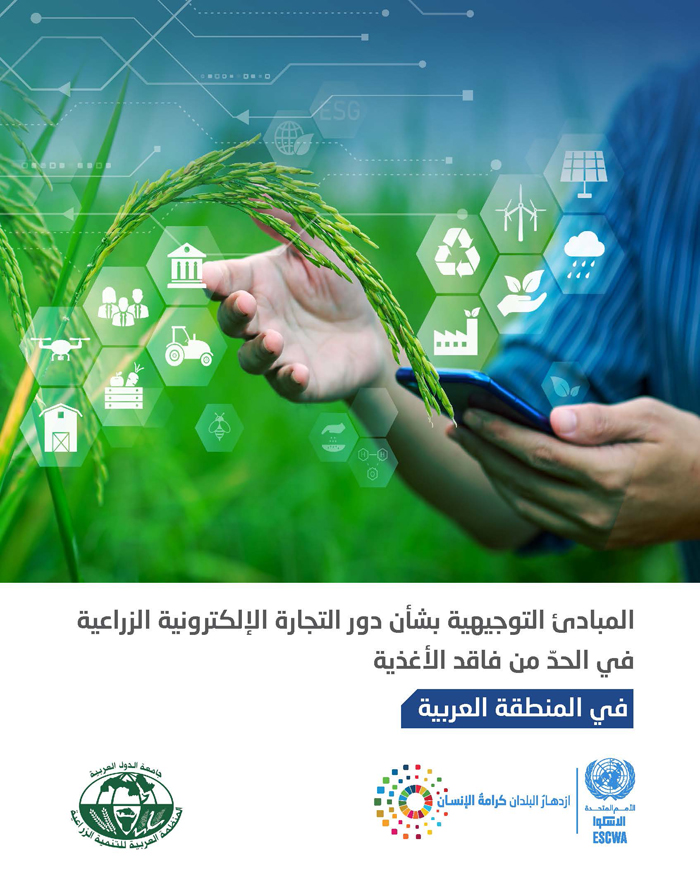
Guidelines on the role of e-commerce in agriculture to reduce food loss in the Arab region
March 2026
The present guidelines provide a practical framework for enhancing the role of e-commerce in modernizing the agricultural sector and reducing food loss by improving the efficiency of supply chains and expanding access to markets. This approach responds to persistent food security challenges facing the Arab region, including inadequate logistics infrastructure, limited digital skills and varying levels of readiness among countries.
The guidelines draw on an analysis of 24 global digital platforms to identify key success factors and assess the readiness of Arab countries to adopt e-commerce in agriculture, while providing practical recommendations for farmers, entrepreneurs, digital platforms, business support organizations and policymakers. Priority areas include strengthening digital and logistics infrastructure, developing electronic payment systems, and improving regulatory frameworks to ensure data protection and enhance cybersecurity. The guidelines also emphasize the importance of establishing strategic partnerships, adopting hybrid service models that combine digital solutions with direct support, and providing integrated service packages that include financing, logistics services and advisory support. Through these approaches, the Arab region can build a sustainable ecosystem for e-commerce in agriculture capable of reducing food loss, strengthening food security and supporting inclusive economic growth.
Related content
Climate change, Natural resource sustainability
The present guidelines provide a practical framework for enhancing the role of e-commerce in modernizing the agricultural sector and reducing food loss by improving the efficiency of supply chains and expanding access to markets. This approach responds to persistent food security challenges facing the Arab region, including inadequate logistics infrastructure, limited digital skills and varying levels of readiness among countries.
The guidelines draw on an analysis of 24 global digital platforms to identify key success factors and assess the readiness of Arab countries to adopt e-commerce in agriculture, while providing practical recommendations for farmers, entrepreneurs, digital platforms, business support organizations and policymakers. Priority areas include strengthening digital and logistics infrastructure, developing electronic payment systems, and improving regulatory frameworks to ensure data protection and enhance cybersecurity. The guidelines also emphasize the importance of establishing strategic partnerships, adopting hybrid service models that combine digital solutions with direct support, and providing integrated service packages that include financing, logistics services and advisory support. Through these approaches, the Arab region can build a sustainable ecosystem for e-commerce in agriculture capable of reducing food loss, strengthening food security and supporting inclusive economic growth.