
ESCWA Publication: E/ESCWA/CL2.GPID/2025/Policy brief.8
Country: Kingdom of Morocco
Publication Type: Policy briefs
Cluster: Gender Justice, Population and Inclusive Development
Focus Area: Inclusive development, Future of employment
Initiatives: Reducing inequalities, Arab Digital Inclusion Platform, Including persons with disabilities in the labour market, Job creation
SDGs: Goal 8: Decent Work and Economic Growth, Goal 10: Reduced Inequalities
Keywords: Accessibility, Employers, Employment creation, Empowerment, Entrepreneurship, Labour market, Morocco, Persons with disabilities, Private sector, Recommendations, Technical cooperation
Integrating persons with disabilities into the labour market in Morocco: opportunities and challenges
November 2025
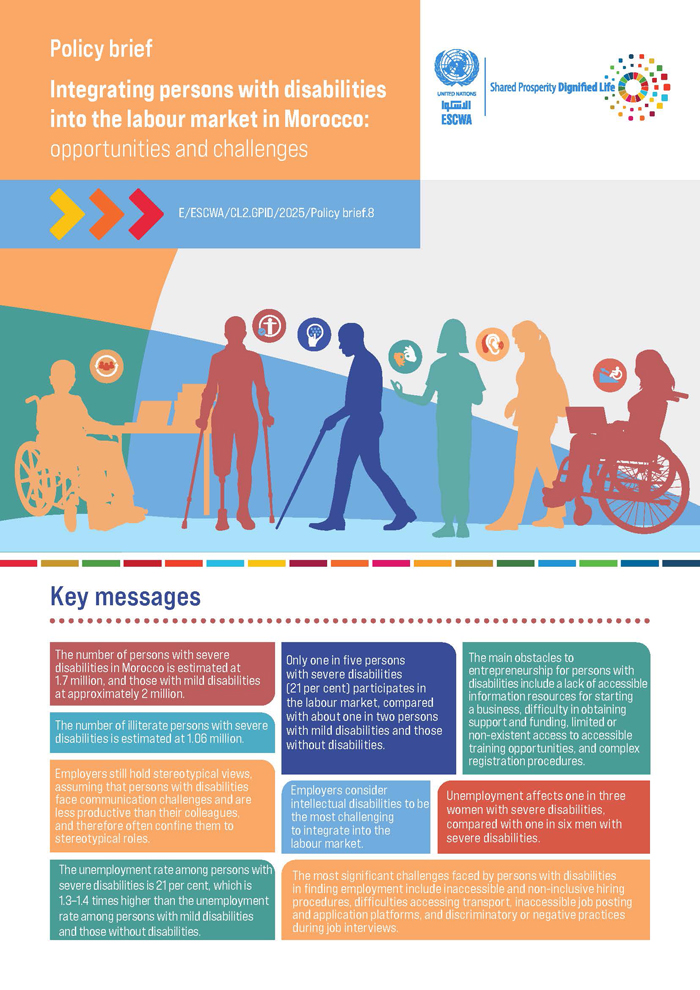
The present policy brief examines the economic inclusion of persons with disabilities in Morocco, highlighting the gaps that continue to limit their equitable participation in the labour market and entrepreneurship, despite legislative and institutional developments supporting their rights.
The present policy brief is based on a recent study by the Economic and Social Commission for Wester Asia (ESCWA) that included surveys and interviews with persons with disabilities and private sector companies to identify challenges and opportunities in the workplace and entrepreneurship. It concludes with recommendations aimed at promoting economic and social inclusion and ensuring equal opportunities and effective participation in sustainable development.
Related content
Inclusive development, Future of employment
The present policy brief examines the economic inclusion of persons with disabilities in Morocco, highlighting the gaps that continue to limit their equitable participation in the labour market and entrepreneurship, despite legislative and institutional developments supporting their rights.
The present policy brief is based on a recent study by the Economic and Social Commission for Wester Asia (ESCWA) that included surveys and interviews with persons with disabilities and private sector companies to identify challenges and opportunities in the workplace and entrepreneurship. It concludes with recommendations aimed at promoting economic and social inclusion and ensuring equal opportunities and effective participation in sustainable development.