ESCWA Publication: E/ESCWA/CL2.GPID/2026/TC.2
Country: Hashemite Kingdom of Jordan
Publication Type: Information material
Cluster: Gender Justice, Population and Inclusive Development
Focus Area: Inclusive development, Population dynamics & migration
Initiatives: Older persons, Reducing inequalities
SDGs: Goal 3: Good Health and Well-Being, Goal 10: Reduced Inequalities
Keywords: Adult education, Ageing persons, Care of ageing persons, Empowerment, Gender equality, Government policy, Healthcare delivery, Jordan, Labour market, Legal aspects, Non-governmental organizations, Nursing homes, Policy making, Political participation, Productive ageing, Public institutions, Public transport, Social justice, Social media, Domestic violence, Social security, Training programmes, Technical cooperation, Urban planning
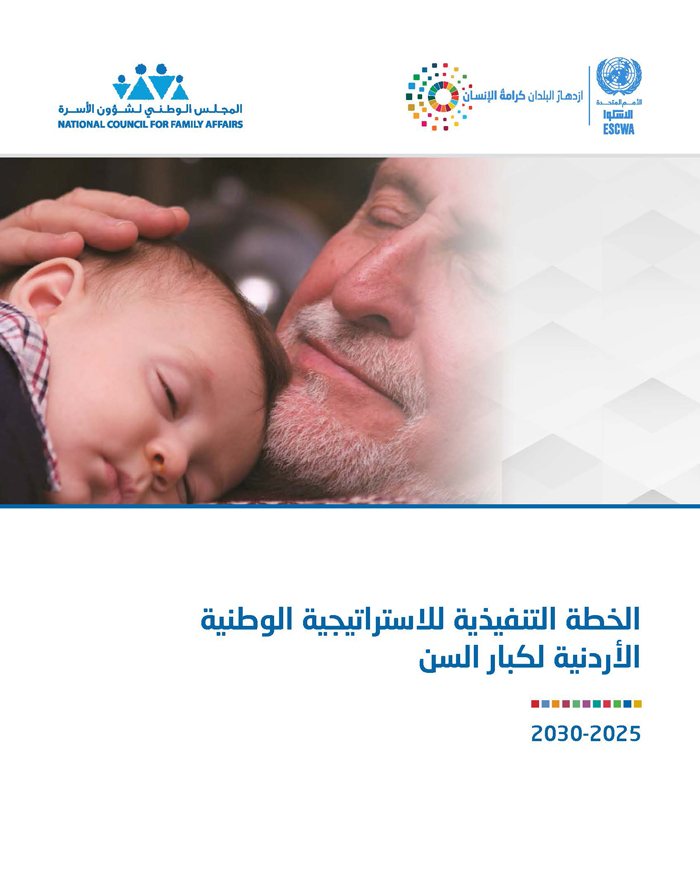
Action Plan for the National Strategy for Older Persons in Jordan 2025–2030
April 2026
Jordan is undergoing a rapid demographic transition characterized by a growing proportion of older persons. While it poses rising challenges for social protection and healthcare systems, it also creates opportunities to strengthen the role of older persons as active human and social capital. In response to these changes, Jordan launched the third edition of its National Strategy for Older Persons (2025–2030). To ensure effective implementation, a Plan of Action was developed through collaboration between the National Council for Family Affairs, national and international partners, and in coordination with the Economic and Social Commission for Western Asia (ESCWA).
This approach aims to enhance implementation, institutional coordination, evidence-based monitoring, and multi-sectoral partnerships. The Plan of Action is structured around eight key pillars, namely social protection and income security; healthcare; social care; participation and intergenerational solidarity; protection of older persons from violence; enabling and supportive environments; strengthening the knowledge base; and coordination and partnerships.
Related content
Inclusive development, Population dynamics & migration
Jordan is undergoing a rapid demographic transition characterized by a growing proportion of older persons. While it poses rising challenges for social protection and healthcare systems, it also creates opportunities to strengthen the role of older persons as active human and social capital. In response to these changes, Jordan launched the third edition of its National Strategy for Older Persons (2025–2030). To ensure effective implementation, a Plan of Action was developed through collaboration between the National Council for Family Affairs, national and international partners, and in coordination with the Economic and Social Commission for Western Asia (ESCWA).
This approach aims to enhance implementation, institutional coordination, evidence-based monitoring, and multi-sectoral partnerships. The Plan of Action is structured around eight key pillars, namely social protection and income security; healthcare; social care; participation and intergenerational solidarity; protection of older persons from violence; enabling and supportive environments; strengthening the knowledge base; and coordination and partnerships.