Priorities for Advancing Sustainable Management of Transboundary Waters
Topic 1: Informed Decision Making in Transboundary Water Cooperation (TBWC)
- Conduct scientific assessments at the national then at the transboundary level to support decision-making.
- Assess existing legal frameworks and conventions related to shared aquifers and evaluate enforcement of prior agreements and treaties.
- Establish a national water information system to manage shared aquifers.
- Utilize tools and mechanisms provided by Water Conventions to support transboundary decision-making.
Topic 2: Climate Change Resilience in Transboundary Contexts
- Review and update national adaptation policies and strategies for climate resilience.
- Promote stakeholder participation to raise awareness and encourage water-saving practices.
- Modify irrigation patterns to adapt to changing climate conditions and use non-conventional water resources and implement water harvesting techniques
- Plan based on climate change impact models on groundwater and apply remote sensing and other technologies to study aquifers.
- Develop joint approaches with riparian countries through collaborative projects.
- Secure international cooperation, funding, and technology transfer.
Topic 3: Overcoming Resource Constraints for Improving TBWC
- Develop a strategic action plan for transboundary waters with input from local experts.
- Consider creating an Arab fund to support studies and initiatives, backed by participating countries and donors.
- Engage with UN conventions (ex: 1992 UN Water Convention) to facilitate access to funding and technical assistance.
- Standardize methodologies across borders and Involve the private sector using principles like “polluter pays.”
Topic 4: Enhancing National Policies, Management, and Institutions to Support TBWC
- Align national laws and regulations with UN Conventions (ex: 1997 UN Watercourses Convention).
- Empower national institutions (ministries, agencies) financially and technically.
- Establish national committees to facilitate TBWC discussions.
- Train personnel in negotiation, governance, and transboundary water management.
- Create national research units focused on transboundary resource management and innovation.
- Engage civil society and the private sector to enhance transparency and public support.
- Align with regional programs and initiatives and attract international supporters and donors.
Topic 5: Intersectoral Cooperation for Better Use of Transboundary Resources
- Foster cooperation between sectors like agriculture, meteorology, and environment to maintain water quality and optimize use.
- Develop and implement action plans to address illegal wells and enforce water.
- Standardize water data collection and promote information exchange.
- Establish committees to oversee monitoring and ensure compliance.


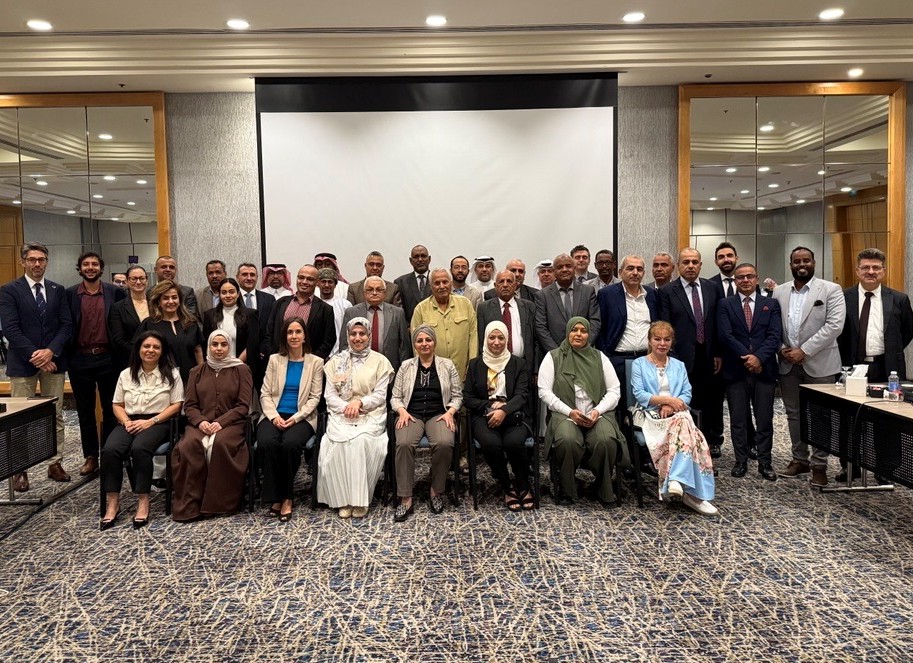





 UN House, Beirut, Lebanon
