Artificial intelligence (AI) is reshaping how businesses operate, innovate and compete, creating new opportunities for small and medium enterprises (SMEs) and startups in the Arab region to increase productivity, develop new products and services, and reach new markets. At the Fourth Arab SMEs Summit on 19 November, a spotlight panel explored what this rapid transition means for smaller businesses and how to ensure its benefits are shared across the region.
AI adoption varies considerably across Arab countries. In the second half of 2025, AI was used by 64% of the working-age population in the United Arab Emirates and 38.3% in Qatar, compared with 27% in Jordan, 13.4% in Egypt, 12.7% in Tunisia, 12% in Algeria, 11.2% in Iraq and 10.9% in Morocco. The global average stood at 16.3%. These figures reflect significant disparities in digital infrastructure, skills, investment and institutional readiness.
Momentum is particularly strong in Gulf Cooperation Council countries, where AI-related venture capital investment has reached around $1.6 billion since 2021. Elsewhere, countries are building the foundations for wider adoption. Iraq, for example, has developed a National Strategy for Artificial Intelligence focusing on institutional, regulatory, infrastructure and human-capital conditions.
For SMEs, AI can make tools for data analysis, customer service, marketing and forecasting more accessible. Yet realizing these benefits depends on reliable digital infrastructure, affordable technology, relevant data, adequate financing and appropriate skills.
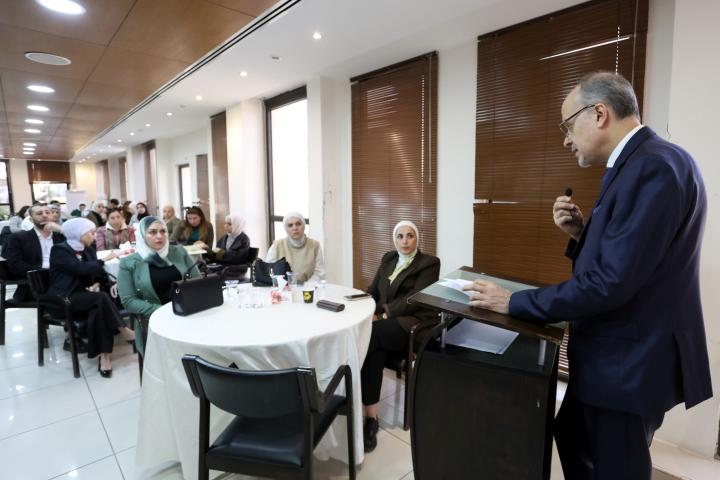
The panel brought together Mohammed Allahou of UNDP, Rama Chakaki of Qatar Science & Technology Park, and Baleegh Abu Kalal of Iraq’s Communications and Media Commission. Discussions focused on creating an enabling and inclusive ecosystem where SMEs at different levels of readiness can participate in and benefit from the AI transition, while strengthening trust, data protection, transparency, cybersecurity and responsible AI use.