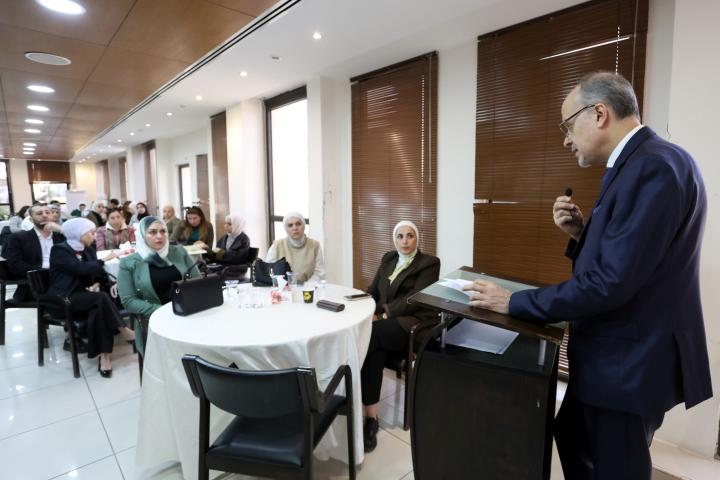
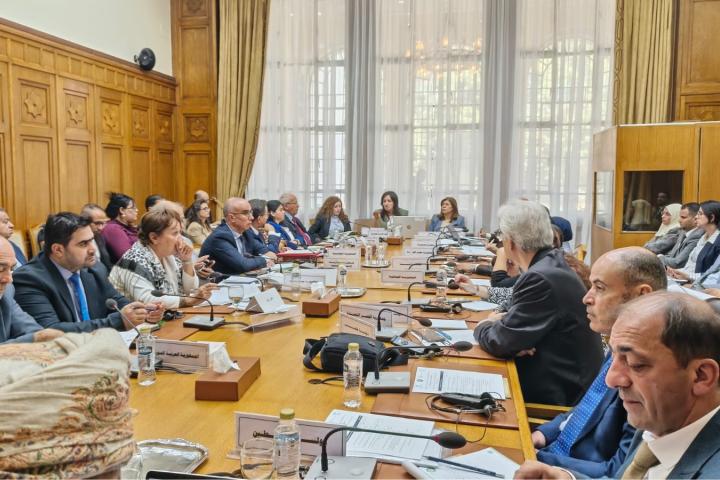
Policymakers, private sector representatives and experts from across the Arab region came together in Baghdad, Iraq, at the Fourth Arab SMEs Summit for a two-day policy dialogue on strengthening the environment in which micro, small and medium-sized enterprises (MSMEs) operate. Held on 18 and 19 November, the dialogue focused on moving from exchanging experiences to identifying practical policy solutions and areas for regional cooperation.
With SMEs accounting for an estimated 96% of businesses in Arab countries and contributing up to 40% of regional GDP, discussions recognized their central role in employment, economic diversification and resilience, while addressing persistent barriers to their growth.
Internationalization and e-commerce, business formalization, and access to finance
On the first day, discussions focused on internationalization and e-commerce, formalization, and access to finance. Participants examined ways to help SMEs expand into regional and global markets through digital trade, export support and better logistics and payment systems. They also considered practical pathways for bringing enterprises into the formal economy through simplified procedures, digital registration and incentives, as well as financing instruments including credit guarantees, blended finance, fintech, Islamic finance and concessional lending.
Digital and emerging technologies, green economy, andshared policy priorities and regional cooperation actions
The second day turned to digital and emerging technologies and the green economy. Discussions explored policies that can help SMEs use artificial intelligence and other technologies to improve productivity and competitiveness, while addressing gaps in digital skills, data readiness, cloud adoption and cybersecurity. Participants also examined how green finance, clean technologies, resource efficiency and circular economy approaches can support more resilient and sustainable SMEs.
Across the five thematic tracks, country experiences provided a basis for identifying approaches that could be adapted to different national contexts. Each round table was designed to generate a policy recommendation and a regional cooperation action, with the final discussion bringing the tracks together around shared priorities and follow-up.
The dialogue ultimately sought to turn regional diversity into an opportunity for peer learning and cooperation, supporting more inclusive, resilient and forward-looking SME policies across the Arab region.