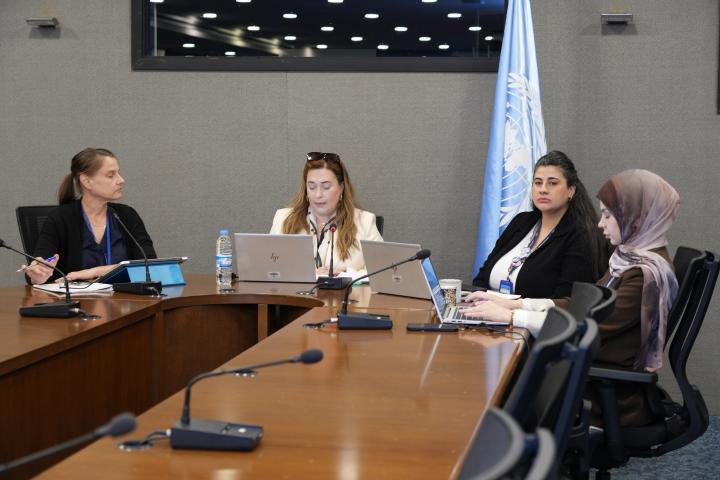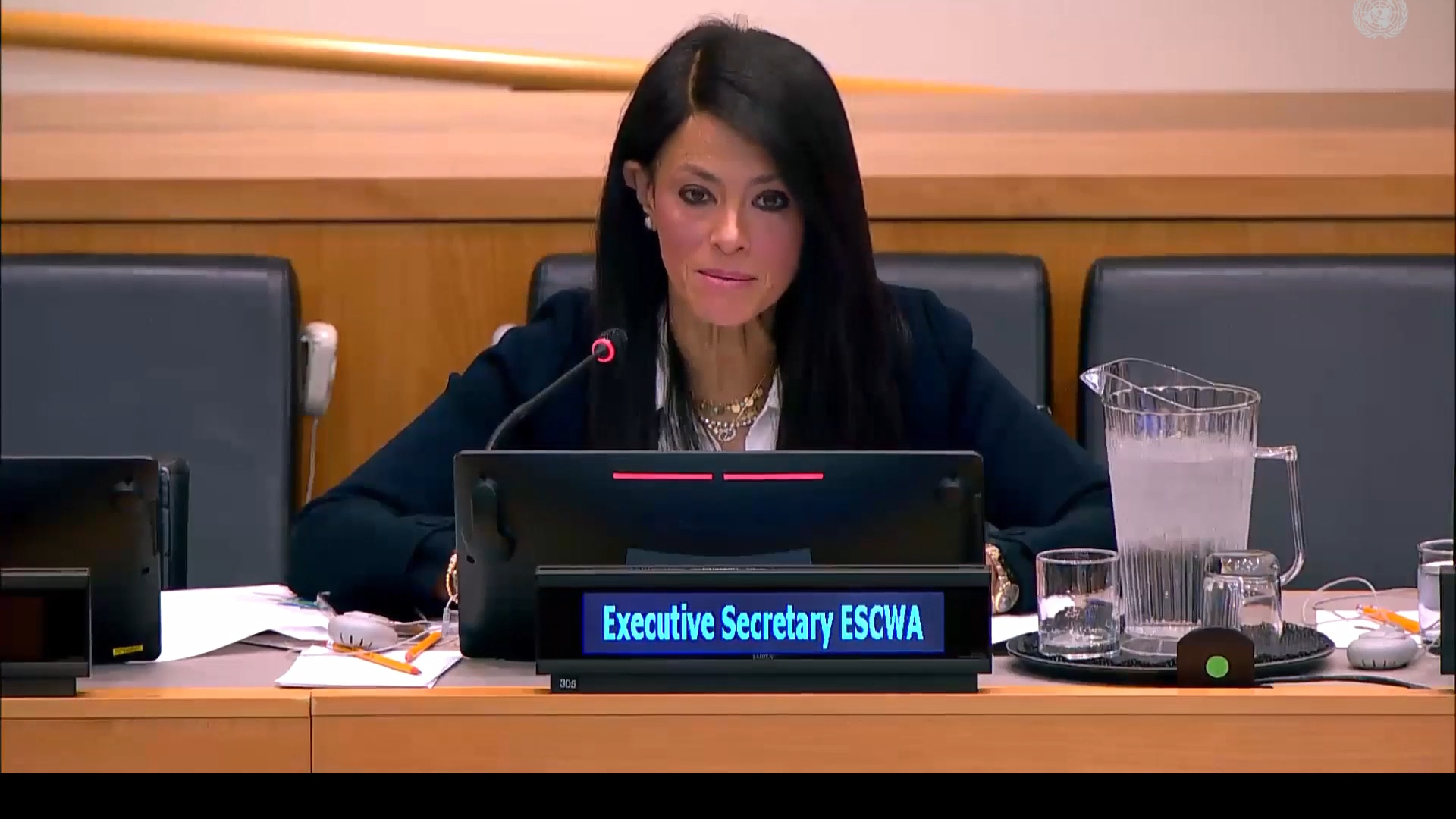
Regional cooperation is more vital than ever to tackle shared vulnerabilities and advance sustainable development amid geopolitical tensions, climate shocks and financing constraints. That was the central message of UN Under-Secretary-General and ESCWA Executive Secretary Rania Al-Mashat at the Dialogue of the Second Committee of the United Nations General Assembly with the Executive Secretaries of the five regional commissions, held in New York on 20 October.
The stakes are especially high in the Arab region: nearly 90% of its population lives in water-scarce countries, while the annual sustainable development financing gap is estimated at $1 trillion.
Al-Mashat identified three priorities for stronger regional cooperation: connectivity, capability and convergence. Together, they can help countries reinforce institutions, pool knowledge and resources, and build resilience to challenges that cross national borders.
Regional energy cooperation can cut costs, strengthen energy security and unlock investment, while deeper digital connectivity can widen access to data and knowledge. The Arab Development Portal of ESCWA, for example, brings together more than 175,000 datasets and over one million publications and reports for all the Commission’s member States.
Cooperation can also ease financing pressures. ESCWA estimates that debt swaps covering just 25% of bilateral debt-service payments could create about $2.5 billion in additional fiscal space each year across the region, which could be channelled into Sustainable Development Goal and climate investments.
The dialogue delivered a clear message: regional cooperation can cut costs, mobilize investment, strengthen resilience and accelerate implementation, turning shared geography into shared opportunity.
Member States have actively engaged in the dialogue, namely Egypt, Jordan, Lebanon, Morocco, Qatar, the Sudan, Syria, and Tunisia.
Watch the full session here: https://webtv.un.org/en/asset/k1f/k1f2cy23ac.