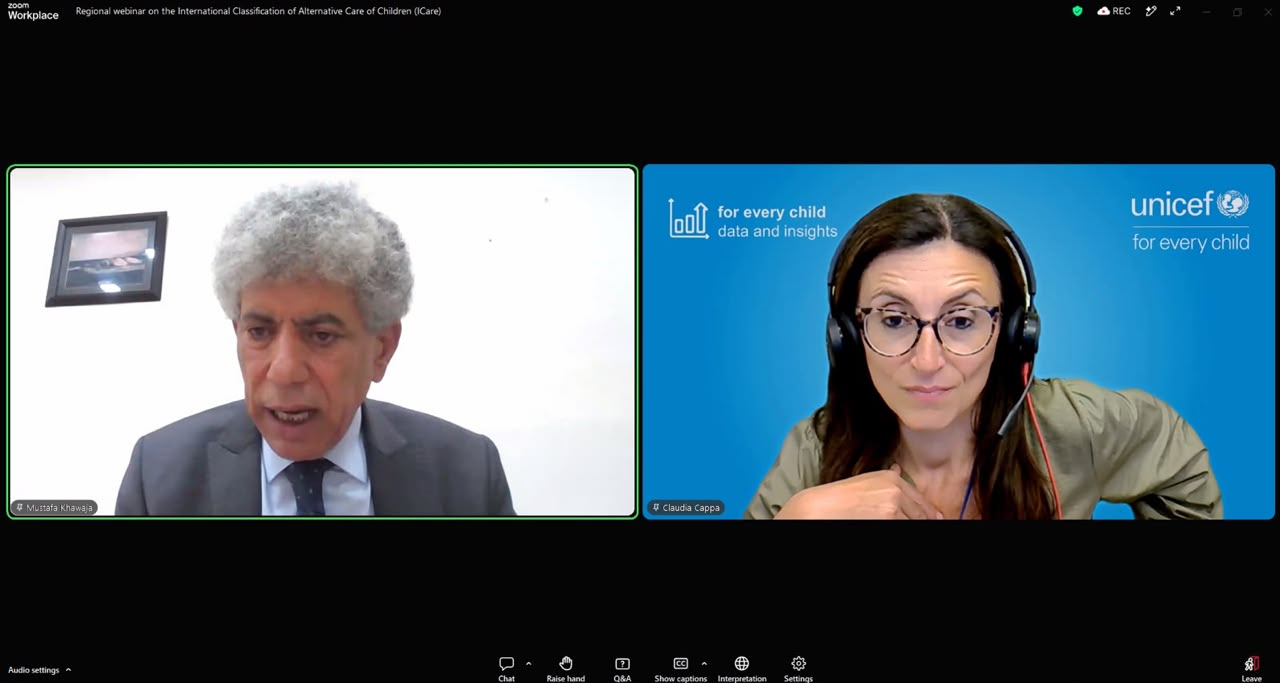
On 29 September, ESCWA, in collaboration with the UNICEF Office of Strategy and Evidence (Innocenti), held a regional webinar on the International Classification of Alternative Care for Children (ICare), with the participation of representatives from national statistical agencies, institutions, and stakeholders in child protection, data production, and data use in Arab countries.
The webinar highlighted the importance of the classification as an international statistical framework that contributes to unifying concepts, definitions, and classifications of alternative care for children, and enhancing consistency in collecting, producing, and disseminating data. The use of this framework will help countries improve data quality and comparability, identify information gaps, and provide a stronger evidence base to support national policies and programmes related to child protection and well-being.
“These efforts are of particular importance within the context of implementing the 2030 Agenda for Sustainable Development,” Head of the Statistical Policies and Coordination Unit at ESCWA Mustafa Khawaja underscored. “Improving data on children in alternative care and linking it with other national data sources can enhance the available statistical picture for monitoring the situation of children and the most vulnerable groups,” he added.
The webinar comes as a follow-up to the outcomes of the fifty-seventh session of the United Nations Statistical Commission, held last March, and within efforts aimed at introducing the International Classification of Alternative Care for Children and enhancing its utilization at the national level.
Participants engaged in dialogue and exchanged expertise on ways to implement the classification in the Arab region. They also discussed challenges related to data availability, quality, and the integration of sources, as well as the role of national statistical offices and child protection institutions in developing more integrated and sustainable data systems.
ESCWA and UNICEF emphasized the importance of continued cooperation with Arab countries to transform the classification from an international standard into a practical, nationally applicable tool. This will enhance the production of reliable and comparable data on children in alternative care, helping policymakers identify gaps, direct interventions and resources, and monitor progress towards ensuring appropriate protection and care for every child.