
ESCWA Publication: E/ESCWA/CL1.CCS/2026/1
Country: Arab region
Publication Type: Flagship publications
Cluster: Climate Change and Natural Resource Sustainability
Focus Area: Natural resource sustainability
Initiatives: Arab Centre for Climate Change Policies
SDGs: Goal 2: Zero Hunger, Goal 11: Sustainable Cities and Communities
Keywords: Arab countries, Armed conflicts, Food policy, Food prices, Food reserves, Food security, Governance, Government policy, Institutional machinery, Natural resources, Recommendations, Stakeholder engagement, Subsidies, Trade policy
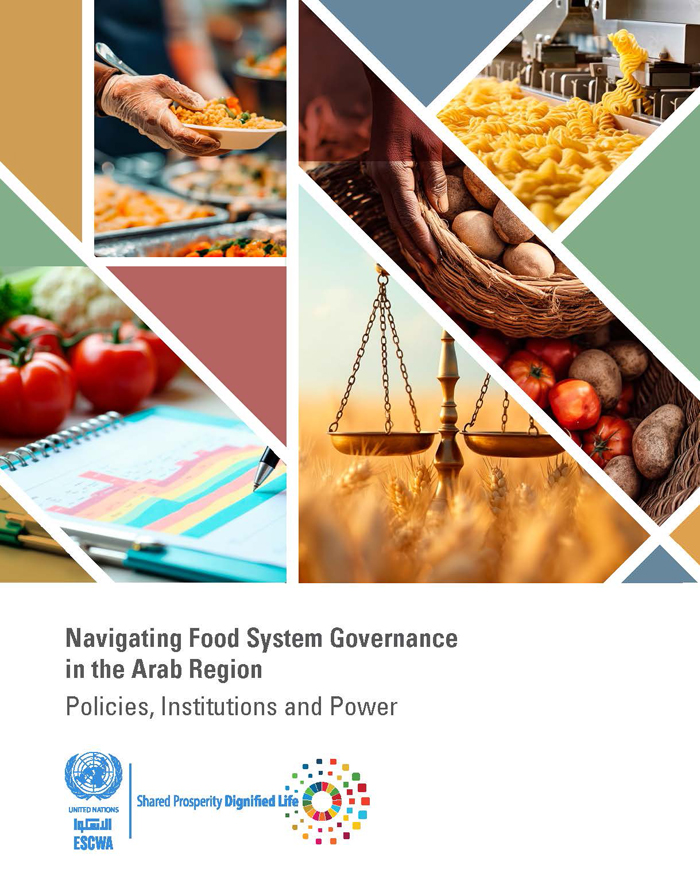
Navigating Food System Governance in the Arab Region: Policies, Institutions and Power
January 2026
Transforming food systems in the Arab region is an urgent and complex challenge. Countries must meet the nutritional, economic and social needs of their populations while confined by fragile ecosystems. Governments must ensure food availability and reliable imports amid unequal global trade relations. Many countries are tasked with rebuilding their food systems in the aftermath of conflict, while trying to break cycles of food insecurity. Central to addressing these challenges is effective governance, which shapes how resources are managed, power is exercised, and development objectives are pursued.
This report highlights governance as a central pillar for transforming food systems in the Arab region. It stresses the importance of clear vision and policy orientation in guiding impactful action. It also discusses the role of robust institutional structures that balance centralization and decentralization while enhancing coordination across stakeholders. The report emphasizes institutional effectiveness, including accountability mechanisms, data and monitoring systems, and stakeholder participation. Key policy areas, including strategic food reserves, trade policies and food subsidies, are presented to illustrate how good governance can guide coordinated, evidence-based and participatory approaches. The report offers actionable insights for policymakers, development partners and practitioners committed to driving food system transformation across the Arab region.
Related content
Natural resource sustainability
Transforming food systems in the Arab region is an urgent and complex challenge. Countries must meet the nutritional, economic and social needs of their populations while confined by fragile ecosystems. Governments must ensure food availability and reliable imports amid unequal global trade relations. Many countries are tasked with rebuilding their food systems in the aftermath of conflict, while trying to break cycles of food insecurity. Central to addressing these challenges is effective governance, which shapes how resources are managed, power is exercised, and development objectives are pursued.
This report highlights governance as a central pillar for transforming food systems in the Arab region. It stresses the importance of clear vision and policy orientation in guiding impactful action. It also discusses the role of robust institutional structures that balance centralization and decentralization while enhancing coordination across stakeholders. The report emphasizes institutional effectiveness, including accountability mechanisms, data and monitoring systems, and stakeholder participation. Key policy areas, including strategic food reserves, trade policies and food subsidies, are presented to illustrate how good governance can guide coordinated, evidence-based and participatory approaches. The report offers actionable insights for policymakers, development partners and practitioners committed to driving food system transformation across the Arab region.