Policy briefs
Gaza war: expected socioeconomic impacts on the State of Palestine
May 2024
Strengthening policy analysis through national CGE models
2014 – Ongoing

Arab economies face structural economic challenges, including climate change, limited economic diversification, fiscal constraints, high unemployment, an expanding public sector and concentrated trade patterns. These pressures make it increasingly important to understand how policies and shocks affect sectors and economic actors across the economy.
Single-country computable general equilibrium (CGE) models help Governments assess these economy-wide effects of policies and shocks in the Arab region. They are especially useful for planning and scenario analysis.
ESCWA develops single-country CGE models to capture interactions among sectors, households and government entities within an economy. The models integrate labour force data and household consumption surveys, enabling analysis of the economy-wide effects of policy changes, such as tax reforms, trade liberalization, and infrastructure investments.
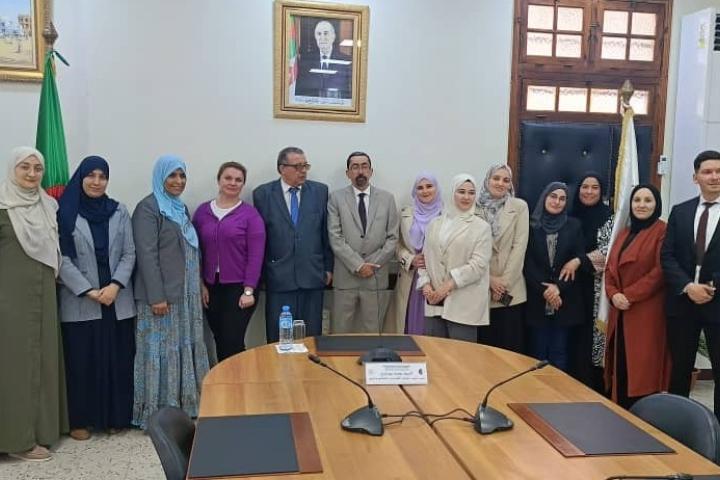
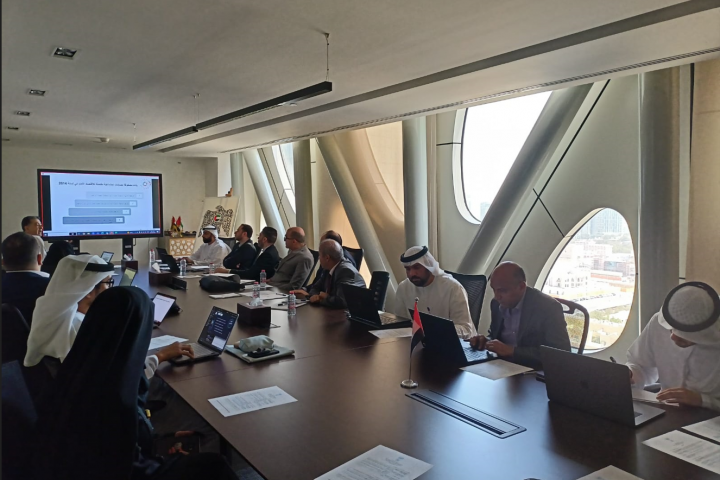
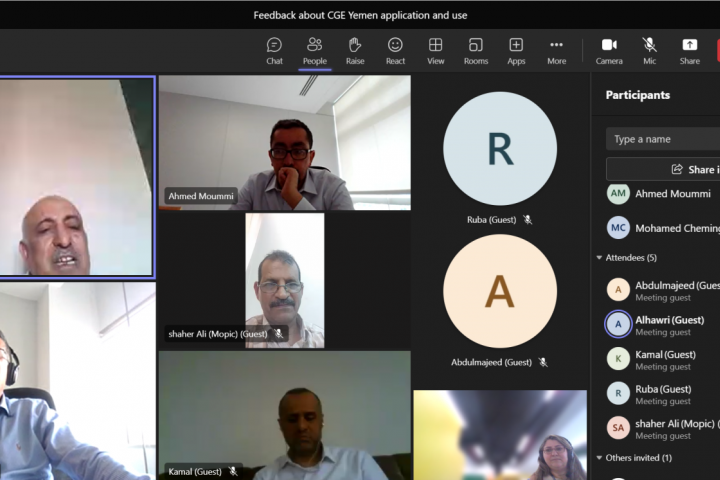
ESCWA has supported at least 11 Arab countries in constructing social accounting matrices, developing and calibrating country models, and strengthening the capacity of technical government officials to use them for policy simulations. These countries are Algeria, Egypt, Jordan, Mauritania, Oman, State of Palestine, Saudi Arabia, Somalia, Syrian Arab Republic, United Arab Emirates and Yemen.
ESCWA works with the United Nations Development Programme (UNDP) and member States to advance single-country CGE modelling and support its use in policy analysis.
Activities include constructing social accounting matrices (SAM) to capture transactions among households, firms, government and foreign sectors.
They also include developing customized CGE models for member countries to simulate economic conditions and policy impacts.
Additionally, the Policy Simulation and Impact Analysis Interface enables policymakers to simulate alternative economic policies and assess their macroeconomic and sectoral impacts in real time.
Scenario planning helps Governments test and refine strategies before implementation.
Capacity-building activities train technical government staff in model development, calibration, validation, interpretation and application using national statistics.


 Algiers, Algeria