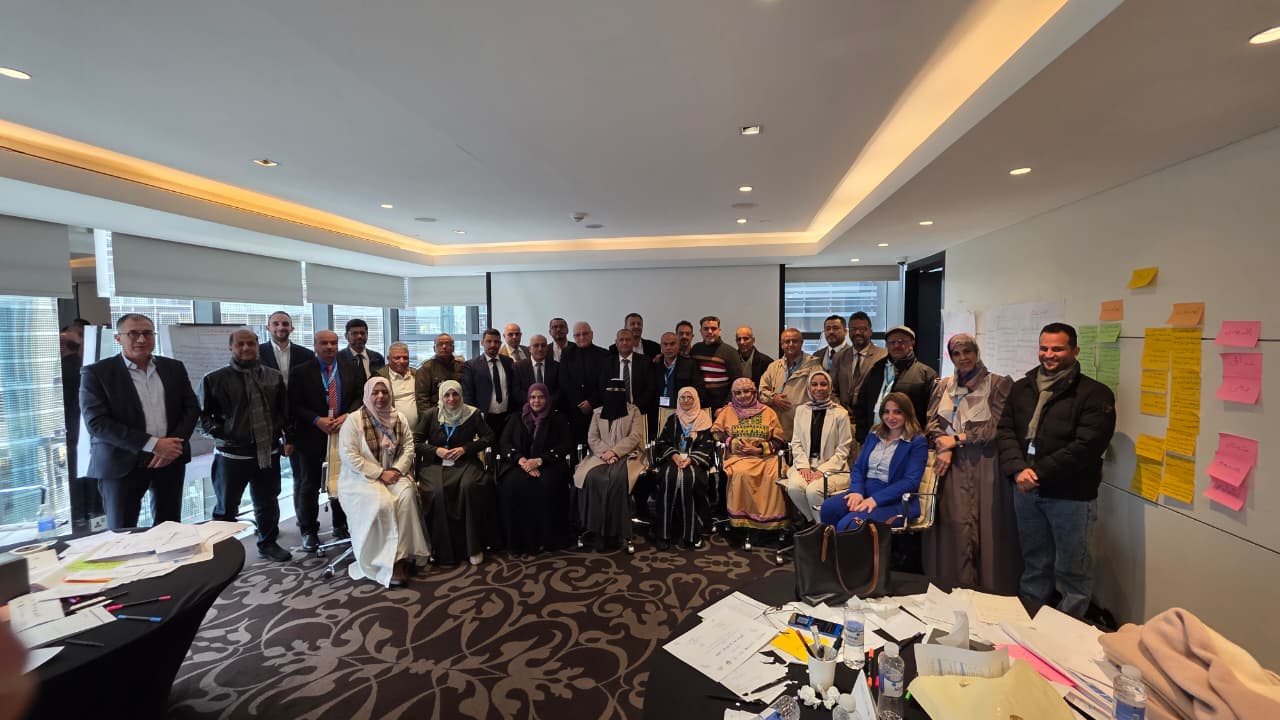
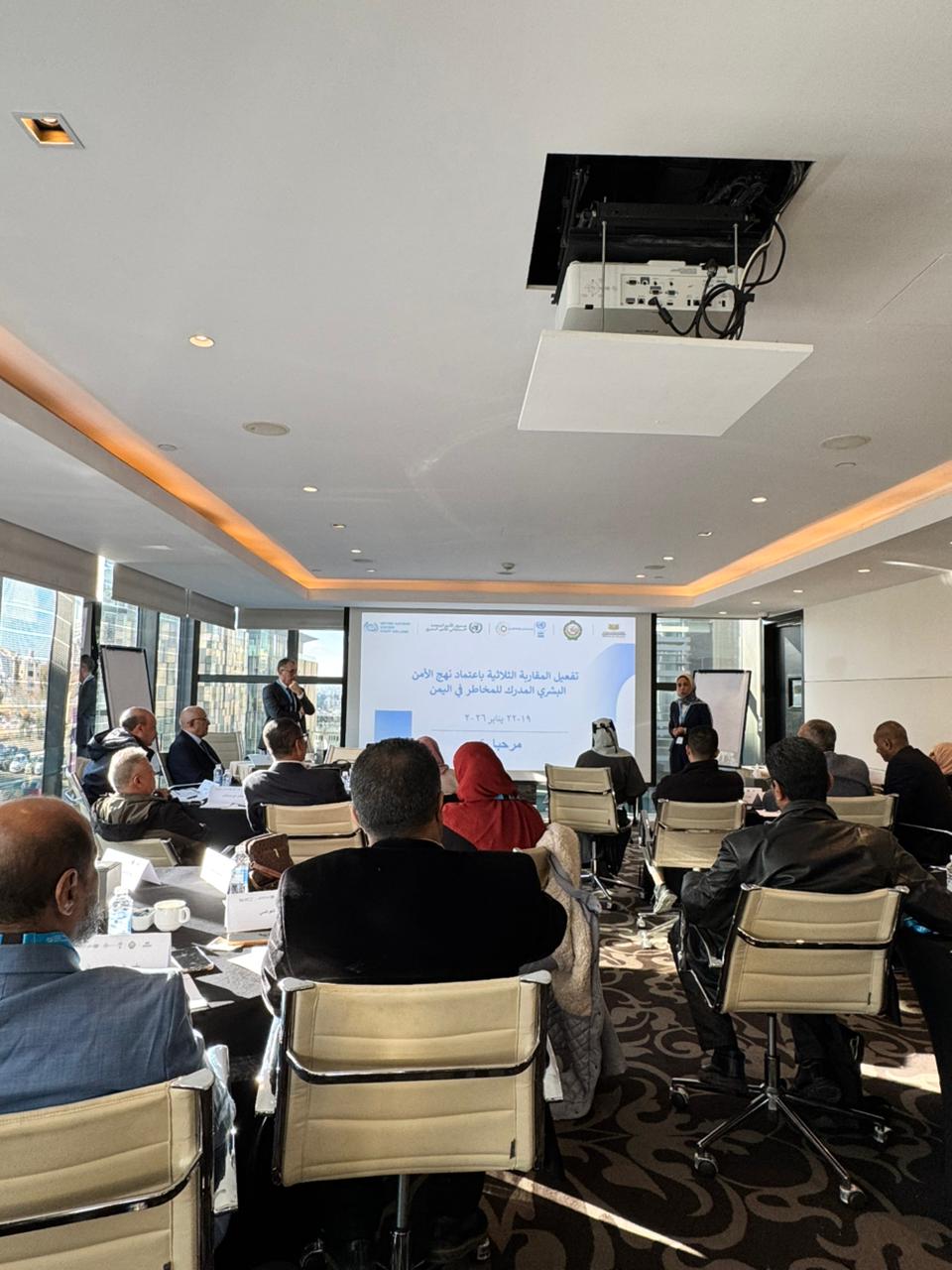
The Yemeni National Workshop on Operationalizing the Triple Nexus through a Risk-informed Human Security Approach was held in Amman, Jordan, from 19 to 22 January 2026, with the participation of relevant national stakeholders. The workshop aimed to strengthen a shared understanding of the Human Security approach as a practical framework for advancing coherence between humanitarian, development, and peace interventions within the Yemeni context.
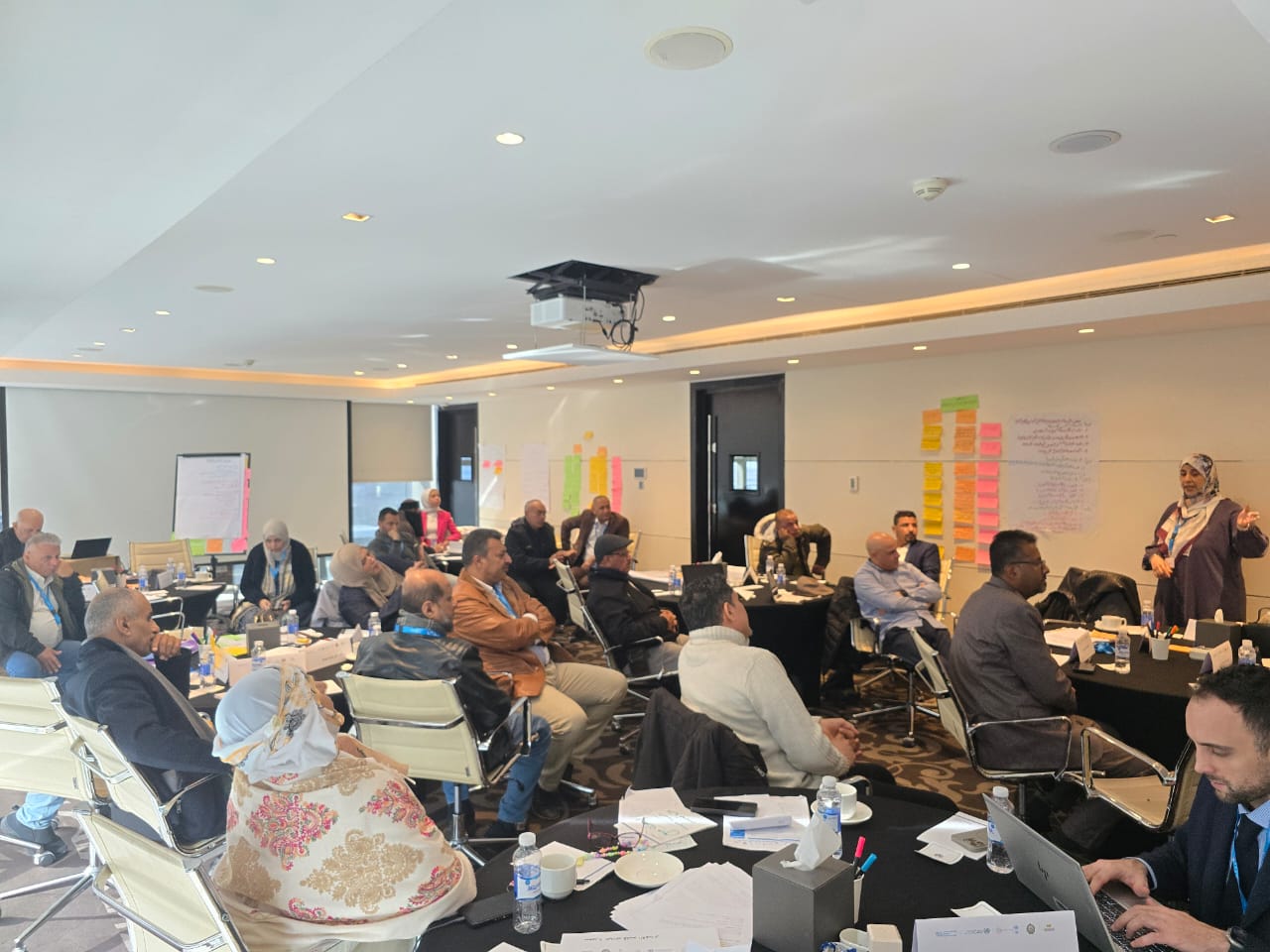
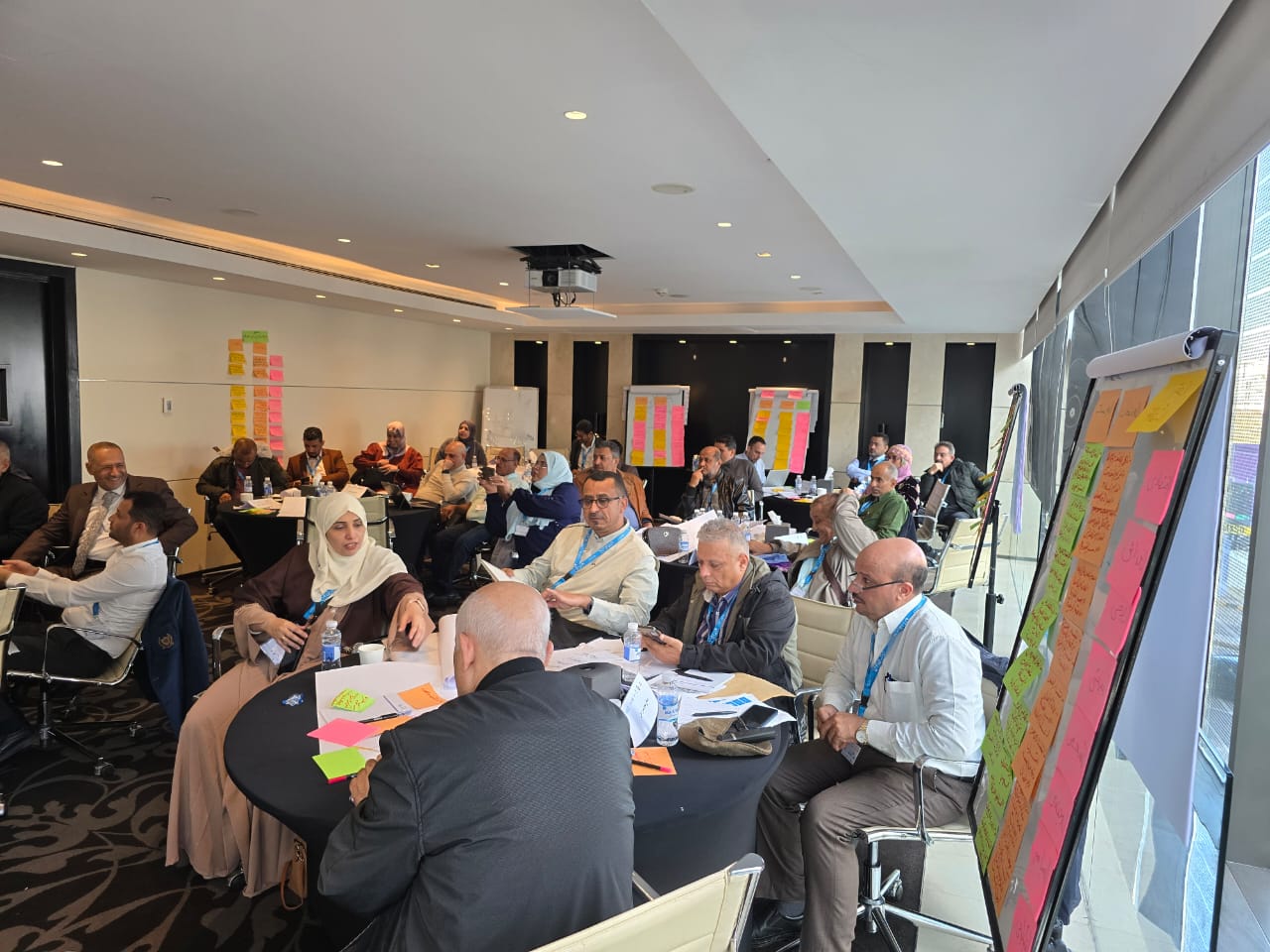
The workshop provided an interactive platform for dialogue, joint analysis, and collaborative learning. It adopted a participatory methodology centered on practical exercises and group work, enabling participants to move systematically from contextual analysis toward the identification of collective outcomes and the definition of implementation pathways at both the national and local levels.
1. Strengthened understanding of the Human Security approach and the Triple Nexus
Participants developed a comprehensive understanding of the Human Security concept, its operational principles, and its added value in addressing complex and protracted crisis contexts. The discussions clarified how the Human Security approach can serve as an enabling framework to overcome fragmented, sector-based interventions and promote integrated action across humanitarian, development, and peace efforts, placing people and their dignity at the center of policy and programming.
2. Joint analysis of the current situation and multidimensional risks
The workshop facilitated a shared analysis of the current situation in Yemen, leading to the identification of key national-level threats and risks. Participants examined the root causes of these risks across global, regional, national, and local levels, contributing to a more nuanced and collective understanding of Yemen’s interconnected and multidimensional challenges.
3. Assessment of the impact of risks on Human Security dimensions
Building on the situation analysis, participants examined the cascading effects of identified risks on individuals, communities, institutions, and the State. This process strengthened understanding of how risks interact across different dimensions of Human Security and how vulnerabilities accumulate and reinforce one another.
4. Mapping needs and vulnerabilities
The workshop enabled the identification of different population groups, with particular attention to those most vulnerable or at risk of being left behind. Participants analyzed how these groups are affected differently by overlapping challenges, resulting in a preliminary mapping of needs and vulnerabilities to guide more targeted and inclusive interventions.
5. Identification of collective outcomes
Based on the joint analysis, participants reached consensus on a set of collective outcomes representing shared national priorities. These outcomes reflected areas of convergence across humanitarian, development, and peace actors and provided a common results framework to guide coordinated action moving forward.
6. Assessment of capacities, resources, and gaps
Participants mapped existing capacities, resources, and assets at the community, group, and institutional levels, while also identifying key gaps that hinder progress toward the agreed collective outcomes. This exercise supported realistic planning and helped clarify areas requiring additional support or coordination.
7. Development of integrated protection and empowerment strategies
The workshop resulted in the formulation of hybrid and integrated strategies combining protection and empowerment measures. These strategies aimed to strengthen community resilience, address structural vulnerabilities, and support a shift from short-term responses toward sustainable recovery and development pathways.
8. Agreement on coordination and implementation mechanisms
Participants reached agreement on the broad parameters of implementation at the national and local levels. This included identifying the lead ministry for the collective outcomes, mapping existing coordination mechanisms and policy frameworks, and outlining ways to strengthen joint action in support of Human Security programming.
9. Clarification of roles and next steps
The workshop concluded with agreement on the roles and responsibilities of the national working group, as well as the definition of concrete next steps to ensure continuity of engagement and translation of the workshop outcomes into actionable follow-up processes.
Overall, the workshop represented a key milestone toward institutionalizing the Human Security approach as a practical framework for operationalizing the Triple Nexus in Yemen. It laid a strong foundation for sustained collaboration, evidence-based planning, and people-centered action that supports recovery, peacebuilding, and long-term sustainable development.



 Athens, Greece
