Beirut, 26 May 2026 – The impacts of conflict in the Arab region will not be limited to the immediate loss of lives, homes, and livelihoods; they will also create long-term shockwaves that deepen intergenerational inequality and threaten the future of millions.
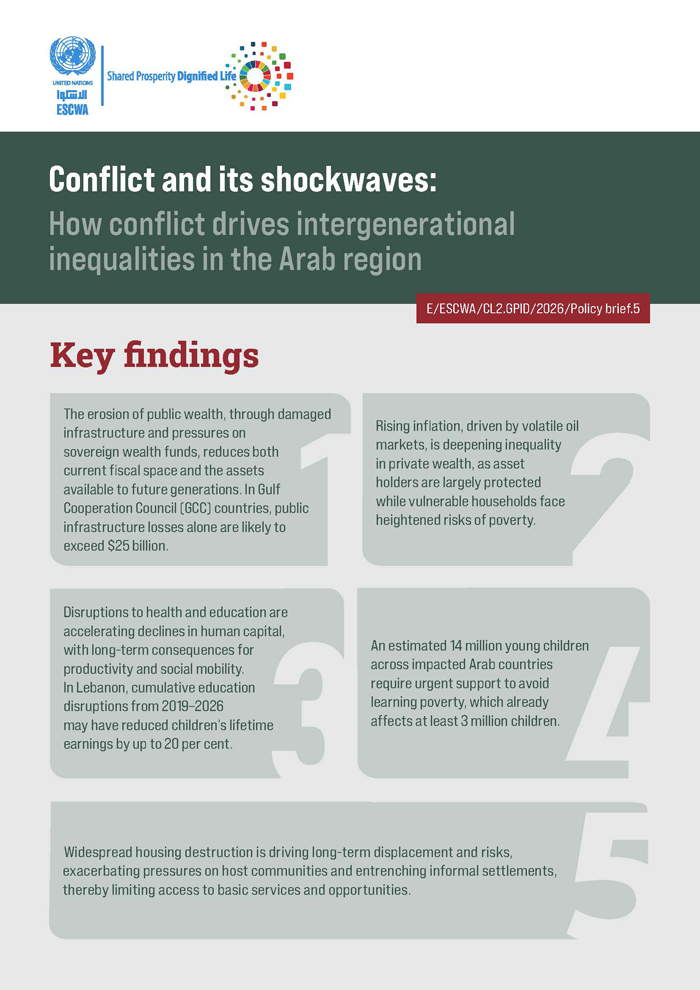
Some 14 million children in affected Arab countries will require urgent support to avoid falling into learning poverty—defined as the inability to read and understand a simple text by age 10—which already affects no fewer than 3 million children. These and other findings are highlighted in a new policy brief issued today by the United Nations Economic and Social Commission for Western Asia (ESCWA), as part of its series of studies on the situation in the region, titled “Conflict and its shockwaves: How conflict drives intergenerational inequalities in the Arab Region”.
The brief adds that cumulative education disruptions in Lebanon threaten to widen the skills gap and undermine the prospects of future generations, potentially leading to a decline in their lifetime earnings by up to 20%. Lebanon is experiencing some of the most severe repercussions of the conflict, with approximately 1.2 million people displaced, placing unprecedented pressure on infrastructure and public services. Infrastructure losses have been estimated at billions of dollars, complicating economic recovery efforts and limiting the country’s ability to invest in essential services.
In the Gulf Cooperation Council (GCC) countries, estimates indicate that critical infrastructure has sustained significant damage due to the repercussions of the conflict, with damages in some sectors exceeding $25 billion to date. These losses directly affect public wealth and fiscal space, including increasing pressure on sovereign wealth funds, which are a key pillar in safeguarding the well-being of future generations.
In this context, ESCWA Acting Executive Secretary Mourad Wahba stressed the need to take urgent action to prevent the intergenerational transmission of poverty and to protect education through strategic long-term investment planning, in order to avoid entrenching inequality for decades in the Arab region.
The brief highlights that conflict severely affects labour markets in the region, as the destruction of workplaces and restrictions on mobility have led to widespread job losses and supply chain disruptions. The informal sector has been the most affected, accounting for between 56% and 72% of total employment in the region and comprising between 65 and 84 million workers, most of whom lack social protection. This makes them among the first to be hit by shocks, suffering immediate and often lasting income losses.
Wahba added: “Social protection constitutes the first line of defence against the repercussions of conflict. Expanding its coverage during crises should not be optional, but rather a necessity to ensure the resilience of societies and to build a more equitable future.”
The brief recommends protecting investment in education and preventing disruptions; expanding social protection systems to support the most vulnerable groups; safeguarding and rebuilding public wealth in a fair and sustainable manner; and supporting livelihoods and creating decent job opportunities, particularly for youth and women.
The brief concludes that addressing the repercussions of conflict should not be limited to immediate humanitarian responses but must also focus on preventing the entrenchment of intergenerational inequality and ensuring a more just and sustainable future in the Arab region.
****
About ESCWA:
One of five United Nations regional commissions, ESCWA supports inclusive and sustainable economic and social development in Arab States, and works on enhancing regional integration.
For more information and to arrange interviews:
- Ms. Maryam Sleiman, Public Information Assistant
📞 +961 81 769 888 | ✉️ [email protected] - Ms. Rania Harb, Public Information Assistant
📞 +961 70 008 879 | ✉️ [email protected]