
ESCWA Publication: E/ESCWA/CL2.GPID/2026/Policy brief.5
Country: Arab region
Publication Type: Policy briefs
Publication Subject: Conflict and Its Shockwaves
Cluster: Gender Justice, Population and Inclusive Development
Focus Area: Inclusive development
Initiatives: Reducing inequalities, Addressing multidimensional poverty, Monitoring money-metric poverty
SDGs: Goal 1: No Poverty, Goal 4: Quality Education, Goal 10: Reduced Inequalities, Goal 16: Peace, Justice and Strong Institutions
Keywords: Arab countries, Discrimination, Education, Housing, Human resources, Labour market, Lebanon, Poverty mitigation, Recommendations, Recovery, Social mobility, War, Wealth, Humanitarian aid and relief
Conflict and its shockwaves: How conflict drives intergenerational inequalities in the Arab region
May 2026
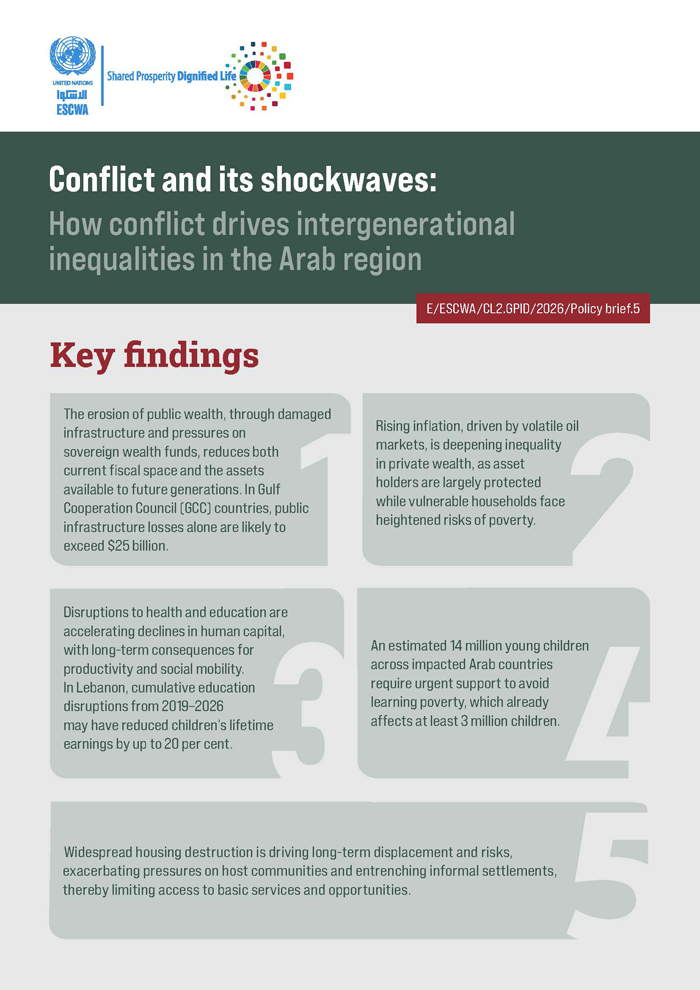
The present policy brief examines the immediate and intergenerational effects of the escalating conflict in the Arab region, focusing on how current shocks may shape inequality for generations to come. While the human and economic costs of war are immediate and severe, the brief argues that unequal recovery risks entrenching and amplifying pre-existing inequalities across and within countries. The analysis identifies four key channels, namely housing, wealth, human capital and labour markets, through which conflict can entrench inequality. Housing destruction and displacement risk long-term informal settlements and reduced access to services, while losses in public and private wealth constrain recovery. Moreover, disruptions to education and employment weaken human capital and lifetime earnings, especially for vulnerable groups.
The brief concludes that without deliberate and forward-looking policy interventions, conflict can transform temporary shocks into permanent structural disparities. It calls for an immediate ceasefire and urgent action to protect public wealth, expand social protection, safeguard education, support livelihoods, and prevent displacement from becoming protracted.
Related publications: Conflict and Its Shockwaves
Related content
Inclusive development
The present policy brief examines the immediate and intergenerational effects of the escalating conflict in the Arab region, focusing on how current shocks may shape inequality for generations to come. While the human and economic costs of war are immediate and severe, the brief argues that unequal recovery risks entrenching and amplifying pre-existing inequalities across and within countries. The analysis identifies four key channels, namely housing, wealth, human capital and labour markets, through which conflict can entrench inequality. Housing destruction and displacement risk long-term informal settlements and reduced access to services, while losses in public and private wealth constrain recovery. Moreover, disruptions to education and employment weaken human capital and lifetime earnings, especially for vulnerable groups.
The brief concludes that without deliberate and forward-looking policy interventions, conflict can transform temporary shocks into permanent structural disparities. It calls for an immediate ceasefire and urgent action to protect public wealth, expand social protection, safeguard education, support livelihoods, and prevent displacement from becoming protracted.
Related publications: Conflict and Its Shockwaves