
ESCWA Publication: E/ESCWA/CL2.GPID/2026/2
Country: Arab region, Global, Arab Republic of Egypt, Kingdom of Morocco, Republic of Tunisia
Publication Type: Flagship publications
Cluster: Gender Justice, Population and Inclusive Development
Focus Area: Gender equality, Inclusive development
Initiatives: Reducing inequalities, Women’s economic empowerment
SDGs: Goal 5: Gender Equality, Goal 10: Reduced Inequalities
Keywords: Africa, Arab countries, Asia, Economic conditions, Egypt, Employment, Government policy, Informal sector, Labour law, Latin america, Manpower, Morocco, Recommendations, Social justice, Social security, Tax systems, Tunisia, Women's employment, Young workers
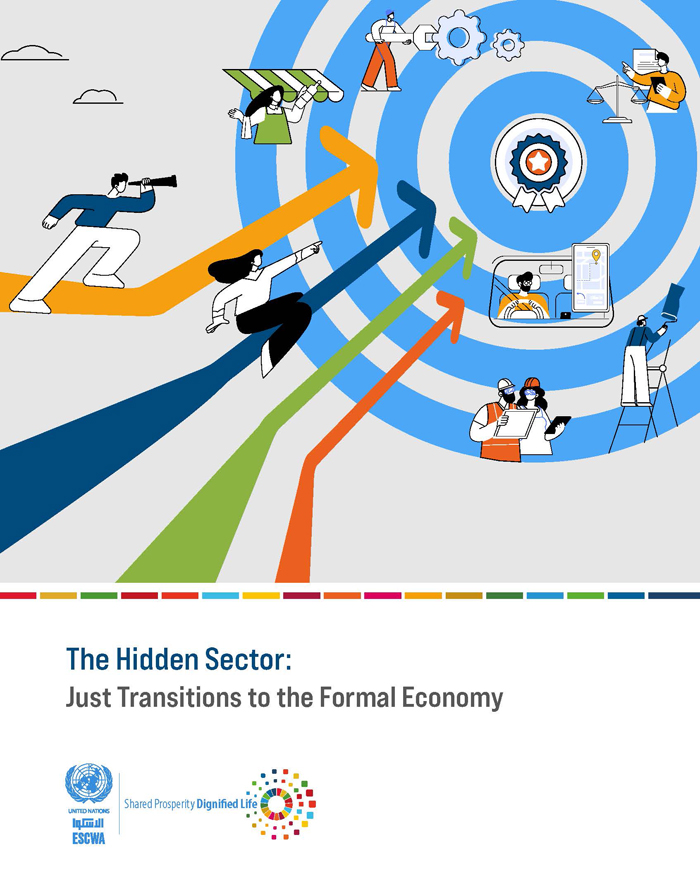
The Hidden Sector: Just Transitions to a Formal Economy
January 2026
The informal economy remains one of the most entrenched challenges in the Arab region, where nearly 72 per cent of workers operate outside the scope of labour regulations, social protection systems and financial inclusion mechanisms. Affecting an estimated 44.9 million individuals, informality disproportionately impacts young people, women and older persons. This report provides analysis of the drivers, characteristics and statistical trends of informality across the Arab region. It highlights the intersection of informality with structural unemployment, climate shocks, conflict and demographic pressures, showing how these reinforce cycles of exclusion and vulnerability.
The report calls for holistic, inclusive and sustained policy frameworks for streamlined registration and licensing, integrated digital tools, accessible financing and expanded social protection. Partnerships between Governments, employers, workers, civil society and regional organizations are essential to reducing informality and ensuring fair transitions.
Related content
Gender equality, Inclusive development
The informal economy remains one of the most entrenched challenges in the Arab region, where nearly 72 per cent of workers operate outside the scope of labour regulations, social protection systems and financial inclusion mechanisms. Affecting an estimated 44.9 million individuals, informality disproportionately impacts young people, women and older persons. This report provides analysis of the drivers, characteristics and statistical trends of informality across the Arab region. It highlights the intersection of informality with structural unemployment, climate shocks, conflict and demographic pressures, showing how these reinforce cycles of exclusion and vulnerability.
The report calls for holistic, inclusive and sustained policy frameworks for streamlined registration and licensing, integrated digital tools, accessible financing and expanded social protection. Partnerships between Governments, employers, workers, civil society and regional organizations are essential to reducing informality and ensuring fair transitions.