Policy briefs
A Shock that Travels: Remittances Under Pressure in the Arab Region
September 2026
Realizing women’s rights and achieving gender equality
2020 – Ongoing

Women's economic empowerment in the Arab region remains constrained by multifaceted challenges despite progress in legislative and policy reforms over the past decades. Many Arab countries have implemented legal changes to expand women's access to the labour market, ensure equal pay, and prevent workplace discrimination. Notable advancements have been made to enable women to work in previously restricted sectors and promote entrepreneurship through training programmes, financial incentives and policy support. These initiatives underscore the recognition of women as vital contributors to economic growth and sustainable development.
Nevertheless, the region faces significant obstacles to women’s economic empowerment. Cultural norms and deeply rooted societal biases continue to limit women’s ability to fully engage in economic activities. Women often encounter restricted access to financial resources, property ownership and professional networks. Additionally, gender gaps in labour force participation have persisted, with female participation rates in some Arab countries among the lowest globally. Unemployment rates for women remain disproportionately high, particularly in conflict-affected countries, where socio-political instability further exacerbates vulnerabilities. Women also bear the brunt of unpaid care work, which limits their availability for formal employment and economic opportunities.
To overcome these challenges, comprehensive and coordinated actions are essential. Governments must prioritize policies that dismantle cultural barriers, enforce gender-equitable labour laws and address structural inequalities. Investments in education, skill-building and financial inclusion for women, alongside efforts to redistribute unpaid care work and provide accessible childcare, are critical to fostering an enabling environment. Expanding women's leadership opportunities and ensuring their participation in decision-making processes across all sectors are equally pivotal for achieving gender-inclusive economic growth in the Arab region.
ESCWA supports its member States in advancing women's economic empowerment and addressing gender-based economic disparities through the following actions:
1. Conducting in-depth analyses at both regional and national levels to identify the key challenges hindering women's economic participation, and collaborating with member States to develop legislative, policy and programmatic solutions to overcome these obstacles.
2. Promoting women’s entrepreneurship and broader economic integration by preparing foundational documents and resources that facilitate and support their active participation in the economy.
ESCWA collaborates with a wide range of partners to achieve its goals. These include sister United Nations organizations such as the International Labour Organization (ILO), the United Nations Development Programme (UNDP), the United Nations Population Fund (UNFPA), and UN-Women, as well as national women's machineries, parliamentarians, government institutions, and non-governmental organizations advocating for women’s rights.
ESCWA promotes women’s economic empowerment by guiding progress from evidence to policy and impact, focusing on key dimensions such as time, income, assets, finance, skills, voice, and safety.
Through region-specific research on issues like unpaid care work, financial inclusion, leadership, wage disparities, and entrepreneurship, ESCWA provides a foundation for policy reform. The organization facilitates regional consultations and expert group meetings to turn findings into reforms that reflect Arab experiences and best practices.
ESCWA partners with national women’s machineries and public bodies to support the Action Plan to Achieve Gender Equality and Empower Women. This collaboration helps member States improve laws, budgets, data, and services, strengthening institutions to advance gender equality.
ESCWA provides practical technical guidance that transforms evidence into policy. By supporting equal pay for work of equal value and highlighting solutions to gender wage gaps, its research helps raise women’s earnings. Studies show that secure ownership of land and property strengthens women’s businesses by expanding access to credit and markets. ESCWA also facilitates financial inclusion through regional dialogue, demonstrating how access to accounts, credit, and digital services leads to firm creation and decent jobs for women. In partnership with UNFPA and UNICEF, ESCWA has measured the economic and social costs of child marriage, emphasizing the importance of integrated interventions in health, education, social protection, and labor markets. These efforts reveal that reforms in care systems, pay equity, asset rights, finance, skills, and safety work together to advance women’s participation, build resilient families, and drive inclusive growth and sustainable development across the Arab region.


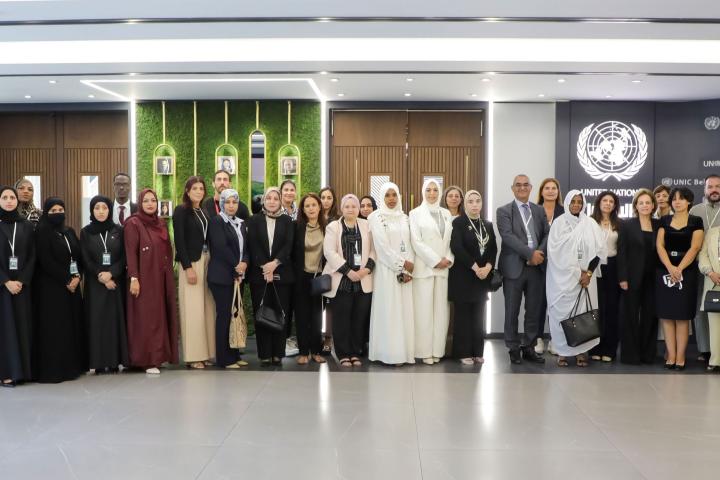
 UN-House, Beirut, Lebanon