
ESCWA Publication: E/ESCWA/CL2.GPID/2026/Policy brief.6
Country: Kingdom of Bahrain, Republic of Iraq, Hashemite Kingdom of Jordan, State of Kuwait, Lebanese Republic, State of Palestine, State of Qatar, United Arab Emirates
Publication Type: Policy briefs
Publication Subject: Conflict and Its Shockwaves
Cluster: Gender Justice, Population and Inclusive Development
Focus Area: Gender equality, Inclusive development
Initiatives: Reducing inequalities, Women’s economic empowerment, Care systems for women’s economic participation, Women, peace and security
SDGs: Goal 5: Gender Equality, Goal 8: Decent Work and Economic Growth, Goal 10: Reduced Inequalities
Keywords: Bahrain, Caregivers, Disaster prevention, Economic aspects, Financial inclusion, Financial services, Gender equality, Human security, Iraq, Jordan, Kuwait, Lebanon, Qatar, State of palestine, United arab emirates, Unpaid work, War, Women, Women's employment
Conflict and its shockwaves: Implications for the security and economic participation of women in the Arab region
May 2026
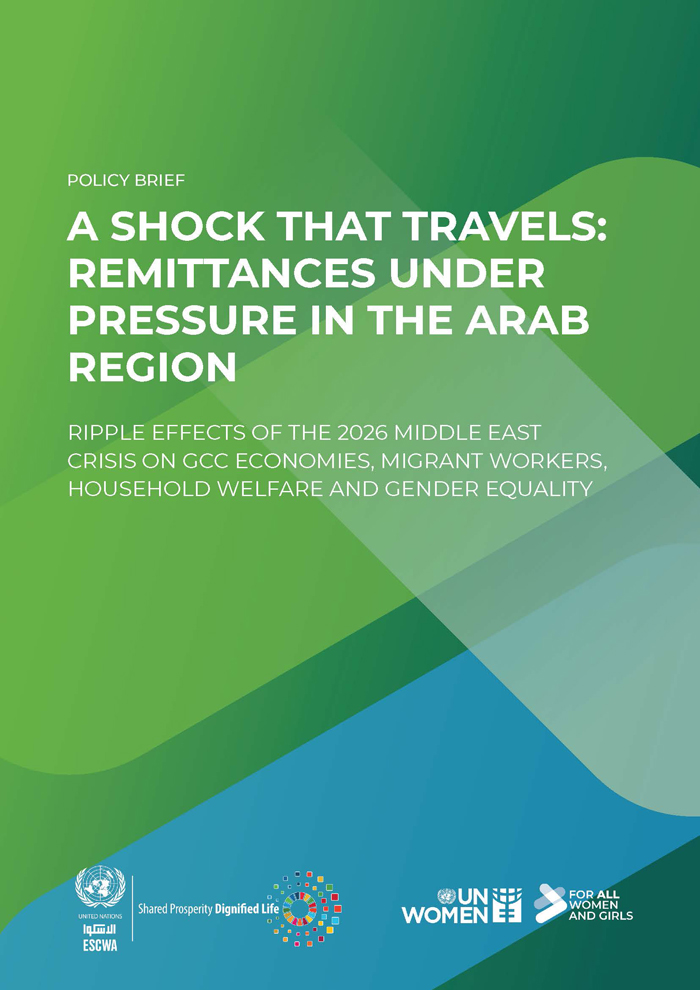
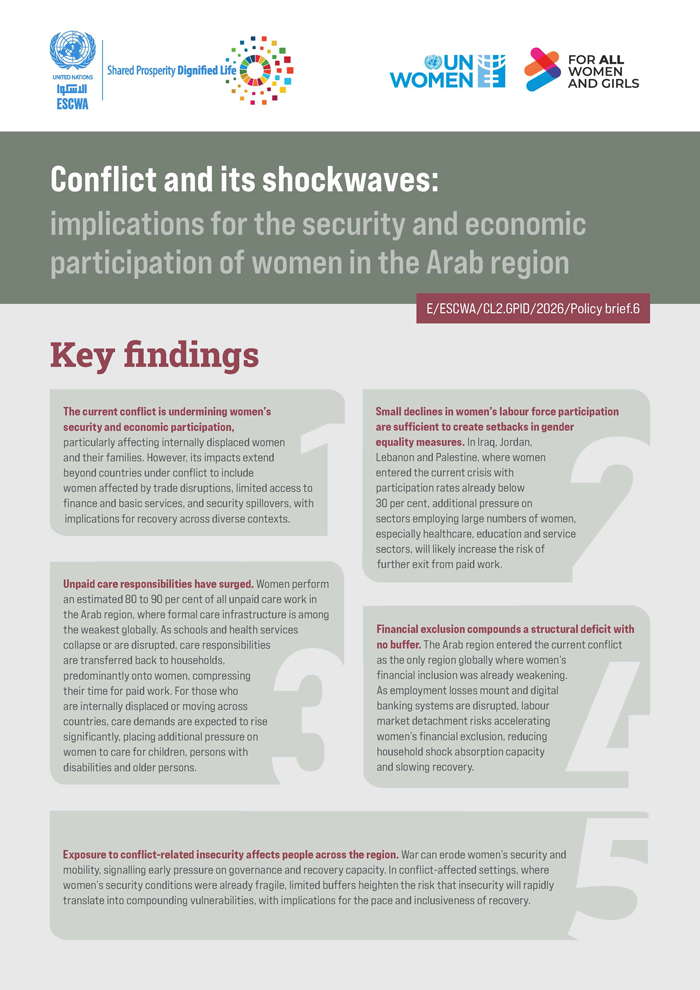
The present policy brief examines the impact of the current regional conflict on gender equality across four interconnected areas: security conditions, labour market participation, unpaid care responsibilities, and access to financial services. Using scenario-based simulations applied to the Women, Peace and Security Index, the Global Gender Gap Index, and the ESCWA Financial Inclusiveness Index, it illustrates how even modest setbacks in security, women’s employment, or digital payment systems can erode gains registered in international indices. The analysis is illustrative rather than predictive, designed to signal early pressure points rather than forecast outcomes. It highlights how conflict shifts care responsibilities back onto women, dismantling formal services precisely when care needs are rising and creating additional barriers to labour force participation, in a region where women’s participation rates were already among the lowest globally.
On this basis, the brief calls on Governments to consolidate and protect gains made for women in recent years, through targeted measures to maintain their presence in the labour market, integrate care into crisis response from the outset, and safeguard women’s access to financial services during active conflict and early recovery.
Related publications: Conflict and Its Shockwaves
Related content
Gender equality, Inclusive development
The present policy brief examines the impact of the current regional conflict on gender equality across four interconnected areas: security conditions, labour market participation, unpaid care responsibilities, and access to financial services. Using scenario-based simulations applied to the Women, Peace and Security Index, the Global Gender Gap Index, and the ESCWA Financial Inclusiveness Index, it illustrates how even modest setbacks in security, women’s employment, or digital payment systems can erode gains registered in international indices. The analysis is illustrative rather than predictive, designed to signal early pressure points rather than forecast outcomes. It highlights how conflict shifts care responsibilities back onto women, dismantling formal services precisely when care needs are rising and creating additional barriers to labour force participation, in a region where women’s participation rates were already among the lowest globally.
On this basis, the brief calls on Governments to consolidate and protect gains made for women in recent years, through targeted measures to maintain their presence in the labour market, integrate care into crisis response from the outset, and safeguard women’s access to financial services during active conflict and early recovery.
Related publications: Conflict and Its Shockwaves