Information material
Environmental, social and governance finance for enterprise circularity in the Arab region
September 2026
Enabling SME-led circularity and climate action through effective policies and support
2025 – Ongoing

The Arab region faces significant challenges in transitioning to a circular economy, including persistent reliance on linear models, environmental and social issues, and high unemployment—especially among young people and women. Small and medium enterprises (SMEs), which represent 80–90 per cent of businesses of most Arab economies, are crucial to driving circularity but encounter obstacles such as limited capacities, difficult access to finance and insufficient support.
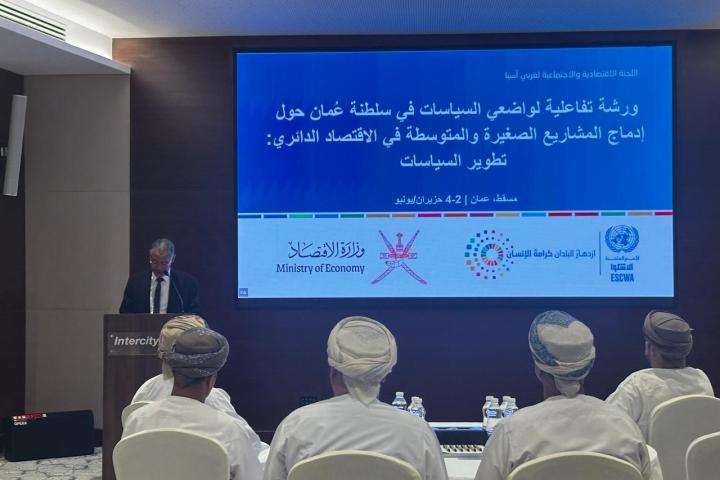
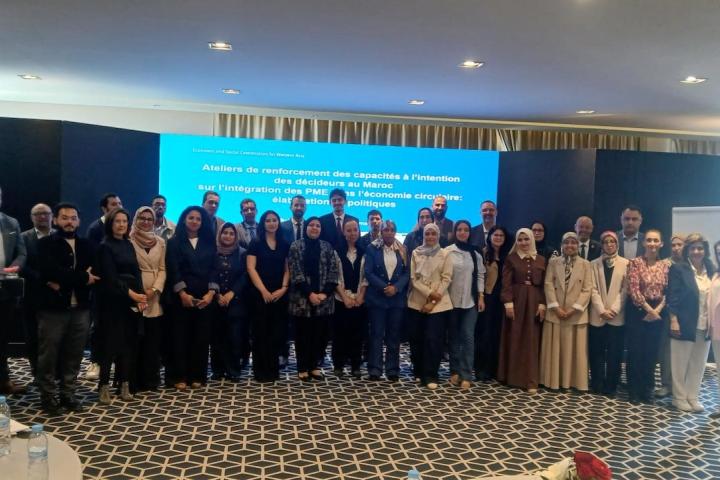
ESCWA has launched this regional initiative "Better Policies for Accelerated Transition to Circular Economy and Enhanced Climate Action in Arab States" to strengthen the capacities of institutions, policymakers, and SMEs in Lebanon, Morocco, and Oman. The aim is to create conditions that enable SME-driven circular practices and support climate action, resilience, and inclusive development. This initiative complements other ESCWA efforts, such as creating practical tools for mainstreaming circular economy principles, organising the Arab SMEs Summit to facilitate market and resource access for small businesses, and operating the Digital Enabling Platform for the Arab Region (DEPAR) to foster SME growth and innovation.
The project supports Lebanon, Morocco and Oman in accelerating the transition to a circular economy, focusing on two key outcomes:
This initiative is funded by the United Nations' Development Account.
Beneficiaries:
Policymakers; business support organizations and SMEs in Lebanon, Morocco and Oman.
Key stakeholders: ministries of industry, economy and environment; SME incubators; national research centres; universities; chambers of commerce and industry; civil society organizations; non-governmental organizations; and local governments and municipalities.
Collaborating entities:
Countries benefit from tailored workshops, advisory services and institutional support to strengthen the enabling environment for circularity.
ESCWA is also developing key resources, such as a regional policy framework, toolbox and monitoring tool, to guide and track SME integration into circular economy models. A regional expert network and consultation meetings is intended to facilitate experience-sharing and foster collaboration across sectors and countries.


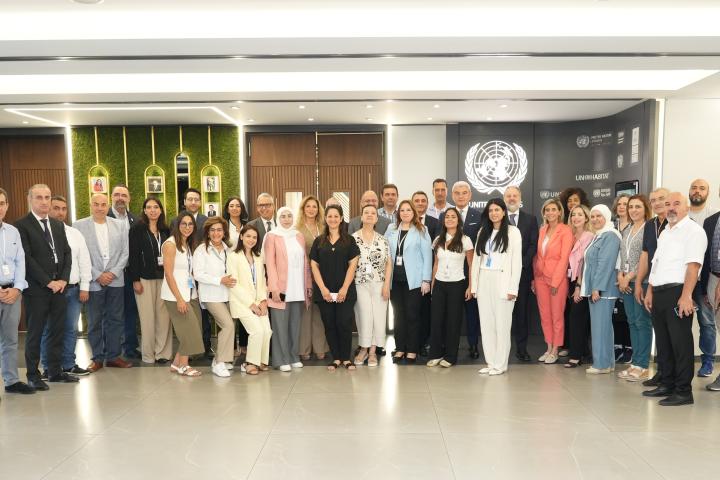
 UN House, Beirut, Lebanon