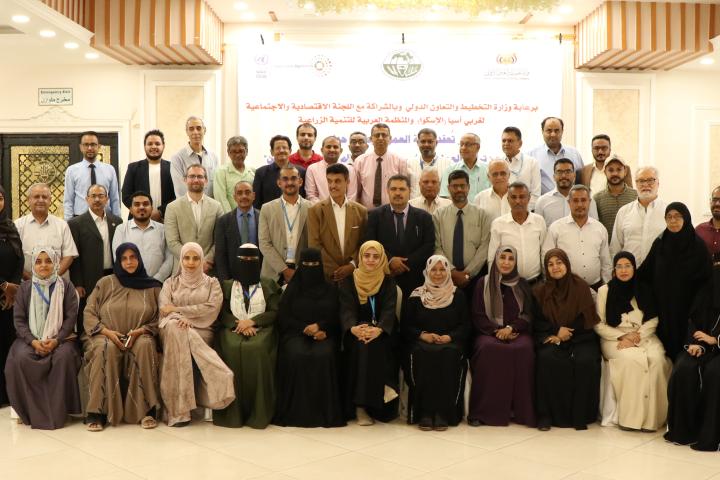
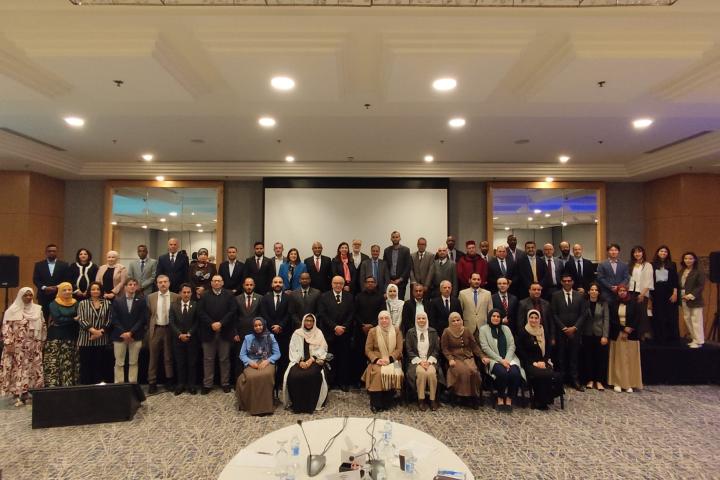
27-28 October 2026
Advancing coherent climate and food systems action in the Sudan
Workshop
 Khartoum, Sudan
Aligning food systems transformation with climate change action
2025 – Ongoing

Climate change and food systems are closely linked. Arab least developed countries (LDCs), despite minimal contributions to global emissions, face severe food insecurity, undernourishment, and environmental degradation due to unsustainable practices and climate effects. This has a direct economic impact on LDCs, where agriculture makes up a large part of the economy and is a major source of rural employment. There is a pressing need for coordinated and equitable strategies that integrate climate adaptation and mitigation within food systems, as current policies in the region are often fragmented and inadequately implemented. Recent international events, such as the UN Food Systems Summit+2 and COP28, have underscored the necessity of aligning food security, nutrition, and climate resilience.
ESCWA aims to assist Arab LDCs in aligning their food systems transformation pathways and policies with their climate change action. The project prioritizes these countries because they are highly vulnerable to food insecurity and climate impacts- despite their small carbon footprint, and lack the means to cope on their own. It has a particular focus on Mauritania, Sudan, and Yemen and seeks to achieve two main outcomes:
The project builds on previous ESCWA engagement in promoting food systems transformation and climate action in the Arab region, and its ongoing support to LDCs. As a regional commission, ESCWA has responded to the call by the UN Food Systems Hub to coordinate food systems transformation efforts in the region, including the organization of annual regional meetings and support for national dialogues and processes. The project also draws on the technical work ESCWA has conducted around food security and climate change, including RICCAR climate change impact assessments, the Food Security Monitor, and the technical paper on food systems governance, among others.
Beneficiaries: policymakers in Arab LDCs, with a particular focus on Mauritania, Sudan, and Yemen.
Collaborating entities: Arab Organization for Agricultural Development (AOAD) and The Food Systems Coordination Hub.
This initiative is funded by the United Nations Development Account.
This project provides national-level capacity development for Mauritania, Sudan, and Yemen. Those countries will be provided with guidelines, capacity building activities, and support for institutional coordination. The project also offers tools and regional meetings that benefit all Arab LDCs by facilitating experience-sharing.
The activities are carried out within the framework of the UN Food Systems transformation processes, in coordination with national Food Systems conveners, as well as with climate focal points.