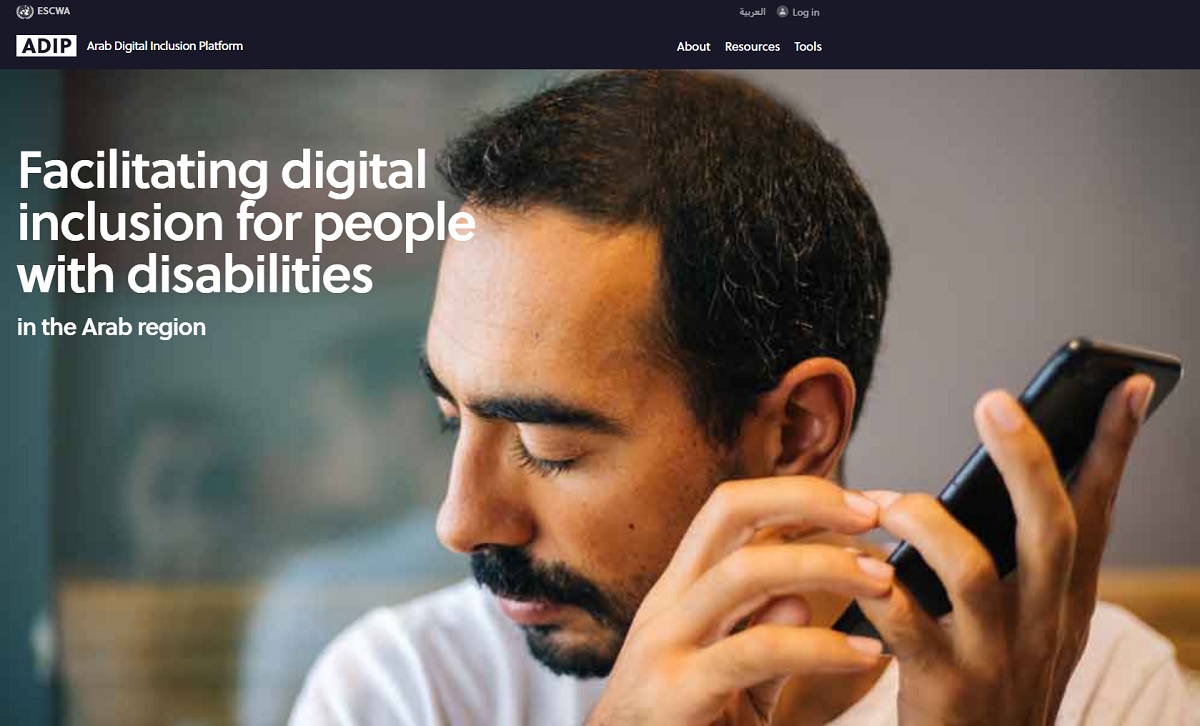
The discussion and feedback session was moderated by Mr. Mohamad Nawar Alawa. Mr. Raafat Alzetawi, Jordan, thanked the organizers of the meeting and noted that the platform contains the necessary tools to help people with disabilities with easy access to information and added some remarks concerning the extent of the application of WCAG standards in the platform. He advised the addition of alternative texts for social media icons, such as WhatsApp, Facebook and Twitter, and to make the addition symbol (+) seen in the resources, accessible by adding alternative text. Mr. Alzetawi was pleased with the flags added above country names in the homepage and suggested the addition of the remaining countries with their appropriate flags. Furthermore, he advised to add a button to skip to main content on the start page to help going to the main content and skipping buttons and links that repeat in the page. Lastly he commented that not all documents are accessible, especially PDF documents. Mr. Mohamad Nawar Alawa thanked Mr. Alzetawi for all his recommendations and added that the team is careful in considering WCAG criteria. Ms. Mirna El Haj Barbar added that the resources are fully accessible; all the content of the resources was adapted and the team is currently exploring further tools using some technologies such as Artificial Intelligence and machine learning to improve this process. She also mentioned that WCAG standards were adopted carefully and localization especially on the Arabic language was done.
Mr. Turki Al Halabi, Saudi Arabia, thanked the organizers of the meeting and commented that the content creator should know about the technically comprehensive access standards. Mr. Alawa added that the team aims to train broad categories at the national level and that content creators will be a part of this training.
Mr. Khaled Hanafy, Egypt, thanked the organizers and introduced himself as the participant on behalf of Dr. Ashraf Marie, General Director of the National Council for people with disabilities in the Arab Republic of Egypt. Mr. Hanafy added that he was the first appointed deputy for people with disabilities in the history of the Egyptian parliament from 2015 to 2020. He suggested integrating special shortcut keys in the platform for quick access to key components, for example, when the user presses ALT1, they will return to the home page. Mr. Khaled proposed the inclusion of the Marrakesh VIP treaty document in the platform to be a reference for people with disabilities. Mr. Alawa thanked Mr. Hanafy for all his recommendations. Mr. Nawar also welcomed any other important documents for people with disabilities from all Arab countries to be included in the platform. Mr. Hasan Arous, ESCWA consultant, clarified that the feature of the special keyboard shortcuts is not yet integrated but will be in the next iteration. At the time of the meeting the user was able to use any external screen reader that already has the keyboard navigation keys feature. Ms. Mirna El Hajj Barbar added that the platform’s toolbar will not replace the assistive screen reader technologies. However, it is used so all the content can be reached via any device, whether it has a screen reader software or not.
Mr. Hamood Alshabibi, Oman, thanked the organizers and suggested to add sign language to the accessibility features noting that most people with hearing disabilities can’t read and rely on sign language. He also added that he wants to share with the team some documents from Oman so they can be included in the platform. Mr. Alshabibi proposed to add links of ministries and agencies concerned with people with disabilities to the platform so it can be comprehensive for everyone who wants to access the platform. Further, he advised to add the achievements of people with disabilities in the Arab region or the appropriate links dedicated to the countries. Finally, Mr. Alshabibi added that all suggestions will be sent to the ESCWA in a written communication for ease of reference. Mr. Mohamad Nawar Alawa thanked Mr. Alshabibi for all his recommendations. He added that, although, the team wants to work on sign language, they are facing an issue in finding a standardized Arabic sign language, and they need to do more research about it. He also welcomed any documents from all countries to be added in the platform and the idea of adding links for ministries. Mr. Alshabibi added that there is a unified or standardized sign language in the Arab region. There are two dictionaries issued by the League of Arab States. ESCWA could collaborate with the technical secretariat of the League to resolve this issue.
Mr. Haidar Fraihat, ESCWA, thanked the organizers and proposed to add an indicators or data section in the platform that is related to SDGs. Ms. Mirna El Haj Barbar added that these indicators can be found on the ESCWA Data Portal. Therefore, all they need to do is to study the linkages between the portals in order to add the SDGs in ADIP platform.
Mr. Rowhi Abdat, United Arab Emirates, thanked the organizers and asked if some specifications have been taken into account for people with autism and learning difficulties, for example, to access this platform like others, such as removing distractions, changing the font. Mr. Hasan Arous, ESCWA, replied that there are currently three features, which are: increase text size, increase letter spacing, and highlight the links. He also added that the team is searching for different Arabic fonts for people with dyslexia. Furthermore, he noted that the ease of language has been considered as required. Mr. Mohamad Nawar Alawa thanked Mr. Abdat for his recommendations.
At the end of this session, Mr. Mohamad Nawar Alawa added that Mr. Rowhi Abadt and Mr. Hamood Alshabibi support the idea of adding a SDGs related section related to the platform. He also added that he was glad to receive all suggestions and other recommendations can be sent to the ESCWA team by email within one week. Ms. Mirna thanked all participants for their valuable recommendations and suggestions, and confirmed that ESCWA ADIP team will take them into consideration and will put all the necessary efforts to produce a better version of the platform. Mr. Haidar Fraihat closed the session.


 Baghdad, Iraq
