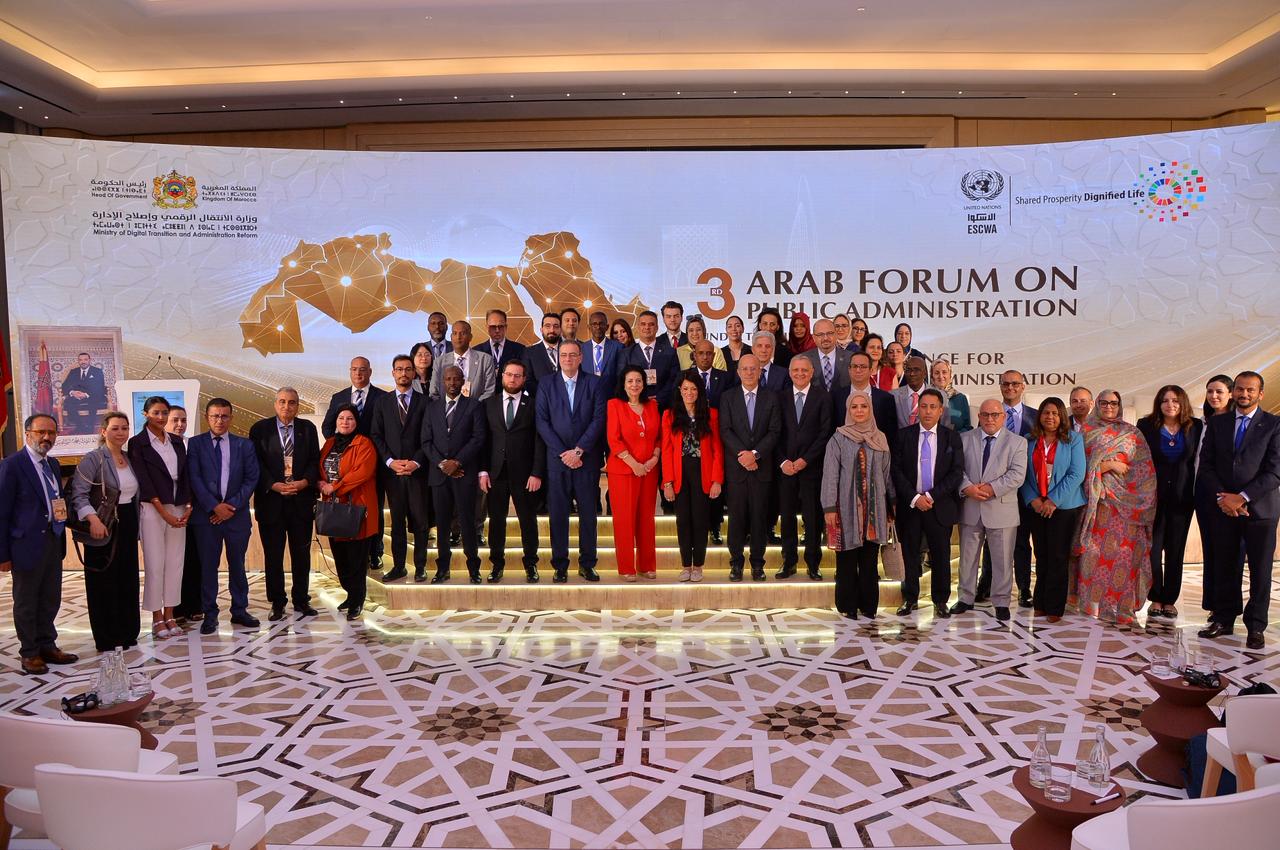
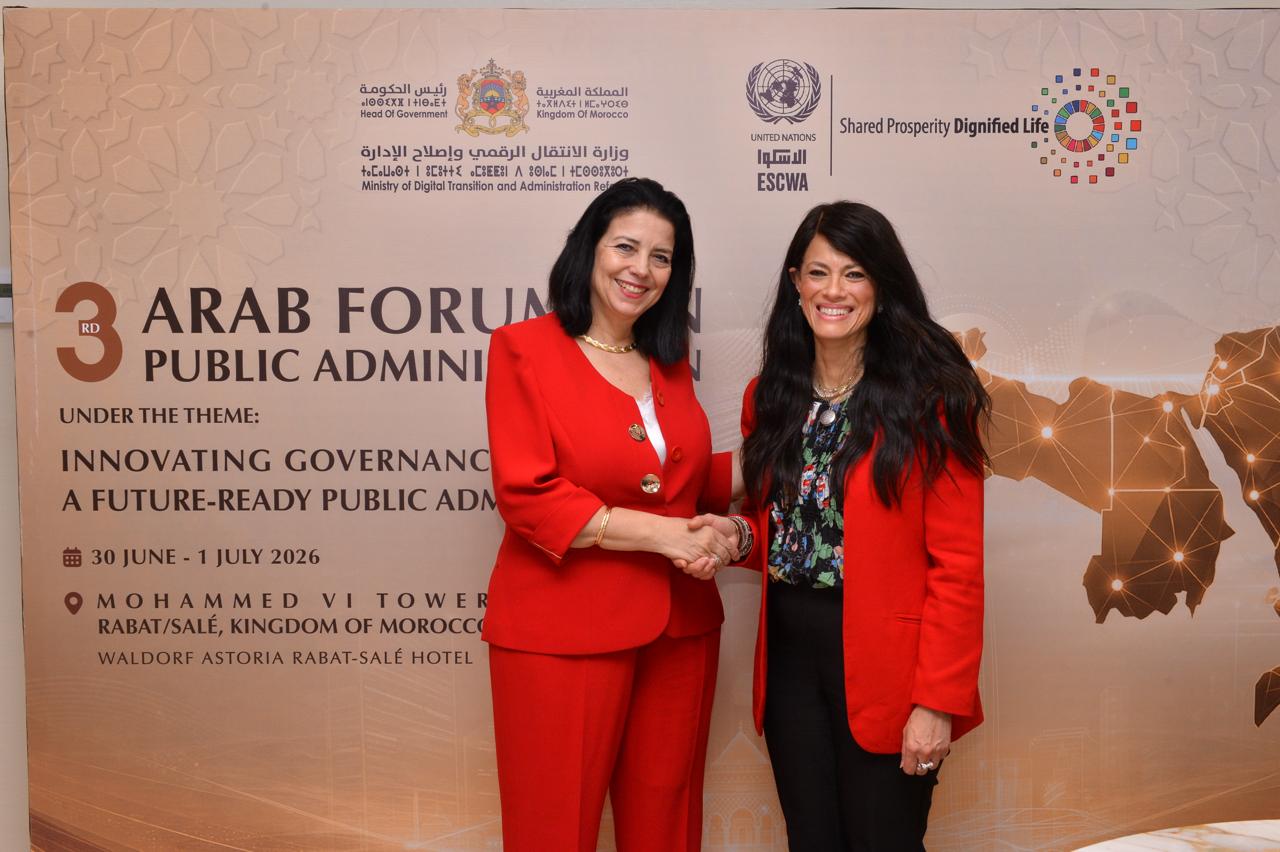
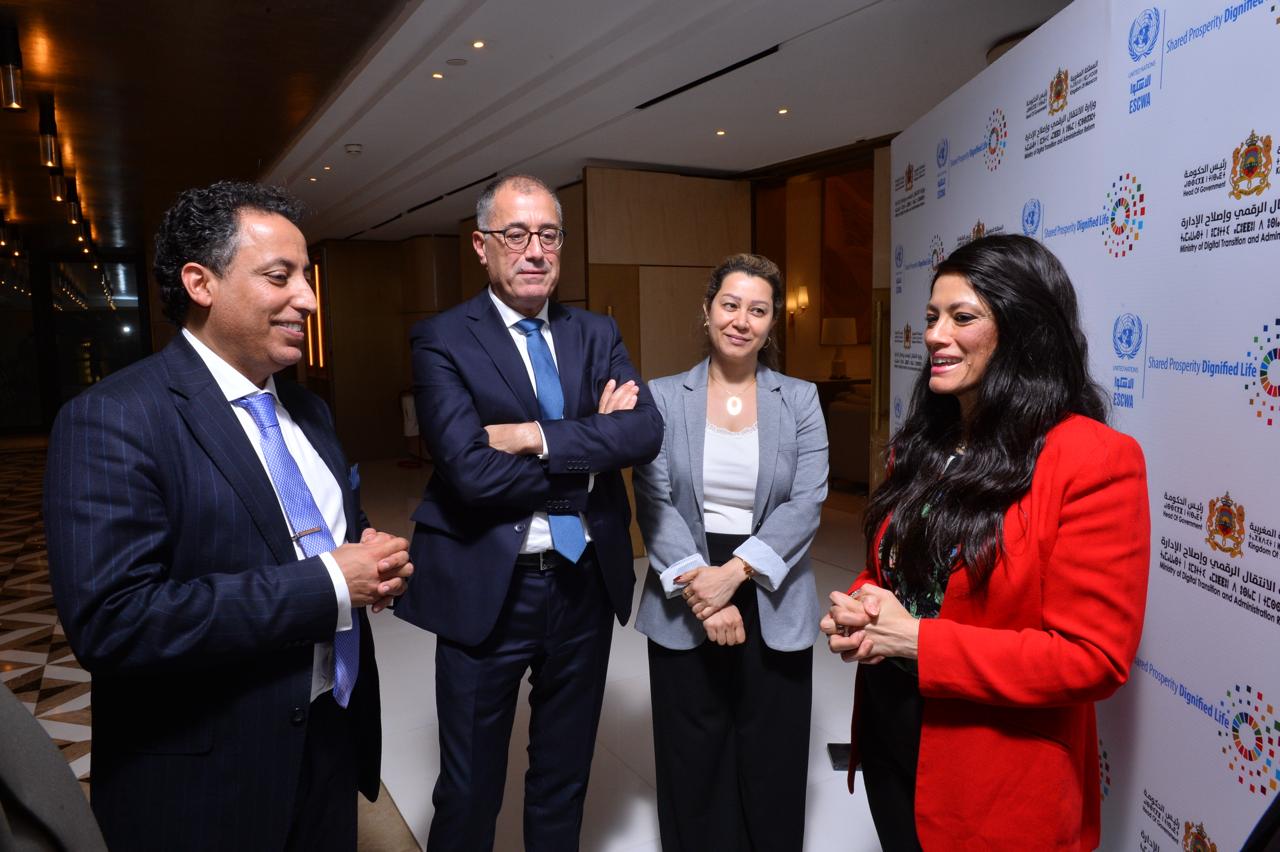
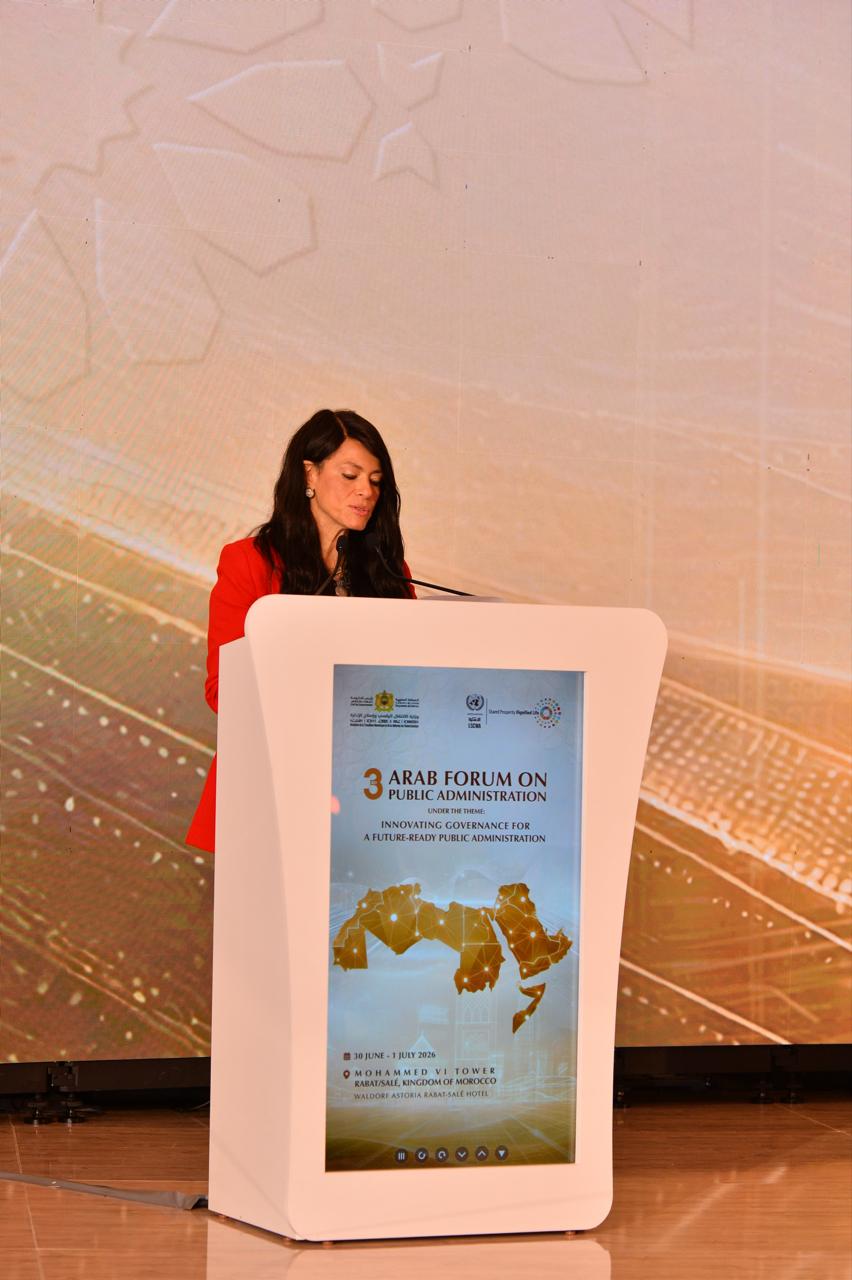
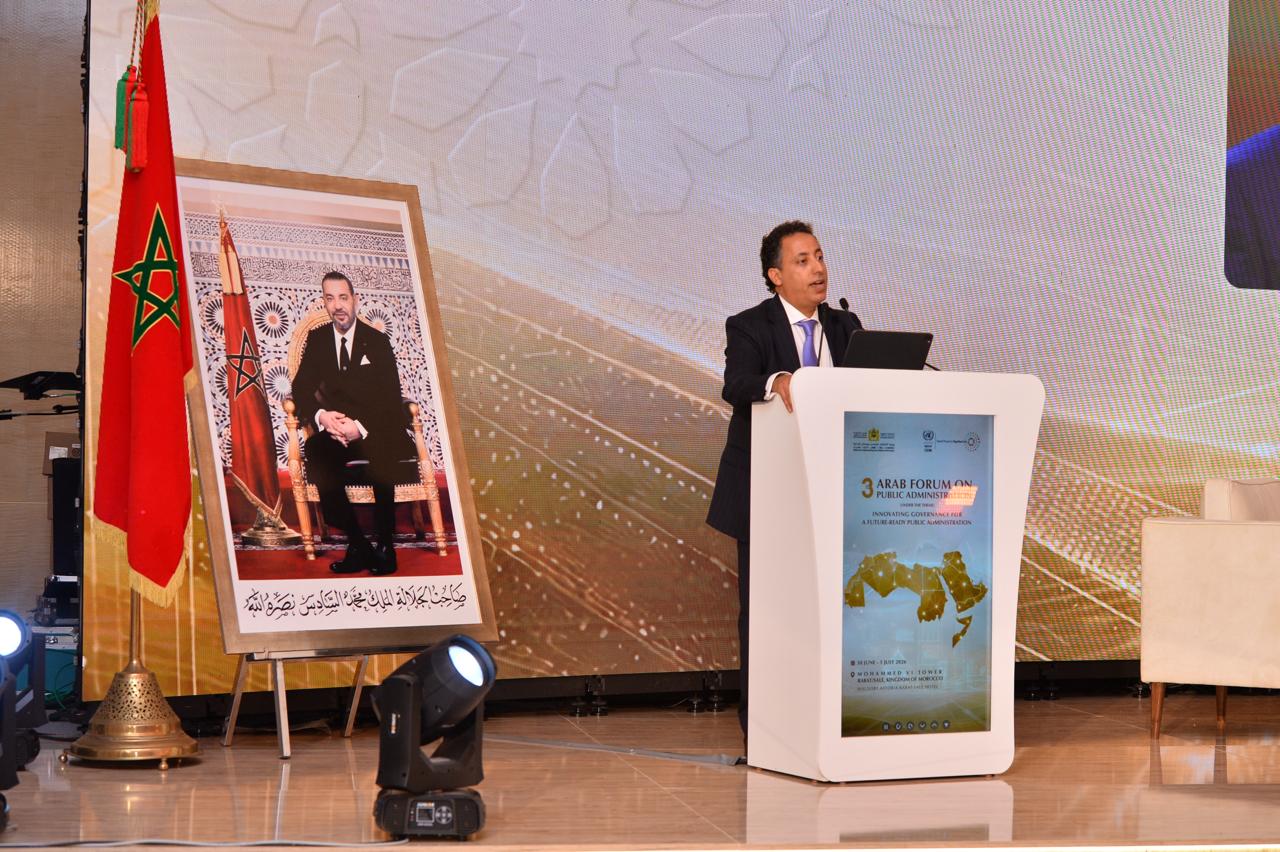
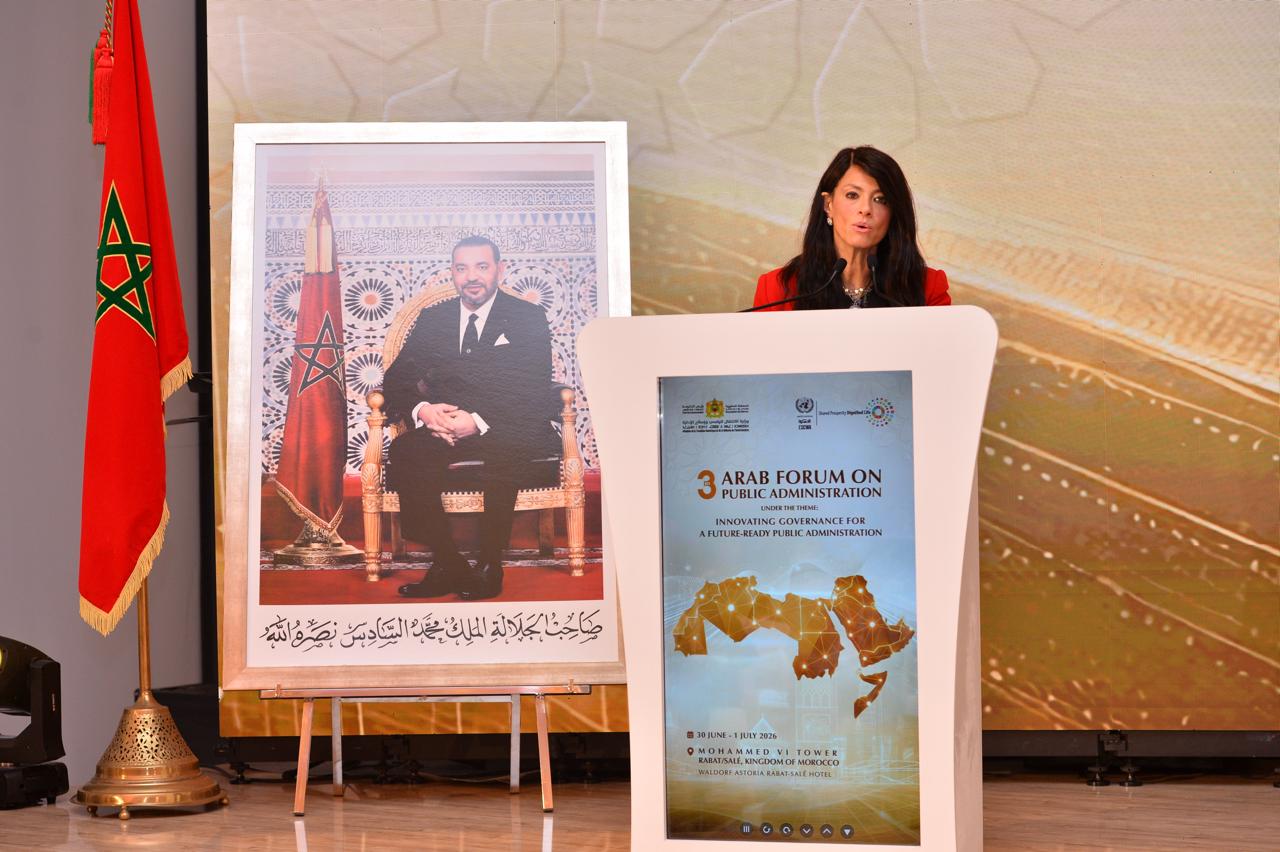
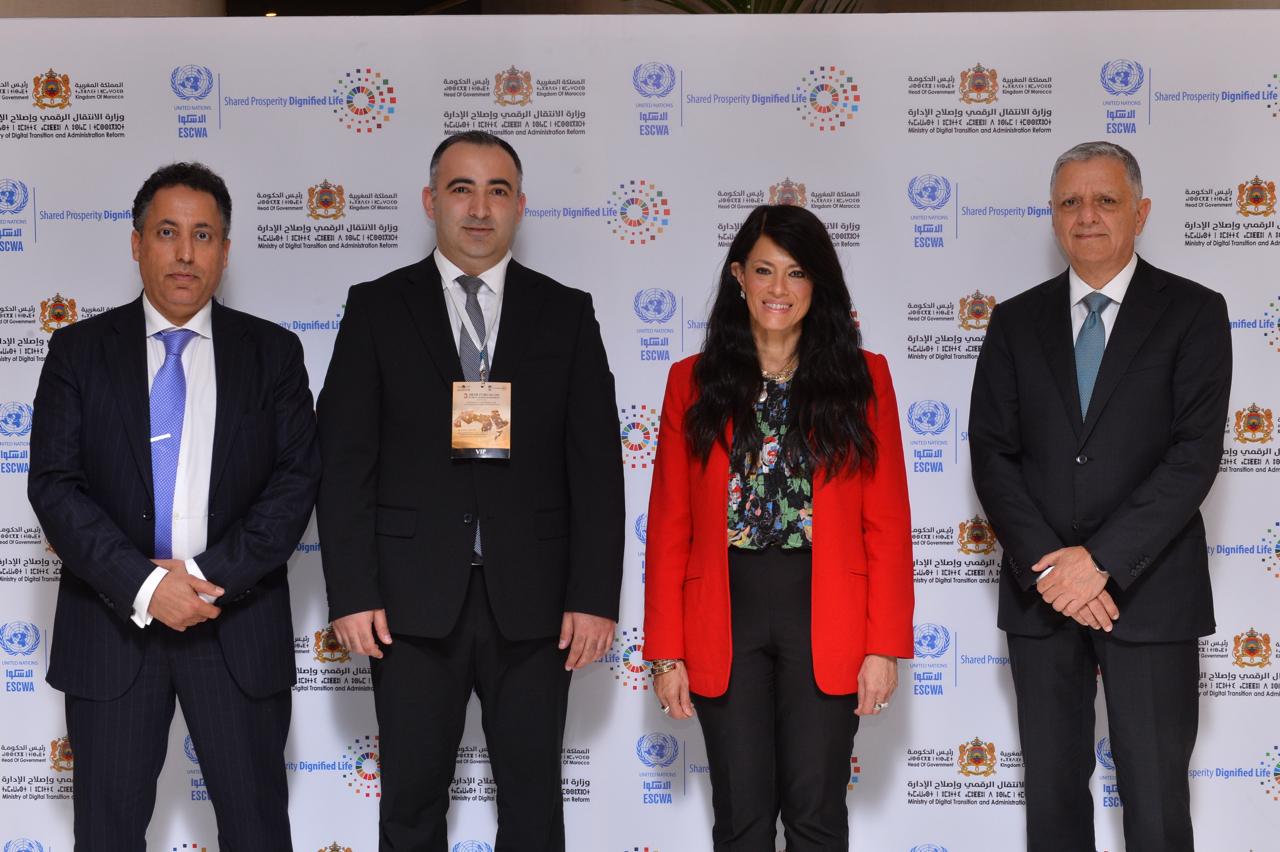
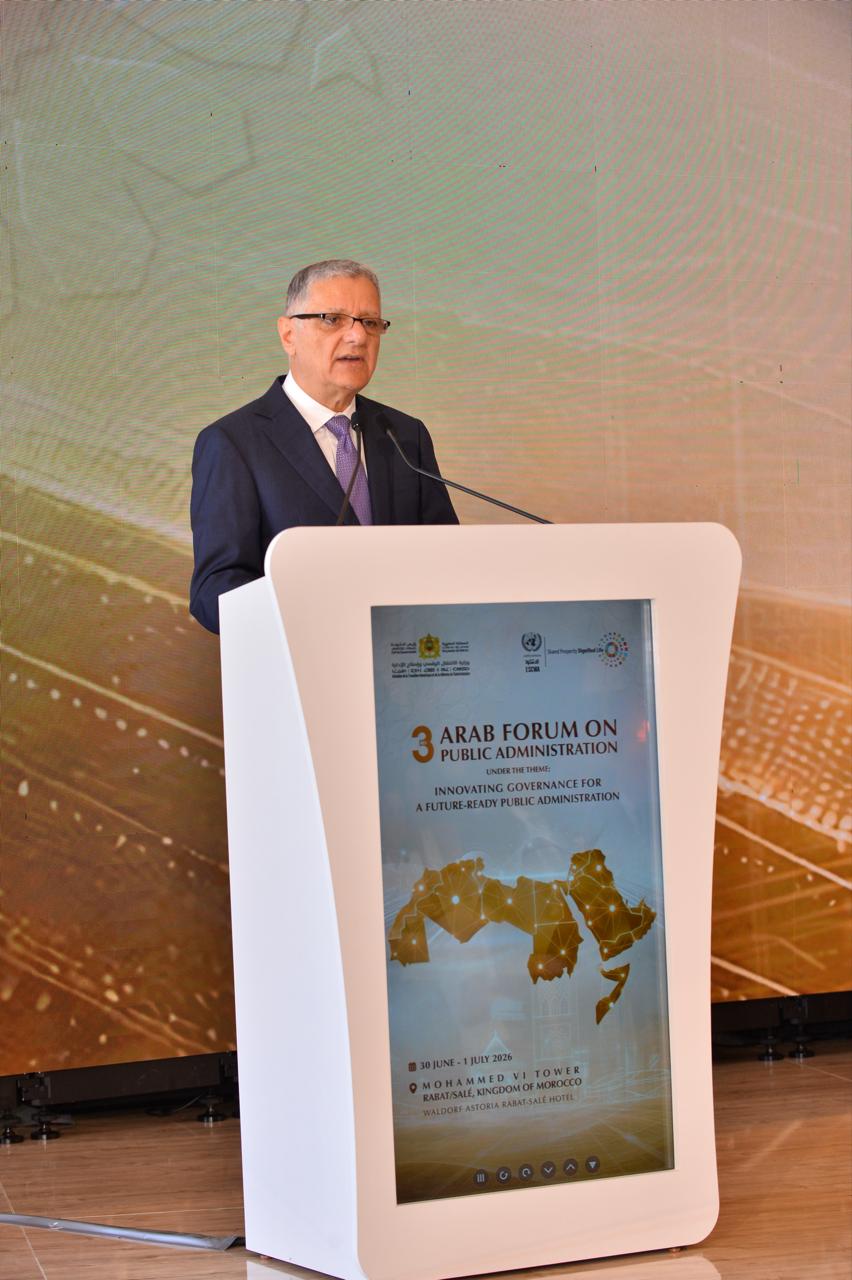
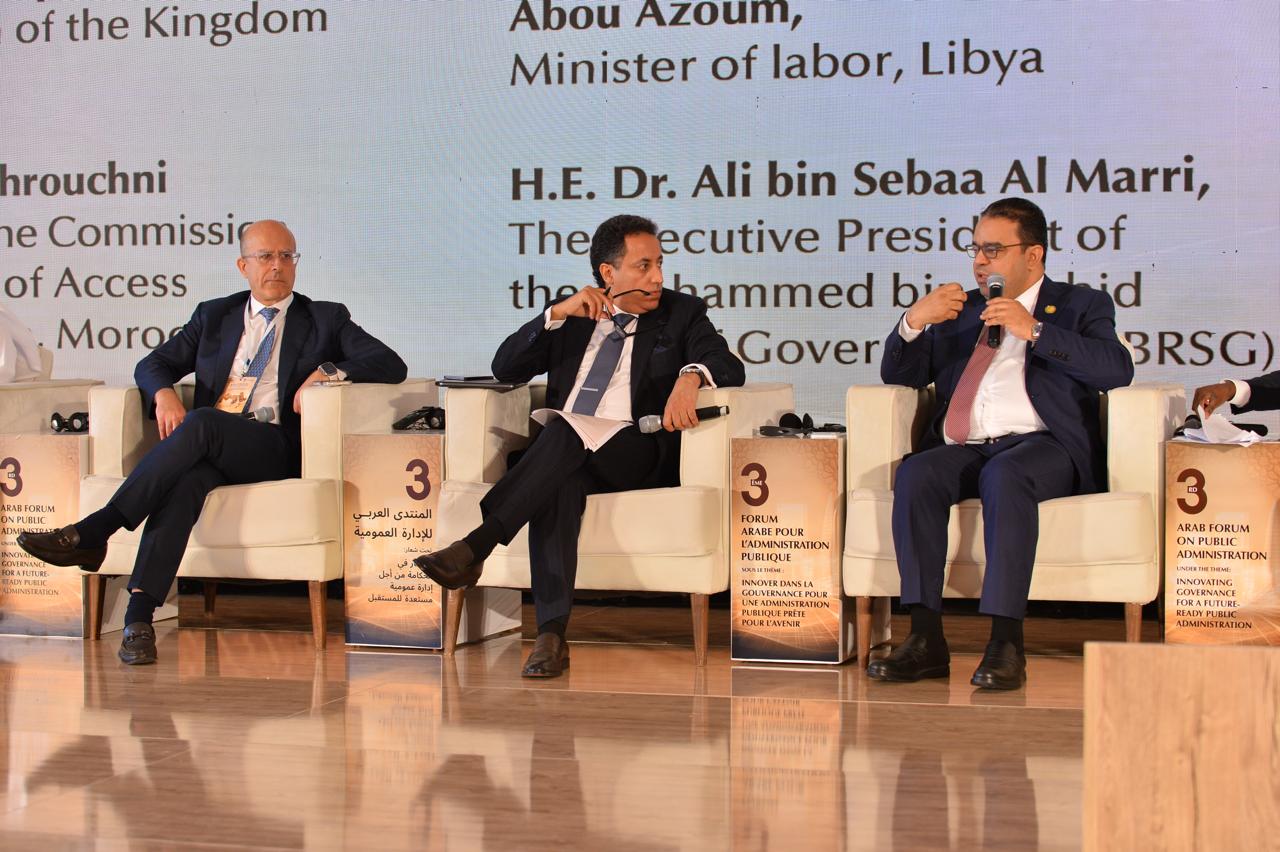
The Third Arab Regional Public Administration Modernization Forum, organized by the United Nations Economic and Social Commission for Western Asia (ESCWA) in partnership with the Ministry of Digital Transition and Public Administration Reform of Morocco, concluded with the adoption of the Rabat Declaration on Innovation for Future-Ready Governance. Bringing together ministers, senior policymakers, experts, and representatives of regional and international organizations, the Forum served as a platform to exchange experiences and identify practical approaches to advancing public administration modernization across the Arab region.
The first day concluded with a set of recommendations aimed at advancing the modernization of public administration. These can be summarized as follows:
- Strengthen the role of political leadership in driving public administration reform and promoting results-based, forward-looking good governance.
- Adopt a citizen-centered approach to the design and delivery of public services, while simplifying administrative procedures and improving service quality.
- Advance digital government by strengthening digital infrastructure, enhancing interoperability, and improving data governance.
- Promote the responsible and secure use of artificial intelligence in line with the principles of transparency, personal data protection, and respect for human rights.
- Invest in human capital through continuous learning, capacity development, and the enhancement of digital, strategic foresight, and leadership skills.
- Modernize the civil service system by introducing recruitment, promotion, and performance evaluation frameworks based on merit, competence, and results.
- Foster a culture of innovation within public administrations by encouraging institutional experimentation and establishing innovation labs to develop administrative solutions.
- Institutionalize innovation by integrating it into planning, budgeting, and legislative frameworks, while ensuring the allocation of adequate financial resources to sustain reform efforts.
- Strengthen partnerships and collaboration among public administrations, the private sector, academic institutions, research centers, and international organizations to support innovation and facilitate knowledge exchange.
- Establish a comprehensive performance measurement and impact assessment framework to enable the continuous evaluation of reforms and the scaling up of successful practices at the national level.
In light of the discussions held during the technical sessions and practical workshop on the second day, the Forum concluded with a set of general recommendations aimed at strengthening the readiness of public administrations to address future challenges. These can be summarized as follows:
- Continue modernizing the organizational structures and legal frameworks of public administration, while strengthening coordination and integration among public institutions to ensure policy coherence and improve government effectiveness.
- Accelerate the transition to an integrated digital government by strengthening digital infrastructure, expanding digital public services, enhancing interoperability among government entities, and adopting the "Once-Only" principle for data sharing.
- Establish a national data governance framework, develop digital identity systems, and adopt modern indicators to assess performance, digital maturity, and the impact of public policies.
- Harness artificial intelligence and emerging technologies to support evidence-based decision-making and improve the quality of public services, while ensuring their responsible use, protecting personal data, strengthening cybersecurity, and fostering digital trust.
- Reinforce the principles of good governance, transparency, integrity, and accountability; promote a culture of open government; and strengthen oversight mechanisms linked to performance and results to enhance citizens' trust in public institutions.
- Invest in human capital by strengthening digital, strategic foresight, and leadership competencies; developing the capacities of public servants; and fostering a culture of innovation and continuous learning across public administrations.
- Mainstream strategic foresight into public policymaking by establishing dedicated foresight units, developing early warning and risk management mechanisms, and enhancing institutional resilience and adaptability to crises.
- Strengthen government innovation ecosystems by promoting institutional experimentation and providing sustainable financing mechanisms for innovation, ensuring that successful initiatives are translated into lasting institutional reforms.
- Enhance partnerships and collaboration among public administrations, the private sector, universities, research centers, civil society organizations, and international organizations, while promoting mechanisms for the exchange of expertise and good practices at both the Arab regional and international levels.
- Strengthen public service continuity planning, enhance institutional preparedness, and promote organizational resilience to ensure the uninterrupted delivery of public services under all circumstances, including times of crisis.

















 Baghdad, Iraq
