3-6 November 2026
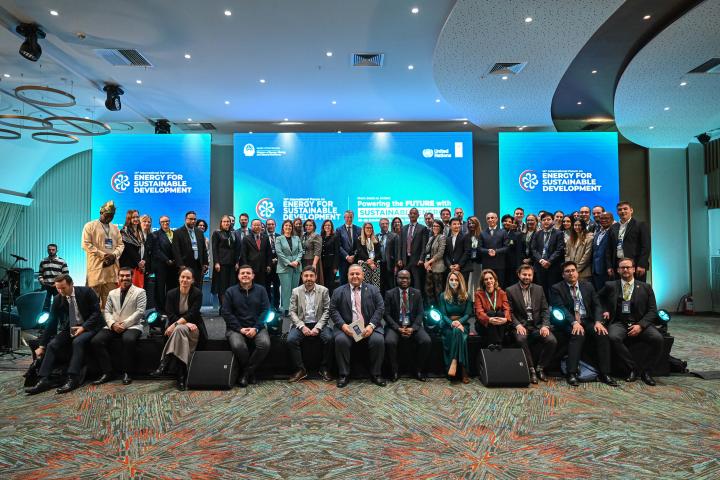
Fifteenth International Forum on Energy for Sustainable Development
Forum
 Xi'an International Convention Centre, Xi'an, China
Advancing inclusive, resilient and smart power systems through digital governance, capacity-building and regional cooperation
2026 – Ongoing

Power systems across the Arab region are under increasing strain from rising demand, ageing infrastructure, climate-related pressures, and the growing need to integrate larger shares of renewable and decentralized energy resources. In countries with special needs, these challenges are further compounded by limited grid flexibility, uneven levels of digital maturity, fragmented data and governance systems, and constrained institutional and technical capacities.
Against this backdrop, digitalization is emerging as a critical enabler for more reliable, resilient and inclusive power systems. In ESCWA member States such as Iraq and Jordan, it offers opportunities to enhance grid performance, improve system visibility, and facilitate the integration of variable renewable energy.
However, in the absence of coherent governance frameworks for data management, interoperability, cybersecurity and institutional coordination, digital energy initiatives risk remaining fragmented and falling short of their full potential.
ESCWA is jointly implementing this initiative with the United Nations Economic Commission for Europe (UNECE) which is leading the effort, and the United Nations Economic and Social Commission for Asia and the Pacific (ESCAP) to support the development of inclusive and digitalized power systems. The initiative is aligned with the ESCWA mandate to advance sustainable energy, strengthen regional cooperation, and accelerate progress towards Sustainable Development Goal 7, while supporting countries in building more resilient, efficient and future-ready power systems.
The approach of ESCWA combines national support with regional knowledge exchange and practical capacity-building with the aim of strengthening digital governance in the power sector.
The initiative supports six target countries, namely Belarus, Georgia, Iraq, Jordan, Mongolia and Tajikistan.
Key stakeholders and partners include national ministries of energy, regulators, transmission and distribution utilities, power system operators, United Nations Resident Coordinator Offices and relevant development partners. The initiative builds on the work of the UNECE Task Force on Digitalization in Energy and promotes collaboration across public and private sector actors in areas such as grid modernization, digital governance, smart grids, data management and cybersecurity.
To support implementation, the initiative undertakes the following key activities: