
ESCWA Publication: E/ESCWA/CL3.SEP/2025/TP.6
Country: Arab region
Publication Type: Information material
Cluster: Shared Economic Prosperity
Focus Area: Debt and fiscal policy, Macroeconomics
Initiatives: Debt Optimization to Enhance Fiscal Space, Climate/SDGs Debt Swap
SDGs: Goal 8: Decent Work and Economic Growth, Goal 13: Climate Action, Goal 17: Partnerships for the Goals
Keywords: Arab countries, Bahrain, Bonds, Central banks, Climate change, Debt, Development finance, Egypt, Environmental aspects, Green economy, Gulf states, Investments, Jordan, Kuwait, Laws and regulations, Lebanon, Morocco, Oman, Policy making, Qatar, Recommendations, Resilience, Saudi arabia, Social aspects, Sustainable development, Tunisia, United arab emirates
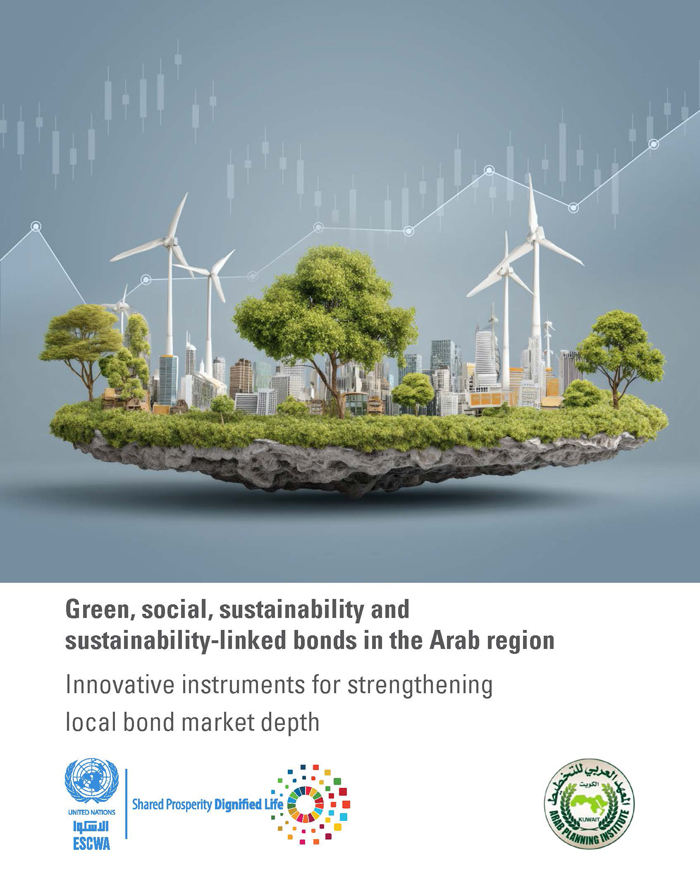
Green, social, sustainability and sustainability-linked bonds in the Arab region: Innovative instruments for strengthening local bond market depth
March 2026
This report examines how Arab countries can strengthen their local bond markets to attract greater domestic and foreign investment in green, social, sustainable and sustainability-linked (GSSS) bonds, thereby supporting the transition towards more sustainable economies. While bond markets in the Arab region have advanced in diversification, transparency and accountability, they still fall short of mobilizing the level of capital required to achieve the Sustainable Development Goals.
The report puts forward key recommendations to deepen local currency bond markets and increase the presence of GSSS bonds issuers. Achieving this requires sound macroeconomic management, regulatory frameworks aligned with international standards, and a more diversified global investor base. It also highlights that sovereign GSSS bonds issuances can catalyze corporate issuance, supported by incentives, tools such as green yield curves and greenium, closer fiscal-monetary coordination, enhanced risk-hedging instruments, and climate stress testing. Building resilient bond markets further depends on establishing sustainable finance frameworks, mobilizing long-term institutional investors, strengthening green finance institutions, and improving project selection and reporting.
Related content
Debt and fiscal policy, Macroeconomics
This report examines how Arab countries can strengthen their local bond markets to attract greater domestic and foreign investment in green, social, sustainable and sustainability-linked (GSSS) bonds, thereby supporting the transition towards more sustainable economies. While bond markets in the Arab region have advanced in diversification, transparency and accountability, they still fall short of mobilizing the level of capital required to achieve the Sustainable Development Goals.
The report puts forward key recommendations to deepen local currency bond markets and increase the presence of GSSS bonds issuers. Achieving this requires sound macroeconomic management, regulatory frameworks aligned with international standards, and a more diversified global investor base. It also highlights that sovereign GSSS bonds issuances can catalyze corporate issuance, supported by incentives, tools such as green yield curves and greenium, closer fiscal-monetary coordination, enhanced risk-hedging instruments, and climate stress testing. Building resilient bond markets further depends on establishing sustainable finance frameworks, mobilizing long-term institutional investors, strengthening green finance institutions, and improving project selection and reporting.