
ESCWA Publication: E/ESCWA/CL3.SEP/2026/Policy brief.1
Country: Arab region, Kingdom of Bahrain, State of Kuwait, Lebanese Republic, Sultanate of Oman, State of Qatar, Kingdom of Saudi Arabia
Publication Type: Policy briefs
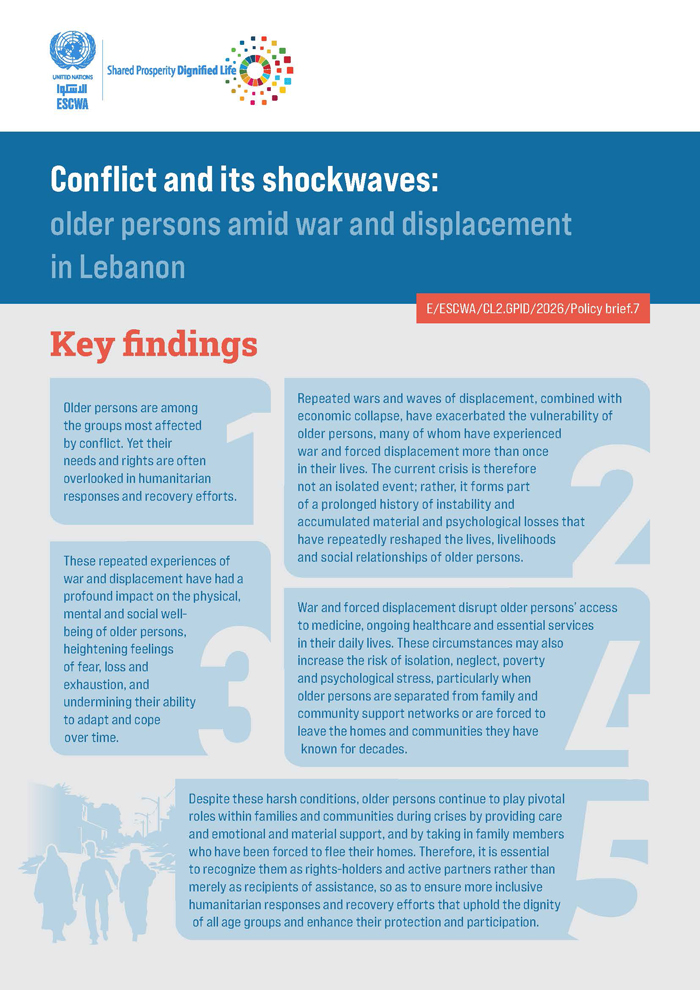
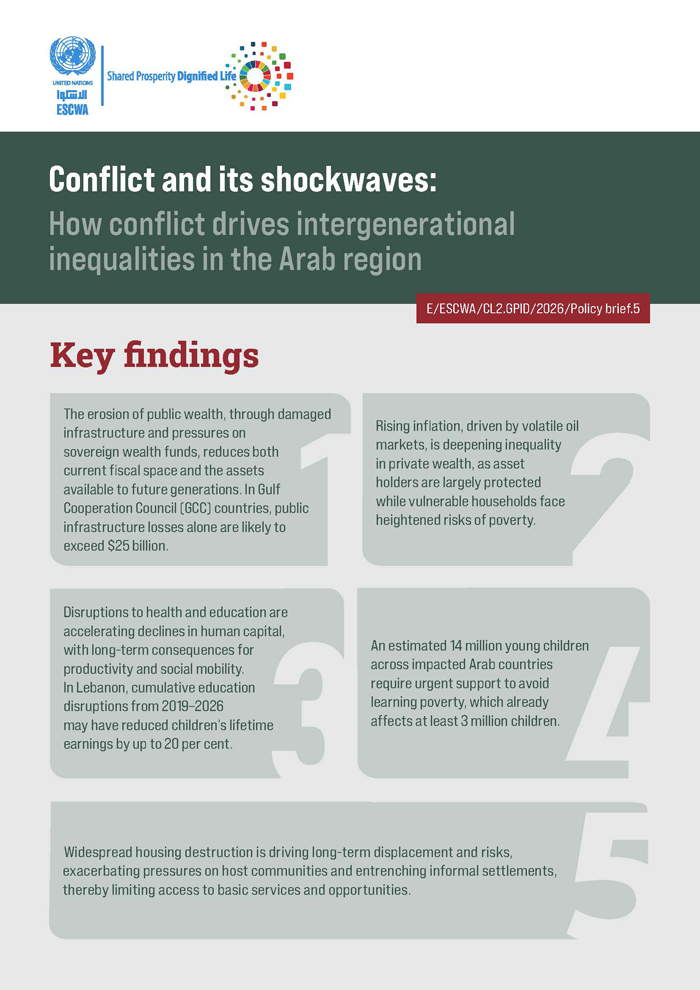
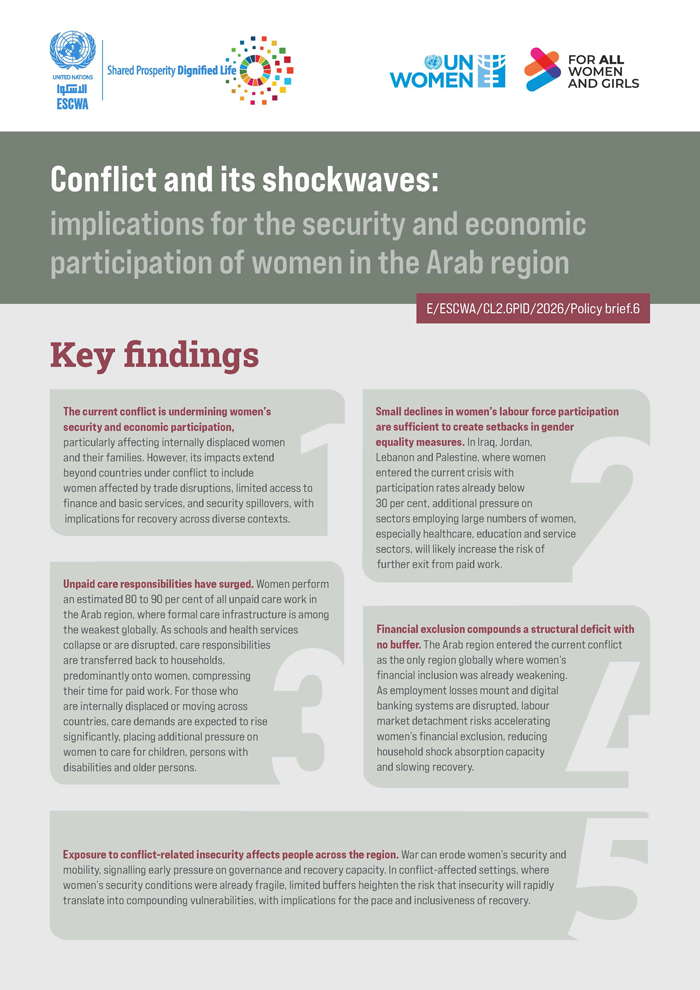
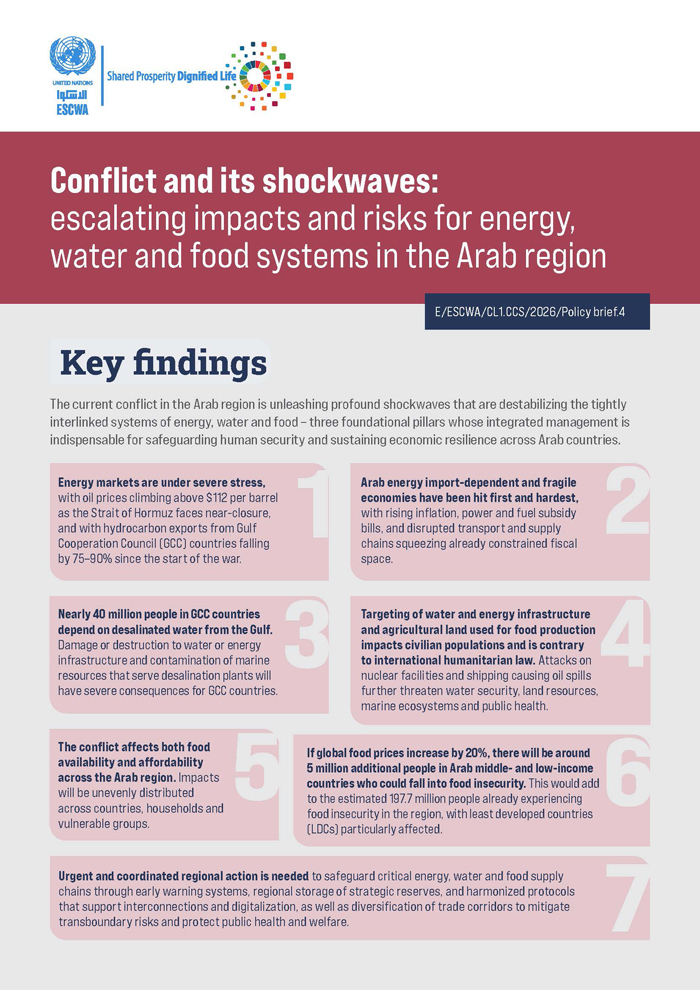
Publication Subject: Conflict and Its Shockwaves
Cluster: Shared Economic Prosperity
Focus Area: Macroeconomics, Resilient development & conflict prevention
Initiatives: Public finance and inclusive fiscal policy
SDGs: Goal 8: Decent Work and Economic Growth
Keywords: Air transport, Arab countries, Capital markets, Economic aspects, Energy resources, Financial aspects, Gulf states, Humanitarian assistance, Lebanon, Maritime transport, Regional cooperation, Resilience, Social aspects, Trade routes, War
Conflict and its shockwaves: escalation of a crisis in the Arab region - A scenario-based assessment
March 2026
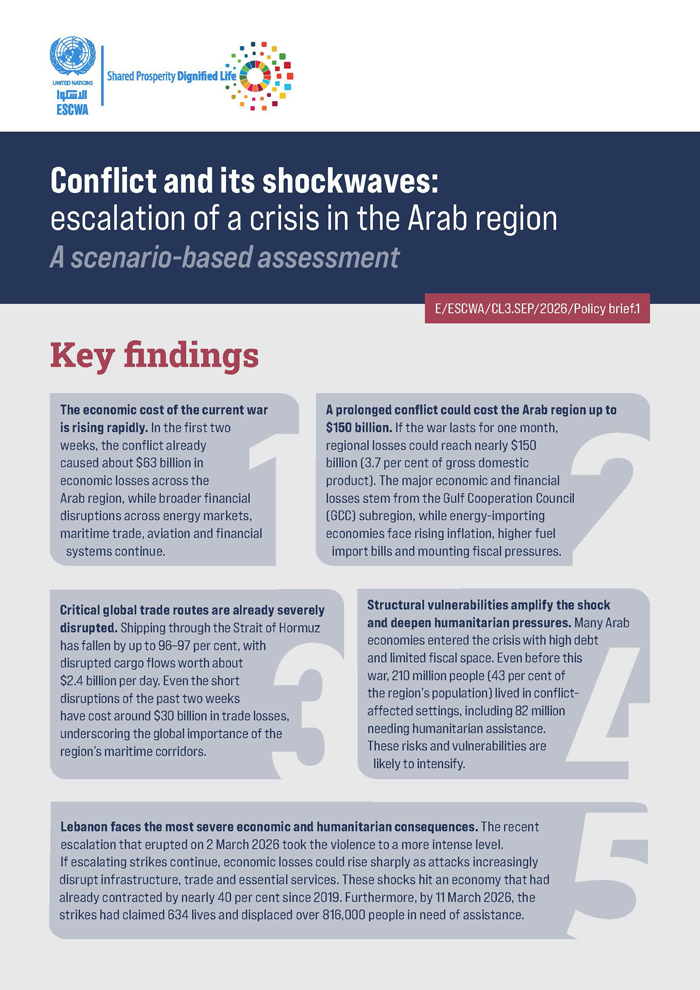
The present brief assesses the impacts of the escalating war in the Arab region. Losses could rise from $63 billion within two weeks to nearly $150 billion in one month (about 3.7% of regional gross domestic product), weakening growth, straining fiscal stability and intensifying humanitarian pressures in a region where 210 million people live in conflict-affected settings and 82 million require assistance.
While Gulf economies are facing the largest aggregate losses, more vulnerable countries, including Lebanon, are likely to face the most severe consequences. The brief highlights the need for stronger regional preparedness and coordination to contain spillovers and protect essential services and supply chains.
Related publications: Conflict and Its Shockwaves
Related content
Macroeconomics, Resilient development & conflict prevention
The present brief assesses the impacts of the escalating war in the Arab region. Losses could rise from $63 billion within two weeks to nearly $150 billion in one month (about 3.7% of regional gross domestic product), weakening growth, straining fiscal stability and intensifying humanitarian pressures in a region where 210 million people live in conflict-affected settings and 82 million require assistance.
While Gulf economies are facing the largest aggregate losses, more vulnerable countries, including Lebanon, are likely to face the most severe consequences. The brief highlights the need for stronger regional preparedness and coordination to contain spillovers and protect essential services and supply chains.
Related publications: Conflict and Its Shockwaves