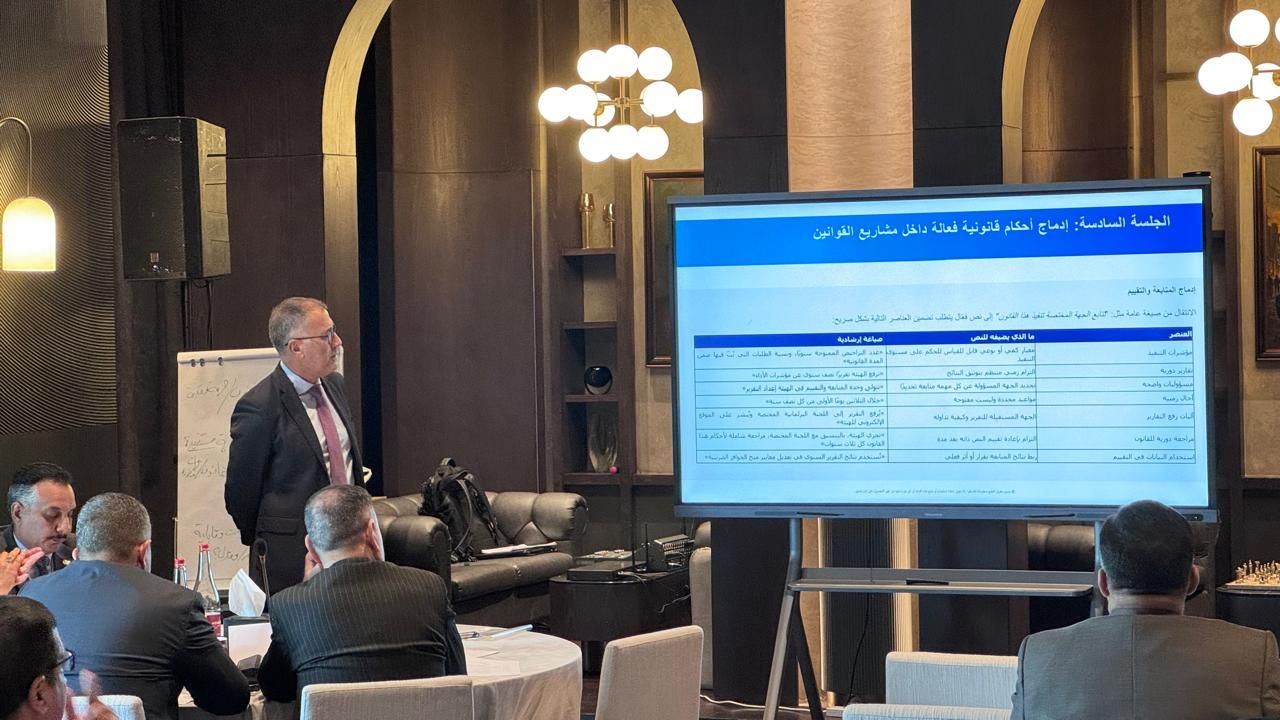
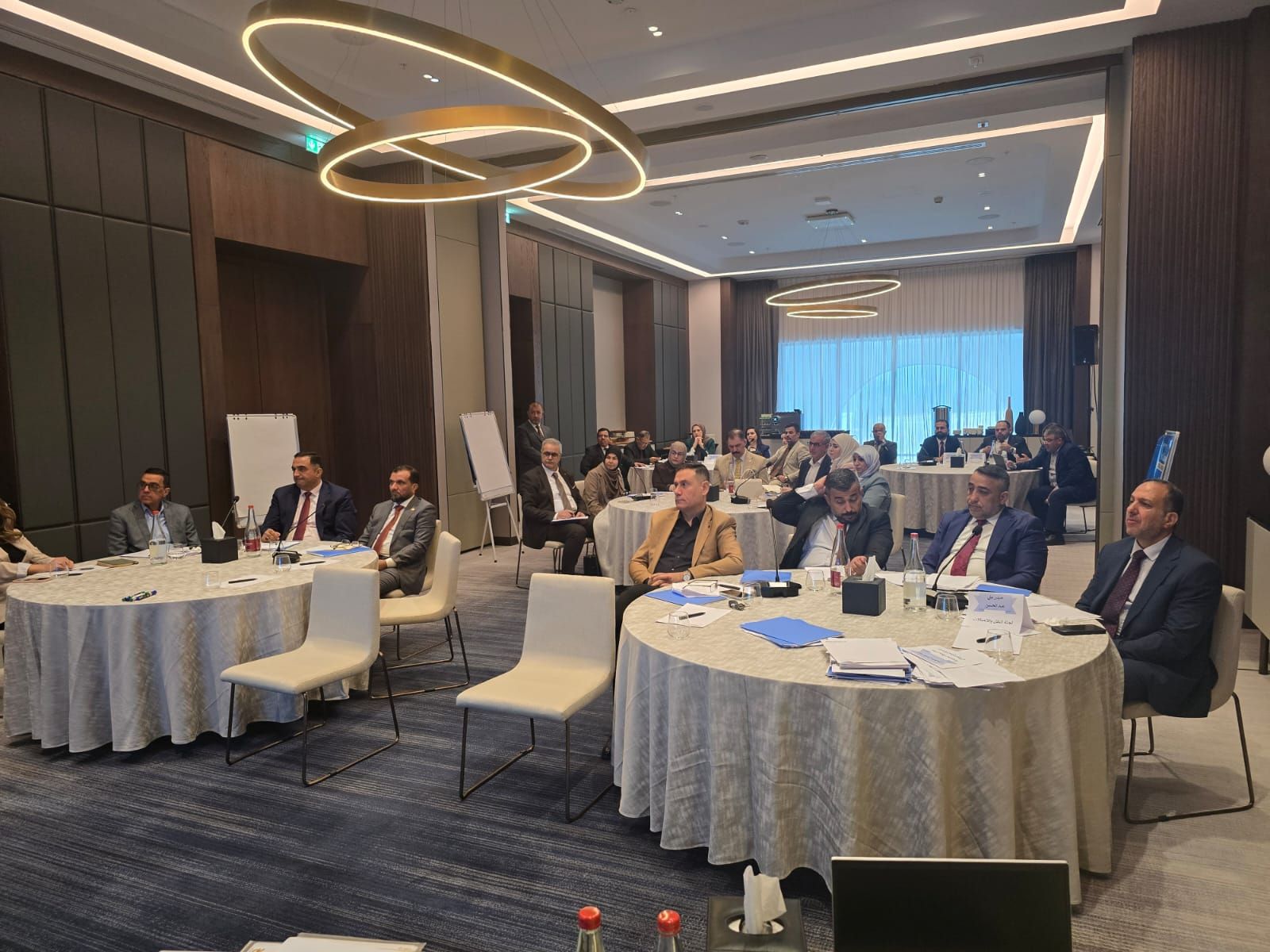
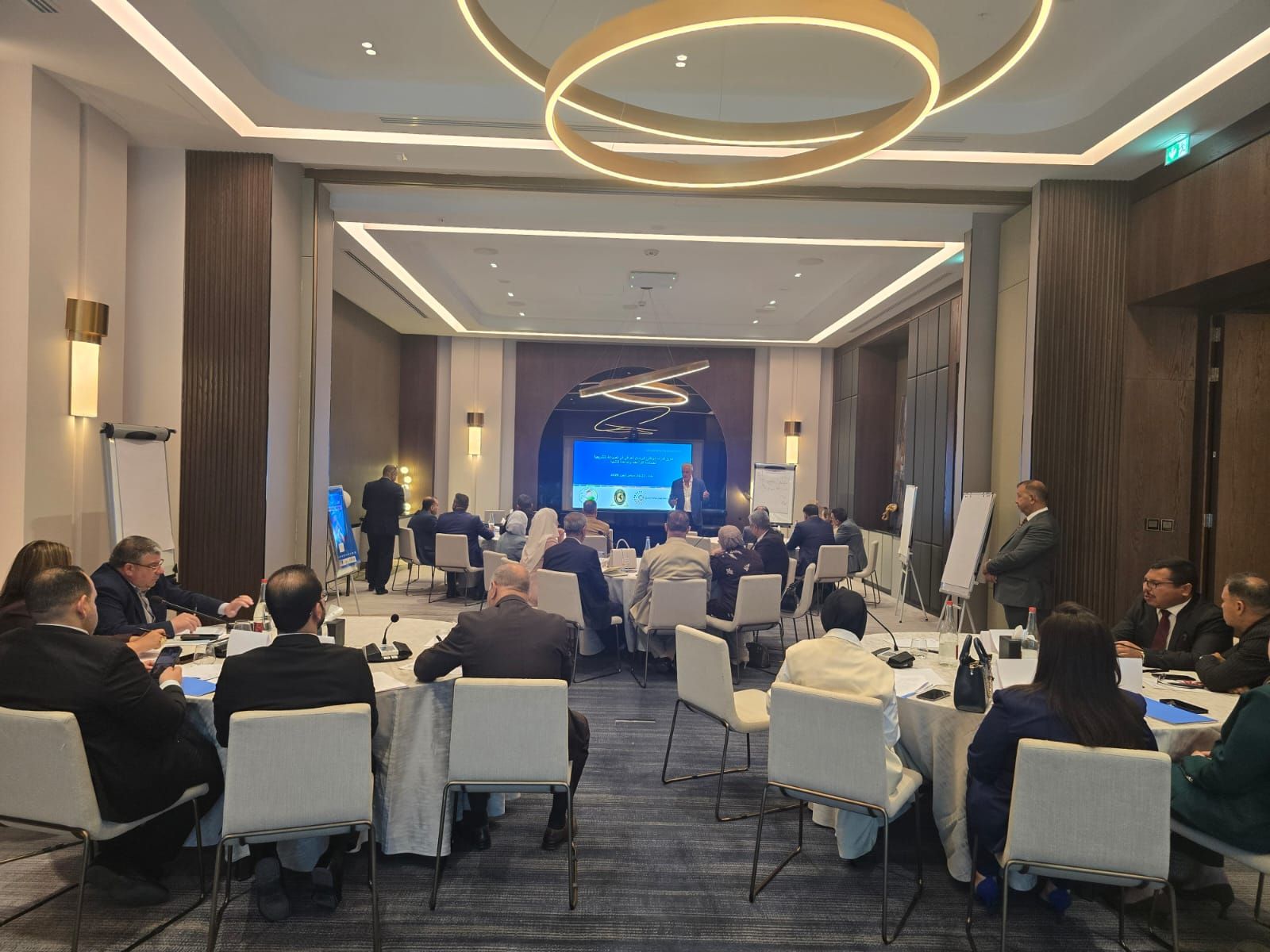
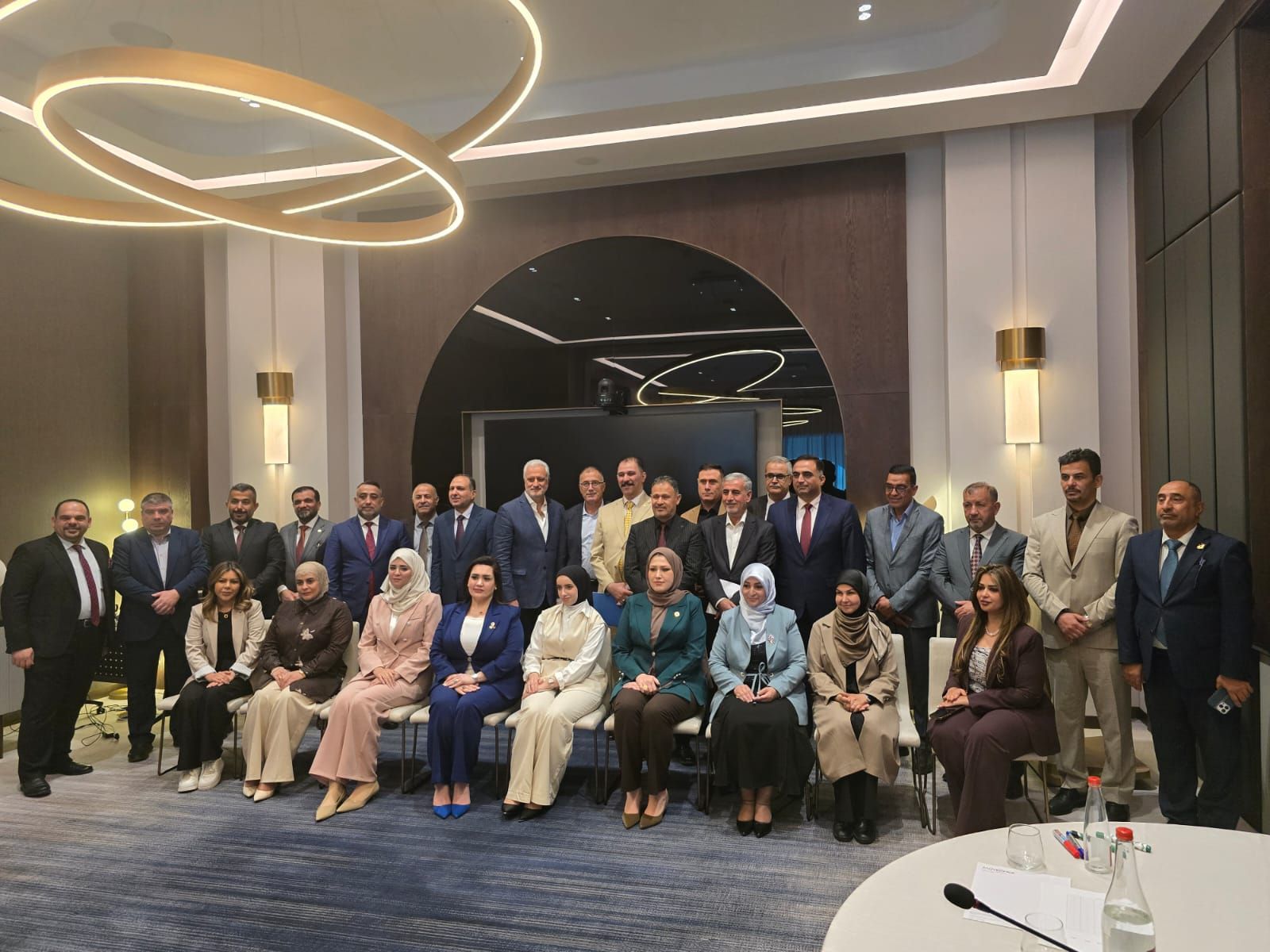
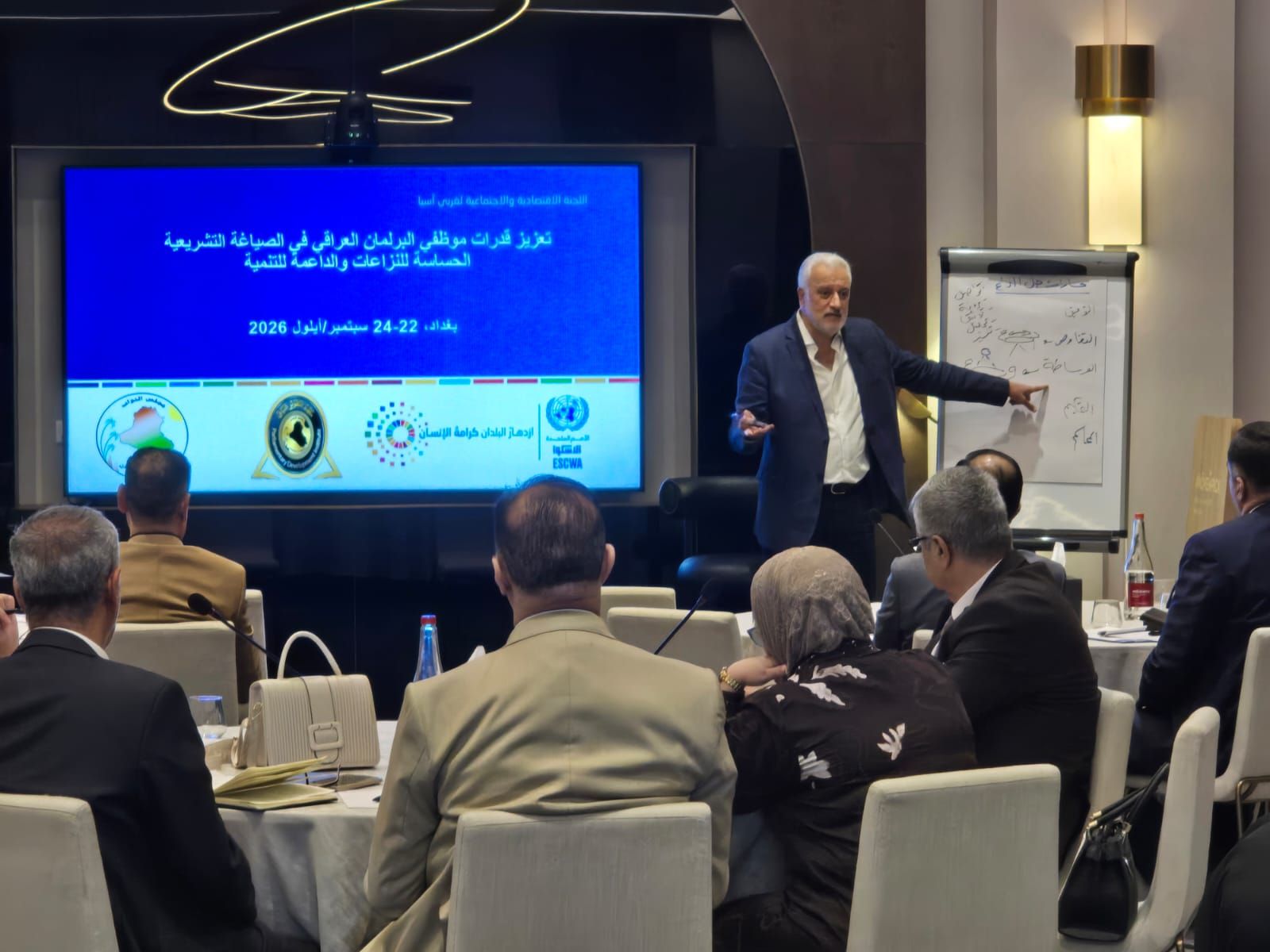
The Economic and Social Commission for Western Asia (ESCWA), in cooperation with the Parliamentary Development Institute of the Iraqi Council of Representatives, conducted a three-day workshop in Baghdad from 22 to 24 September 2026 for 30 staff members of the Iraqi Parliament, representing parliamentary committees and the General Secretariat. The workshop, entitled “Enhancing the Capacities of Iraqi Parliament Staff in Conflict-Sensitive and Development-Supportive Legislative Drafting,” aimed to strengthen participants’ understanding of the technical role of parliamentary staff and the stages of the legislative cycle; enhance their knowledge and application of the principles of good legislative drafting; and promote the integration of development and conflict prevention considerations into legislation, including through the “do no harm” principle and impact analysis tools.
The workshop also examined the review of government-sponsored draft legislation as a public policy instrument; drew on relevant international experiences, including Bougainville and the Niger Delta, Aceh and Colombia, North Macedonia and Rwanda; and strengthened participants’ skills in communication, negotiation and mediation. The workshop comprised nine sessions and adopted an interactive methodology combining group work, role-play, case studies and practical exercises based on hypothetical draft laws.
Participants developed and applied a set of practical tools that can be used in their day-to-day work, including a briefing note, a technical accuracy checklist, a case-tracking register, conflict impact analysis and legislative impact assessment matrices, a “draft law dissection” tool, a draft law review matrix, and a post-enactment law monitoring card.
The workshop was assessed as successful, with a high level of participant engagement and a strong commitment to the learning process. The main recommendations included organizing a joint workshop bringing together parliamentary committee staff and members of parliament to establish a common understanding and shared expectations; developing a methodology for conflict-sensitive and development-supportive legislative drafting that promotes balanced development; expanding the comparative analysis of international experiences through the examination of relevant constitutional and legislative provisions; and organizing a dedicated workshop on the oversight role of the Council of Representatives.



 Cairo, Egypt
