Flagship publications
Macroeconomic outlook in the Arab region
February 2026
Tracking economic trends to support informed policymaking in the Arab region
2020 – Ongoing

Arab economies are closely linked to global markets and exposed to structural vulnerabilities. Geopolitical instability, volatile energy and commodity prices, pandemics, conflicts and recessions in industrialized economies have all shaped the region’s economic outlook. These pressures have compounded fiscal constraints, public debt, inflation, poverty and unemployment, hindering sustainable development.
Macroeconomic monitoring and forecasting are therefore essential to help policymakers assess policy options and mitigate fiscal shocks, including those linked to oil revenues, commodity prices and geopolitical instability.
ESCWA monitors regional economic developments and produces forecasts using the United Nations World Economic Forecasting Model. The framework tracks key macroeconomic indicators, including growth, inflation, public finance and debt, and supports the assessment of policy responses to external shocks such as oil price fluctuations, conflicts, pandemics and inflation.
ESCWA coordinates with United Nations country economists in member States during the initiation and outreach phases to discuss national priorities and guidance that can inform the forecasting process.
Macroeconomic Outlook in the Arab Region, published since 1980 under the title “Survey of Economic and Social Developments in the Arab Region”, is an annual flagship publication mandated by paragraph 173 of General Assembly resolution 35/56. Using the United Nations forecasting model, it analyses economic prospects in the Arab region and the impact of global events and developments.
Exchange rate pass-through and monetary policy reforms in Arab countries: A dynamic stochastic general equilibrium (DSGE) framework that examines how exchange rate fluctuations in small open economies affect import prices, inflation and output, and what this means for policy effectiveness under different institutional settings is essential. The paper uses the DSGE framework to analyse short- and medium-term exchange rate pass-through.
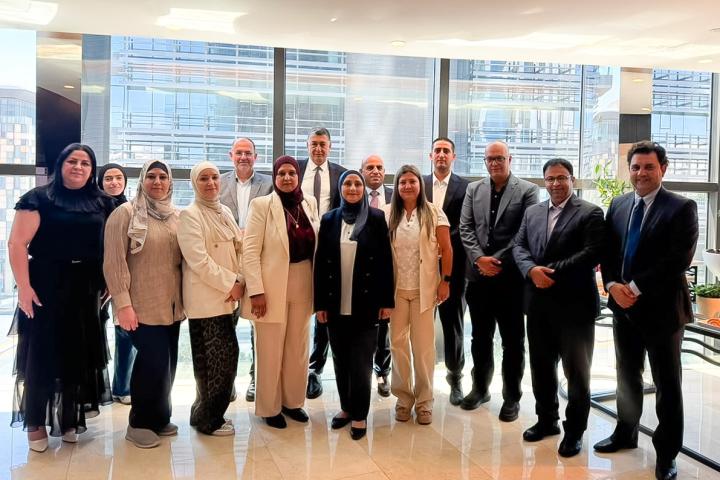
ESCWA also holds consultations with member States and experts through an annual regional expert group meeting on macroeconomic outlook.


 Beirut, Lebanon