

ESCWA Publication: E/ESCWA/CL3.SEP/2025/2
Country: Arab region
Publication Type: Flagship publications
Cluster: Shared Economic Prosperity
Focus Area: Debt and fiscal policy, Macroeconomics
Initiatives: Public finance and inclusive fiscal policy, Nowcasting in the Arab region, Macroeconomic monitoring and forecasting
SDGs: Goal 8: Decent Work and Economic Growth, Goal 9: Industry, Innovation and Infrastructure
Keywords: Arab countries, Artificial intelligence, Climate change, Debt, Digital technology, Economic growth, Egypt, Exports, Green economy, Gross domestic product, Imports, Inflation, Macroeconomics, Saudi arabia, Trade
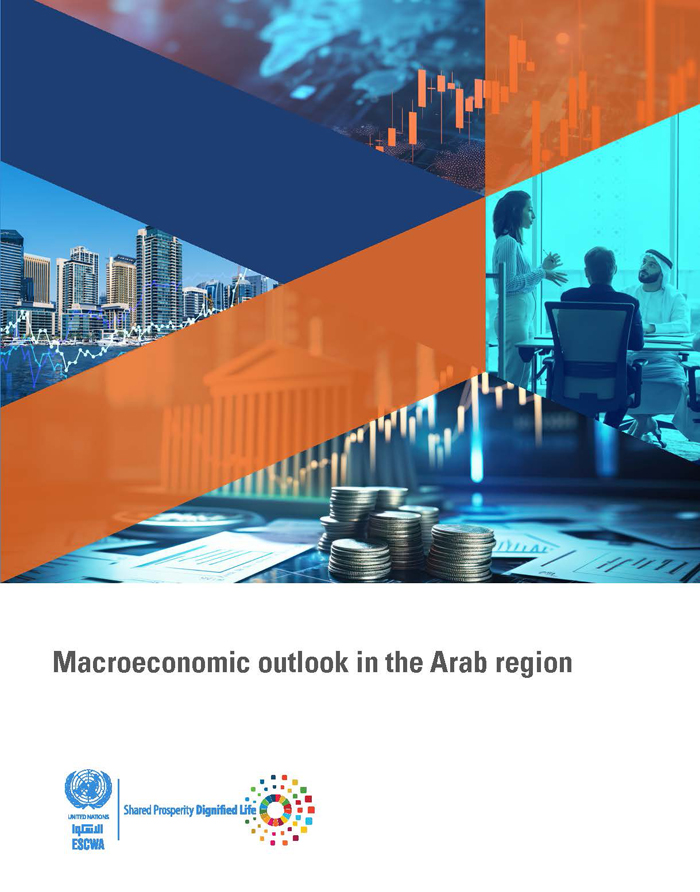
Macroeconomic outlook in the Arab region
February 2026
This report reviews the global macroeconomic climate and its implications for the Arab region. It presents the Arab regional macroeconomic outlook in light of geopolitical and trade uncertainties, socioeconomic challenges and security concerns, focusing on key indicators in all Arab countries for the 2025–2027 period. It also introduces the United Nations Economic and Social Commission for Western Asia machine-learning-based nowcasting models piloted for Egypt and Saudi Arabia. By integrating conventional and alternative data sources, these models enable near-real-time GDP estimation. This provides a scalable framework for evidence-based economic assessment in the region and allows for enhanced policy responsiveness.
Related content
Debt and fiscal policy, Macroeconomics
This report reviews the global macroeconomic climate and its implications for the Arab region. It presents the Arab regional macroeconomic outlook in light of geopolitical and trade uncertainties, socioeconomic challenges and security concerns, focusing on key indicators in all Arab countries for the 2025–2027 period. It also introduces the United Nations Economic and Social Commission for Western Asia machine-learning-based nowcasting models piloted for Egypt and Saudi Arabia. By integrating conventional and alternative data sources, these models enable near-real-time GDP estimation. This provides a scalable framework for evidence-based economic assessment in the region and allows for enhanced policy responsiveness.