I. Background and Context
The workshop was held within a highly complex regional and Palestinian context, characterized by overlapping geopolitical, economic, and institutional crises, under an Israeli occupation that constitutes a structural and systemic risk, perpetuating fragility and fueling risks across all sectors. Discussions highlighted that shifting from a crisis-response approach to a proactive, risk-informed and resilience-building approach is no longer an option, but a planning and policy necessity.
The workshop was grounded in a methodology developed by ESCWA to support governments operating in fragile contexts. This methodology links fragility analysis, risk scanning, foresight, and the formulation of risk-informed public policies, with a particular emphasis on the role of public institutions as a central pillar for building resilience.
II. Objectives
The workshop aimed to:
- Strengthen the capacities of Palestinian planning and policy officials to understand fragility and systemic, interlinked risks.
- Develop a practical approach to risk scanning, analyzing root causes and impacts, and anticipating future risk trajectories.
- Support the transition from analysis to the formulation of risk-informed public policies that can be integrated into national planning frameworks.
- Highlight the role of public institutions and assess their fragility and capacities for response and resilience-building.
III. Participants
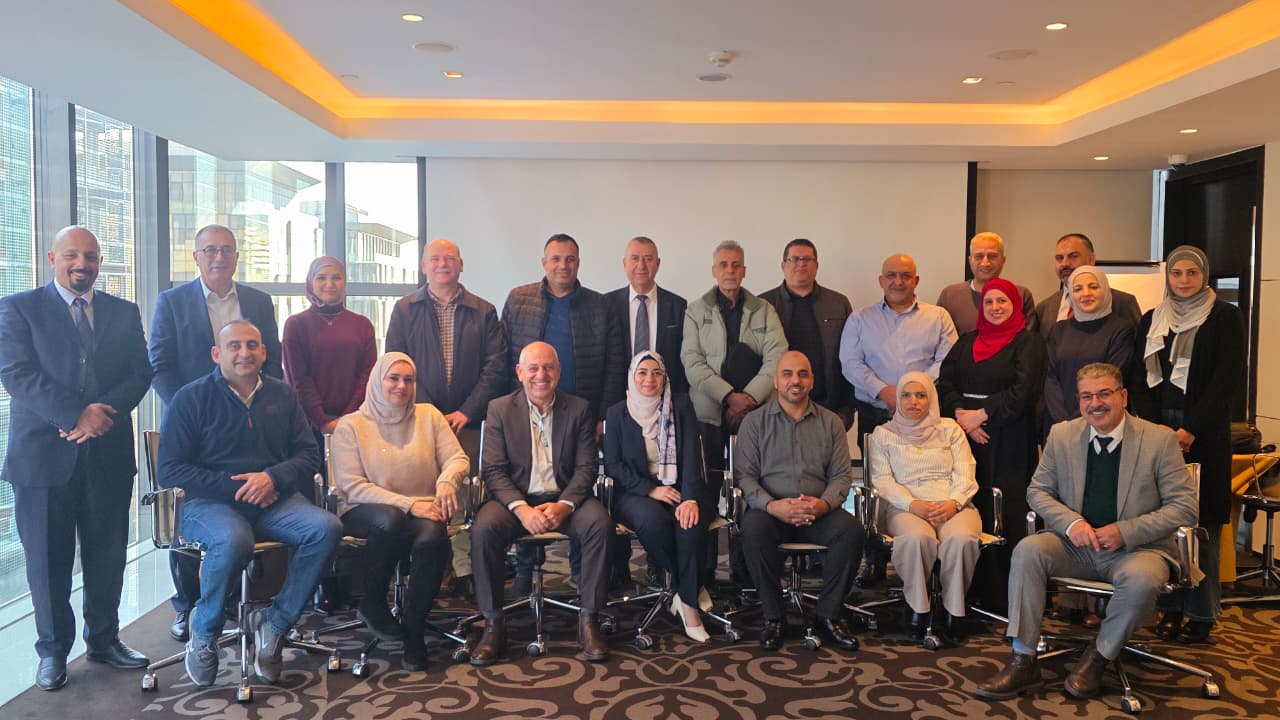
The workshop targeted the second cohort of planning and policy officials from relevant Palestinian ministries and institutions, contributing to the development of a shared institutional core capable of adopting a unified methodology for risk analysis and planning.
IV. Approach and Methodology
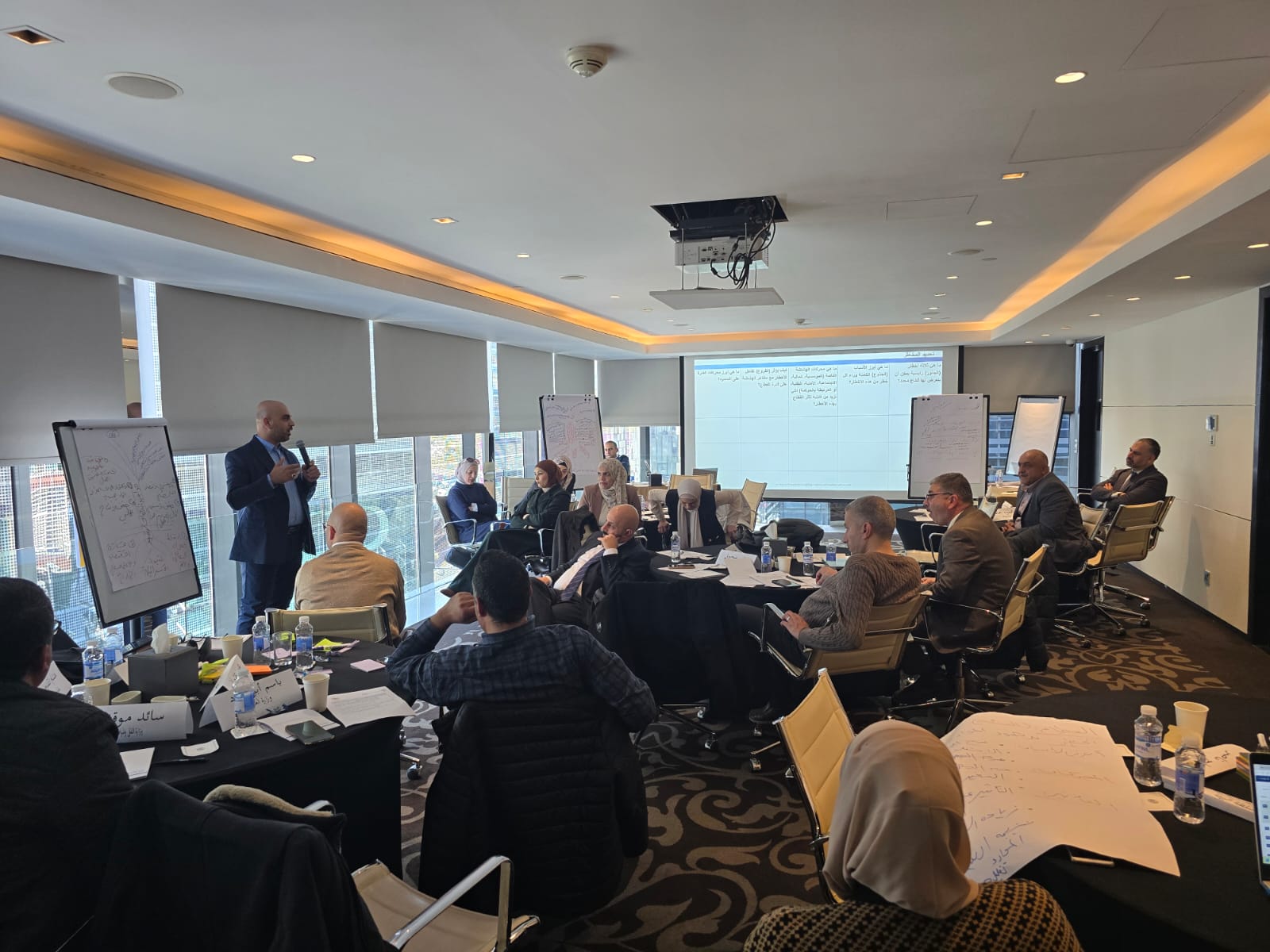
The workshop adopted a cumulative and interactive approach that progressed through the following stages:
- Strategic planning under conditions of fragility as a starting point;
- Identification of fragility dimensions and drivers;
- Risk scanning and definition, with occupation identified as a primary systemic risk;
- Analysis of causes and impacts, and the development of future scenarios;
- Formulation of risk-informed public policies, identification of implementing institutions, and assessment of their capacities.
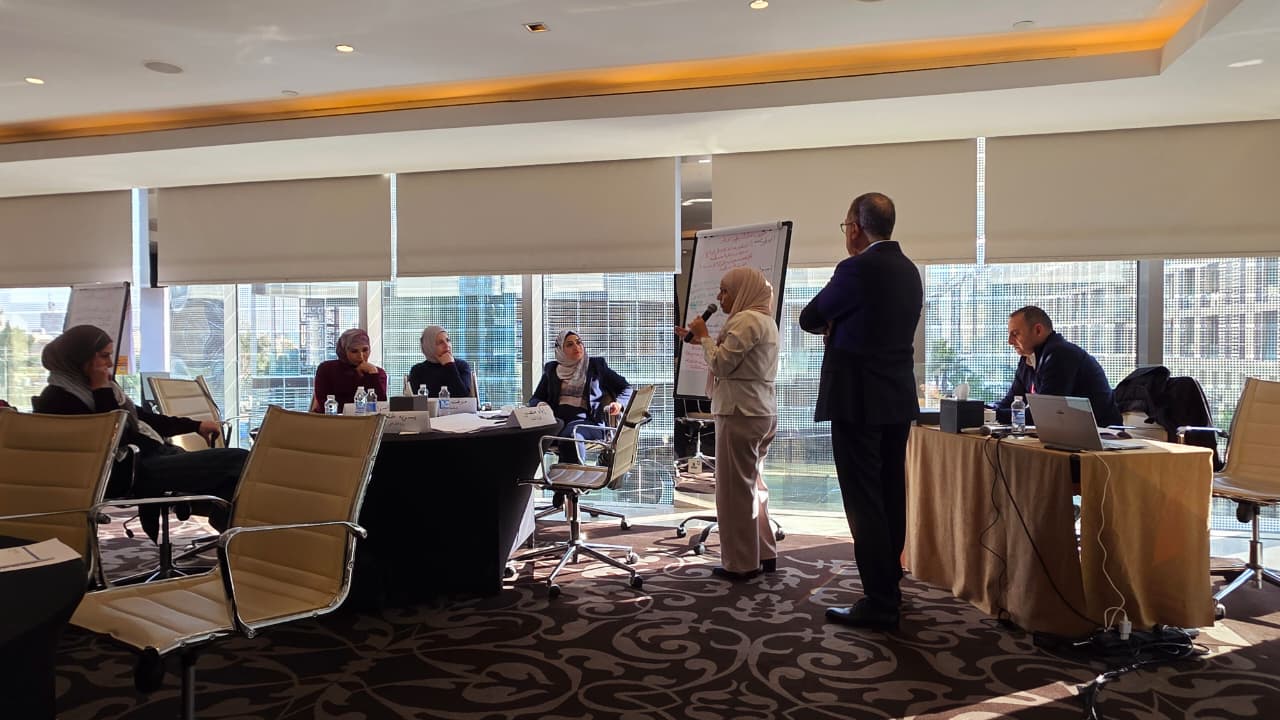
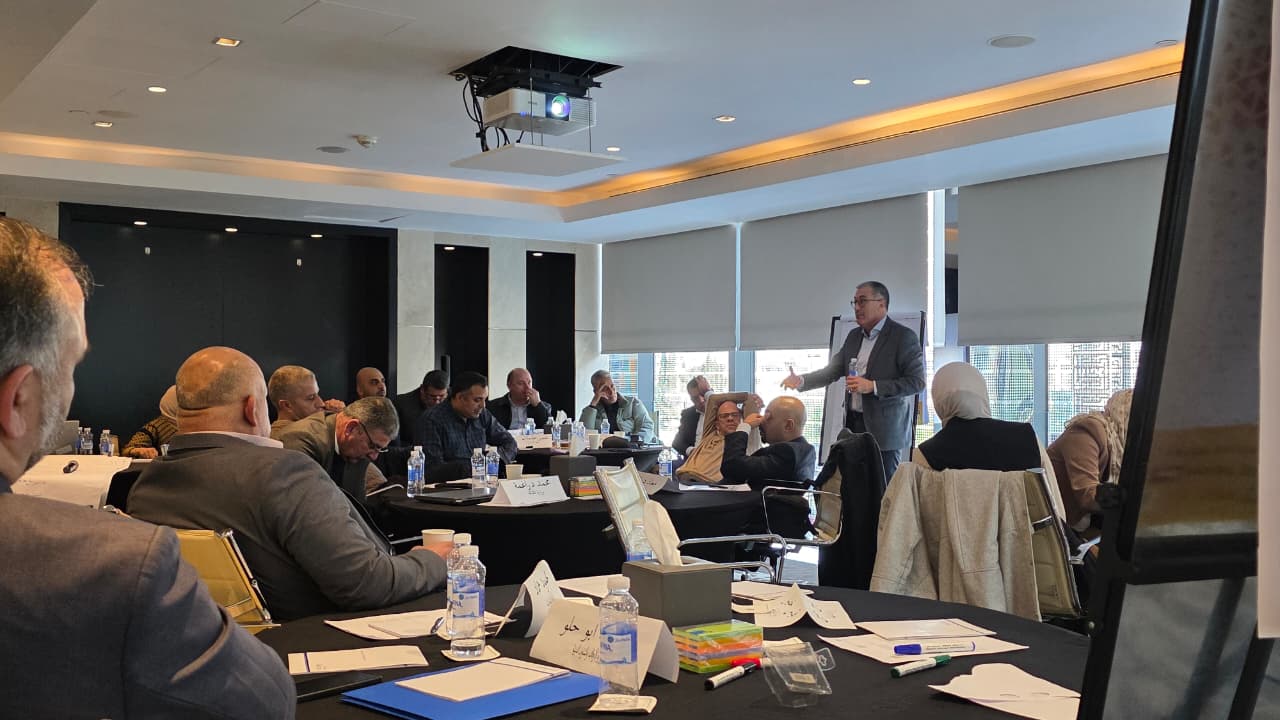
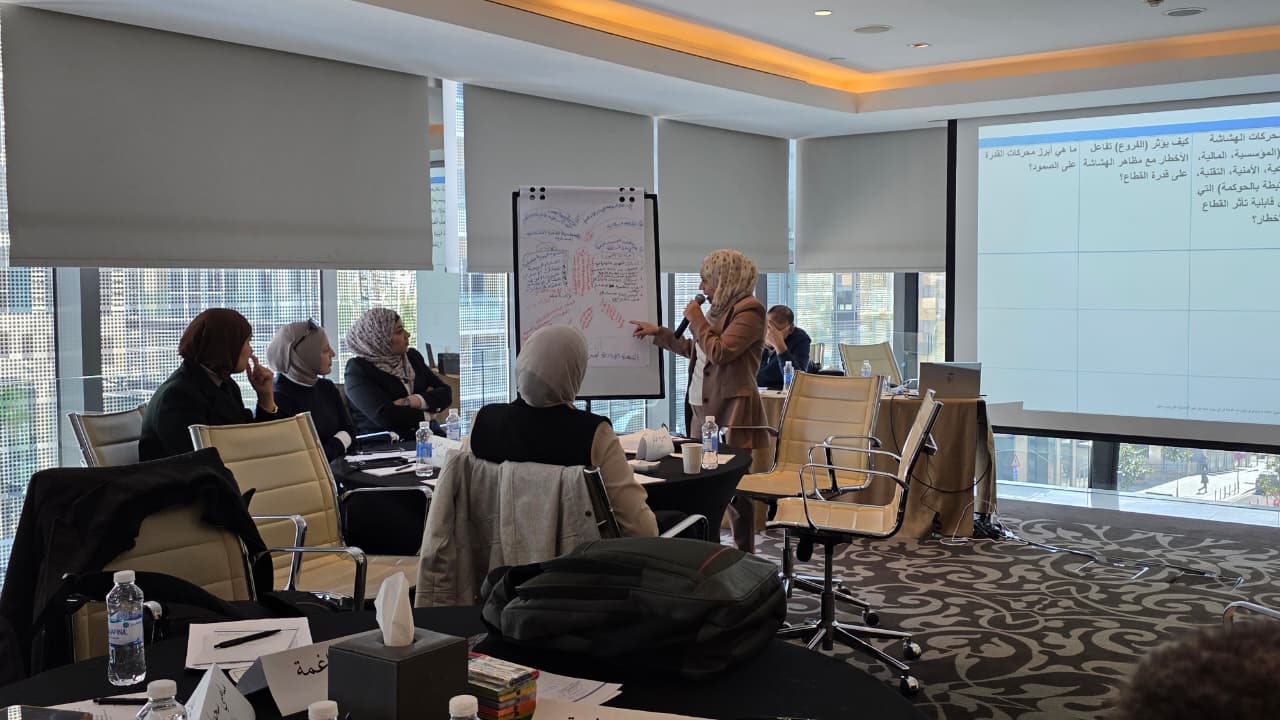
The workshop relied on a mix of conceptual presentations, group exercises, and open discussions, enabling the generation of applied, context-specific knowledge relevant to the Palestinian context.
V. Workshop Proceedings
Day One
Focused on strategic planning under fragility, analysis of manifestations of fragility in Palestine, and linking these to national priority-setting mechanisms. Working groups identified key areas of fragility—political, economic, social, environmental, and institutional—and their structural drivers, foremost among them the occupation.
Day Two
Dedicated to risk scanning and definition, with the occupation adopted as a systemic risk reshaping all other risks. Participants analyzed the causes and impacts of risks and their interaction with fragility, then used the results of the risk scan as a basis for foresight and for developing future risk trajectories.
Day Three
Focused on translating analysis into action by developing prototype risk-informed public policies, identifying implementing institutions, and discussing their current capacities and needs to enhance effectiveness and build resilience.
VI. Key Outputs
- Development of a shared understanding of fragility and systemic risks in the Palestinian context.
- Creation of preliminary risk maps outlining causes, impacts, and cross-sectoral interlinkages.
- Development of initial future risk-based scenarios.
- Formulation of prototype risk-informed public policies linking national priorities with institutional capacities.
- Strengthened coordination among planning officials and the establishment of a foundation for institutionalizing joint action.
VII. Recommendations
The workshop recommended:
- Organizing additional specialized workshops on foresight and scenario-building.
- Institutionalizing fragility and risk analysis methodologies within ministerial planning frameworks.
- Conducting systematic, multi-dimensional analyses of risks generated by the occupation.
- Holding regular meetings and workshops for planning officials to strengthen joint work.
- Unifying databases across ministries and developing an information system to support risk analysis.
- Adopting a unified methodology for analysis and planning across all public institutions.
VIII. Conclusion
The workshop confirmed that developing risk-informed public policies in Palestine requires both a conceptual and institutional shift in planning approaches. This shift must begin with recognizing the occupation as a systemic risk, rely on integrated analysis of fragility, risks, and foresight, and invest in building the capacities of public institutions as a fundamental condition for strengthening national resilience and supporting development pathways in a highly volatile and uncertain environment.



 Baghdad, Iraq
