18 June 2025
11:00–12:30
Beirut time
Expert Group Meeting

Mapping solar energy access in Yemen

Location
  • Online
Contact information
Share

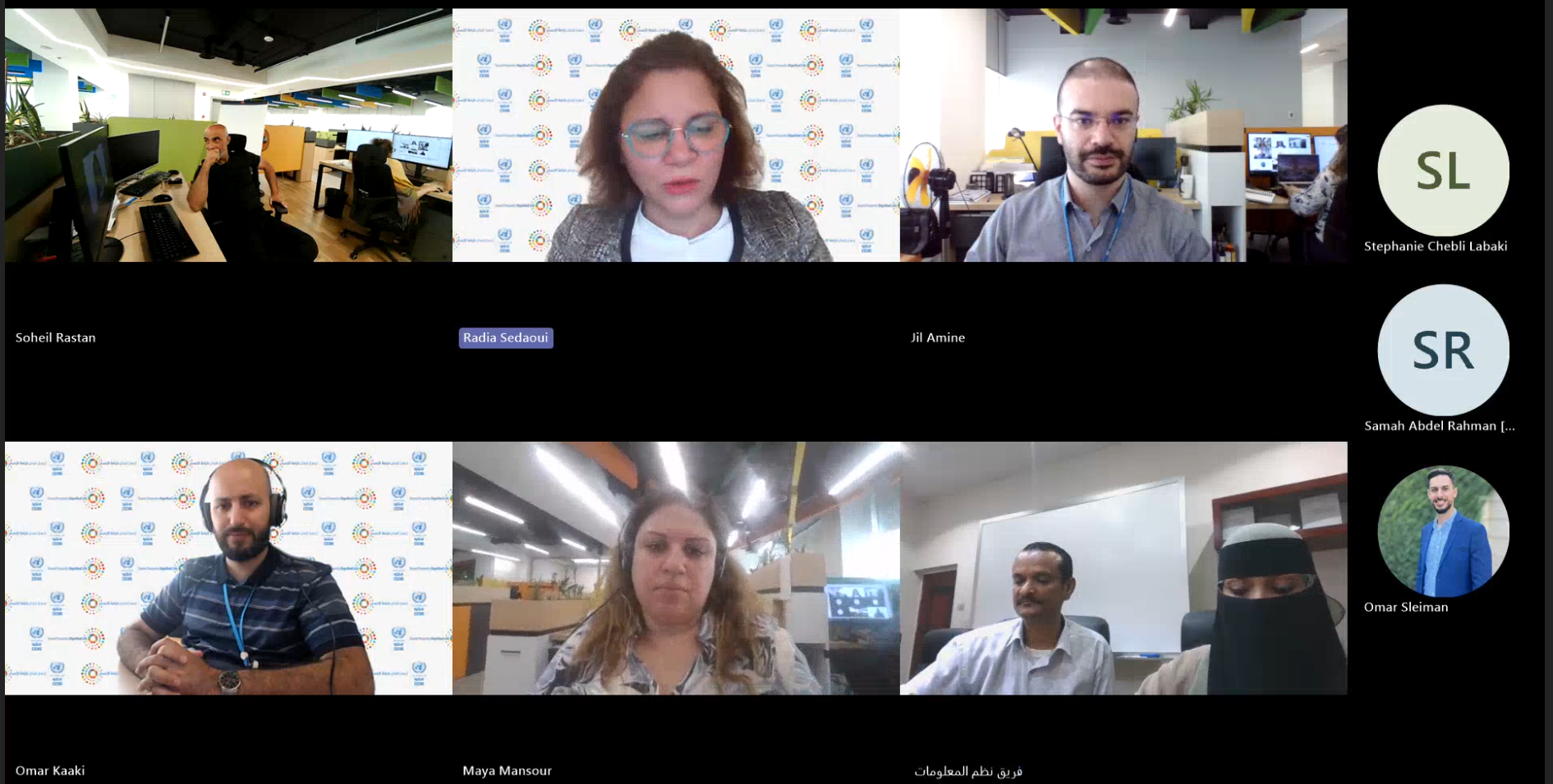
In the framework of a series of consultation meetings on mapping solar energy access in the Arab region, ESCWA is organizing a national consultation meeting with representatives from the Ministry of Electricity and Energy in Yemen. The objectives of the meeting include informing representatives of the ESCWA project on "Improved mapping and monitoring of solar energy access for enhanced climate policy action and socio-economic resilience in ESCWA member States"; assessing current capabilities and availability of data in Yemen; and identifying technical and policy gaps and challenges.

The meeting aims to explore opportunities for collaboration on data coordination, capacity-building, and the use of satellite-based analysis to support solar energy mapping. Yemen is considered a key beneficiary of the project following its expression of interest during the regional workshop on Arab LDCs held by ESCWA in April 2025.

Outcome document

  • ESCWA will share:
    • A survey for all stakeholders in Yemen, to inform the project and a case study on Yemen.
    • Presentations from the Geo-Insights team.
    • L-1 to L-4 maps for Yemen with the mapped locations of solar PV farms and a list of all farms in an excel sheet for review, evaluation, and edits.
  • Yemen will inform ESCWA about the selected areas that would be appropriate for a deep case study on estimating installed solar PV capacity from large solar farms to small rooftops systems.
  • Yemen will send a formal email expressing interest in the project and its capacity-building activities and nominating the focal points for the project.
  • ESCWA will send a formal request to the Center of Statistics in Yemen to support data access.
  • The project will be presented at the Committee on Energy in September 2025, during which Yemen will be presented as one of the beneficiary countries.

The meeting commenced with welcoming remarks from ESCWA, followed by a brief introduction of the IMSE project, which aims to support countries in mapping renewable energy applications to inform decision-making and policy development. The project includes virtual coordination meetings, regional training workshops, and stocktaking exercises. The key points discussed were: 

  • ESCWA outlined the project’s objectives:
    • Assess technical and GIS capabilities for renewable energy monitoring.
    • Evaluate policy knowledge and data-informed decision-making.
    • Understand human capital capacity for strategic RE mapping.
    • Build institutional capacity to support SDG7, with a focus on solar energy.
    • Support data gathering for a Yemen-specific case study.
  • Yemen noted:
    • The GIS unit at the Ministry of Energy and Electricity (MoEE) currently maps all electricity infrastructure and large-scale solar PV systems that are connected to the high and medium voltage networks.
    • MoEE’s control and coverage area is the south of Yemen where Aden is the main city. Other areas of the country are under the control of another government in Yemen, and their data is not currently accessible by MoEE.
    • The number of decentralized and privately-owned solar PV systems continue to rapidly increase, especially in Aden, due to the increasing need and high energy costs, but they are not being recorded or mapped.
    • Small rooftop systems are largely undocumented.
    • Not all donors coordinate with MoEE upon the implementation of solar PV systems. Even when they do, it is done at the planning stage, but coordination stops upon and after implementation.
    • Awareness of solar energy systems is improving.
    • Citizens are increasingly purchasing larger and more efficient solar PV panels.
    • Small systems are often underutilized due to poor design and lack of awareness. Some of them are just being utilized as shading devices, and not for generating electricity.
  • ESCWA’s Geo-Insights team presented analysis work done in Aden, Yemen based on open-source satellite imagery which was able to detect several large-scale solar farms. A comparative analysis could be done on imported solar panels from UN trade data and IRENA reported installed renewable energy capacity to further conduct a gap analysis. The analysis work done and presented by ESCWA was discussed by the MoEE representatives and they were able to identify most of the solar systems detected by the ESCWA team.
arrow-up icon
Feedback